
Money calculation skills Worksheets for Ages 6-8
3 filtered results
Difficulty Level
Grade
Age
-
From - To
Subject
Activity
Standards
Boost your child’s financial literacy with our Money Calculation Skills Worksheets designed for ages 6-8. Our engaging and educational worksheets help young learners master the basics of counting money, making change, and understanding the value of different coins and bills. Featuring colorful illustrations and practical scenarios, our resources make learning about money fun and interactive. Perfect for both the classroom and at-home practice, these worksheets build a solid foundation in essential math skills, preparing kids for real-world financial situations. Start your child's journey towards money-savvy confidence with our expertly crafted worksheets today!
Favorites
With answer key
Interactive
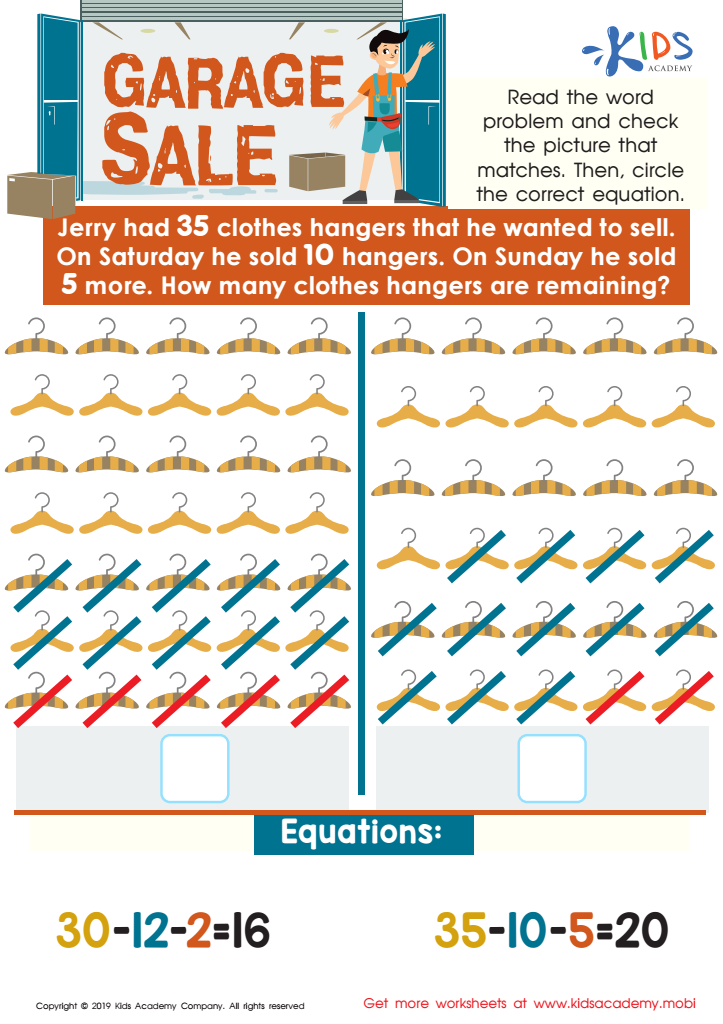
Garage Sale Worksheet
Help Jerry at his garage sale! With this worksheet, your child can practice subtraction word problems with multiple subtrahends. They'll read the problem, identify important info, circle the equation and solve it. Let your little math star have fun while helping Jerry out!
 Assign to My Students
Garage Sale Worksheet
Worksheet
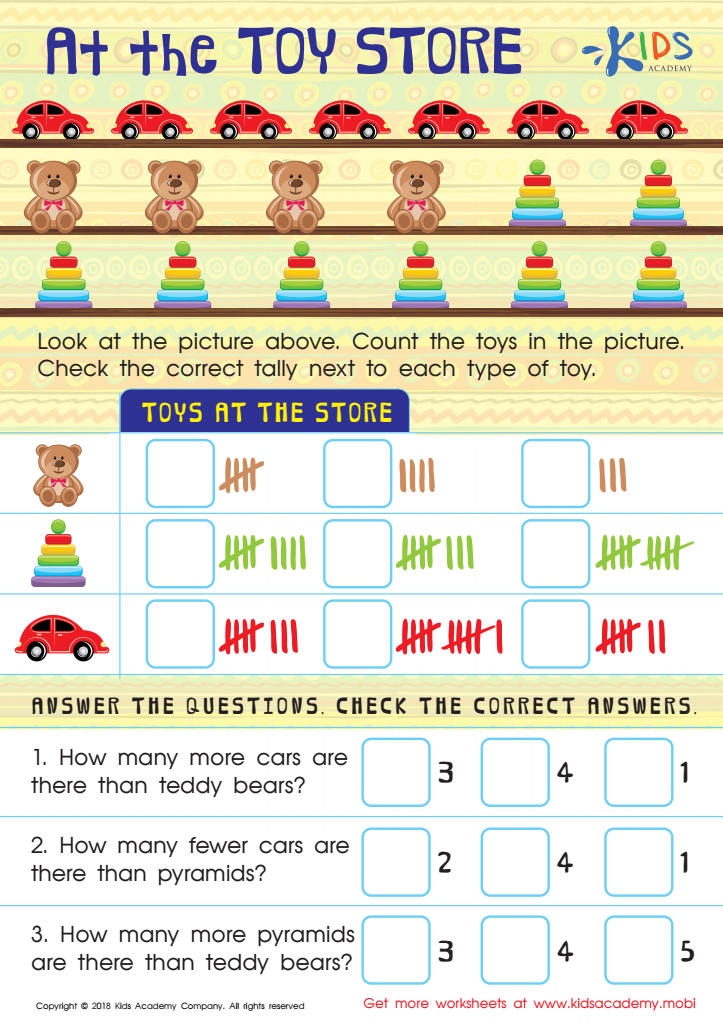
Tally Chart: At the Toy Store Worksheet
Kids Academy has a fun worksheet to help kids practice counting and using tally marks! They can think about the number of toys and compare them. At the bottom, help them answer the questions about the toys on this math page. It's an easy way to learn that one tally mark equals one item.
Tally Chart: At the Toy Store Worksheet
Worksheet
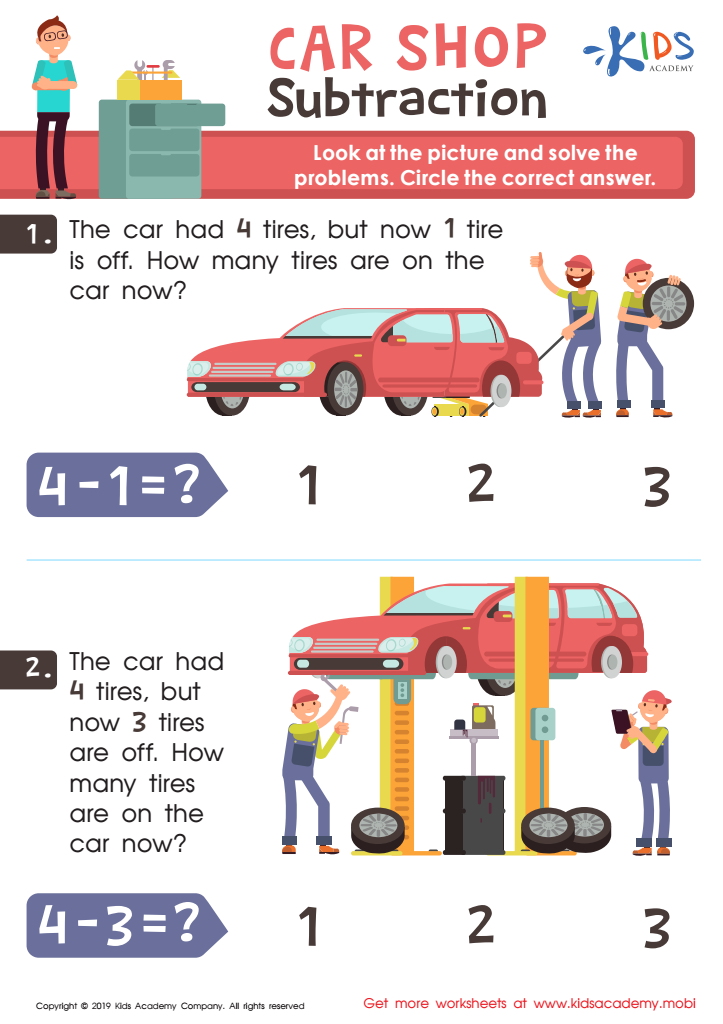
Car Shop Subtraction Worksheet
Encourage your kids to practice addition and subtraction with this worksheet. Read the word problems aloud, help them solve and check the answer from the provided options. With enough exercises and guidance, this task should be fairly easy.
Car Shop Subtraction Worksheet
Worksheet
Join Kids Academy for Free
Who is primarily going to use this learning content?



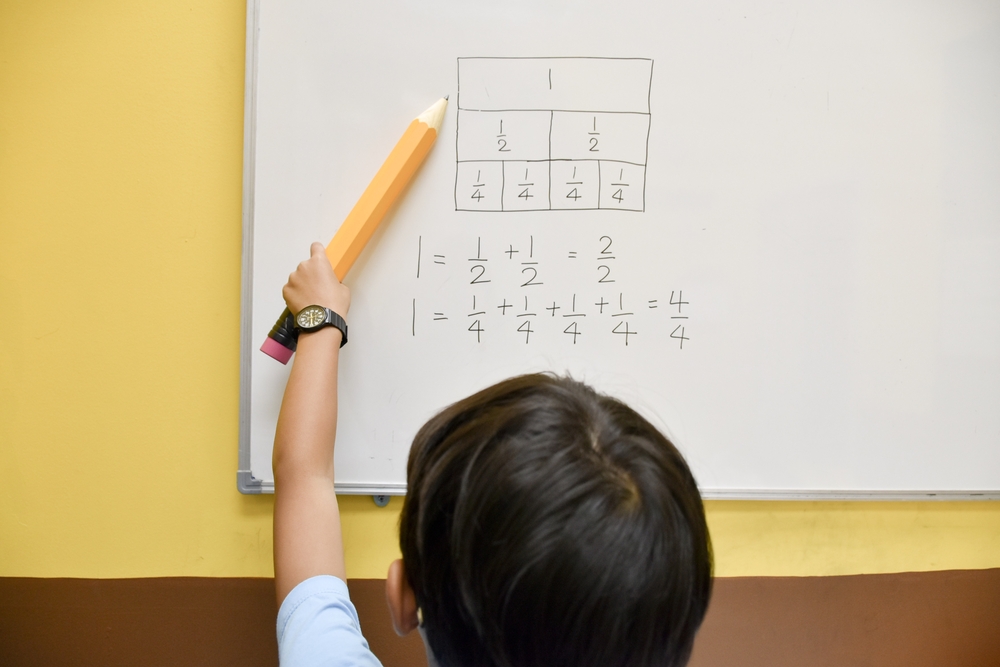




Understanding money and its value is a fundamental life skill that greatly benefits children aged 6-8. For parents and teachers, focusing on money calculation skills at this early age lays the groundwork for financial literacy, which is crucial for managing personal finances responsibly in the future.
First, grasping money concepts helps children develop a sense of numeracy. It allows them to practice addition, subtraction, and other basic math skills in a practical, engaging context. For example, when kids count coins or make change, they reinforce important mathematical principles.
Second, learning to handle money teaches children the value of saving and spending wisely. When kids understand that they can't buy everything they want immediately, they learn to make choices and prioritize their needs and wants. This fosters patience and delayed gratification, which are essential for healthy financial habits later in life.
Importantly, these skills also boost self-confidence and independence. When children know how to manage small amounts of money, they feel more competent and capable. This sense of accomplishment extends to other areas of learning and life.
Lastly, teaching money skills early helps mitigate future financial mistakes. Financial irresponsibility is a common challenge for adults, but starting with a solid foundation at a young age can lead to smarter financial choices down the line, promoting economic stability and well-being. Hence, both parents and teachers have a pivotal role in cultivating money calculation skills in young learners.








