Number counting Worksheets for Ages 6-8
3 filtered results
-
From - To
Unlock the joy of learning with our engaging number counting worksheets for ages 6-8! Designed to blend fun with education, these worksheets are perfect for young learners to practice counting, improve their numerical skills, and build a strong math foundation. Each printable is crafted to captivate children’s interest and keep them motivated. They’ll enjoy a variety of activities including counting objects, number tracing, and simple arithmetic. Ideal for parents and teachers alike, these resources make math both enjoyable and accessible. Foster a love for numbers in your child today with these creative and interactive worksheets!
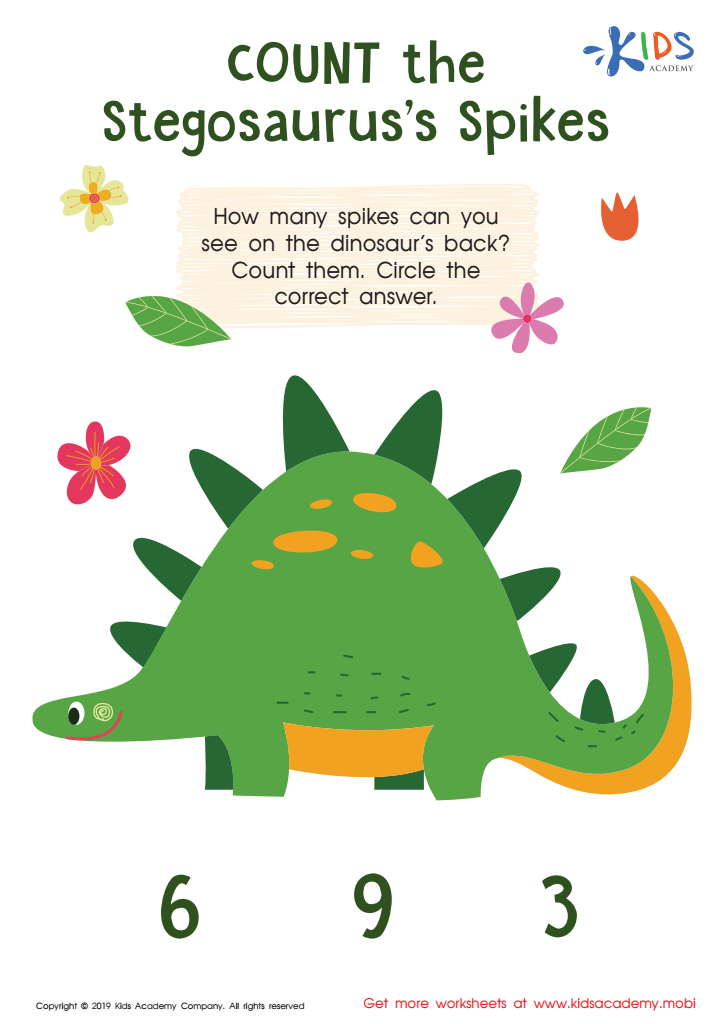
Count the Stegosaurus's Spikes Worksheet
 Assign to My Students
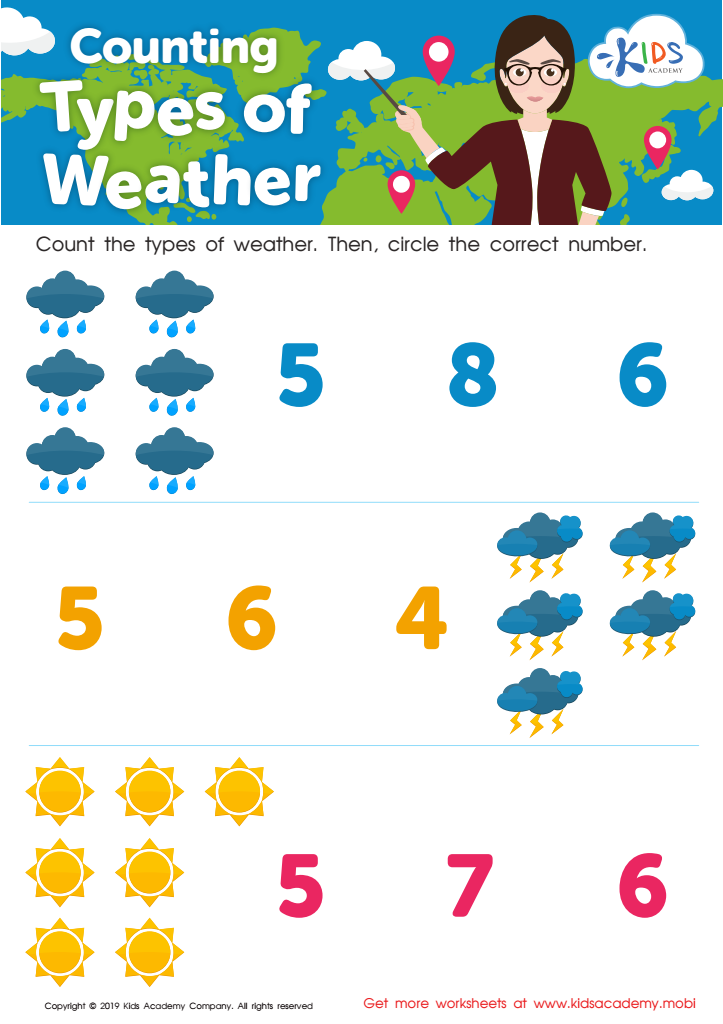
Counting Types of Weather Worksheet








Number counting for children aged 6-8 is crucial for several fundamental reasons. At this developmental stage, kids are like sponges, soaking up information that will form the foundation for future academic success. Counting is the bedrock for understanding more complex mathematical concepts such as addition, subtraction, and place value. If children grasp counting well, it sets the stage for more advanced arithmetic and problem-solving skills.
First, counting helps develop numerical fluency, enabling children to recognize and use numbers confidently. This fluency supports their ability to perform everyday tasks, like telling time, measuring ingredients in recipes, or even managing their own small amounts of money. Second, early proficiency in counting fosters a positive relationship with mathematics, making children more likely to enjoy and excel in the subject later on.
Teaching counting also supports cognitive development. It helps improve memory, attention to detail, and logical reasoning skills. Socially, it can foster cooperative learning opportunities, like playing counting games with peers.
Finally, a strong foundation in counting is predictive of future educational success, especially in STEM fields. By investing time and effort into teaching counting, parents and teachers can help set children on a path of academic achievement and lifelong learning.








