Observational skills Worksheets for Ages 6-8 - Page 2
27 filtered results
-
From - To
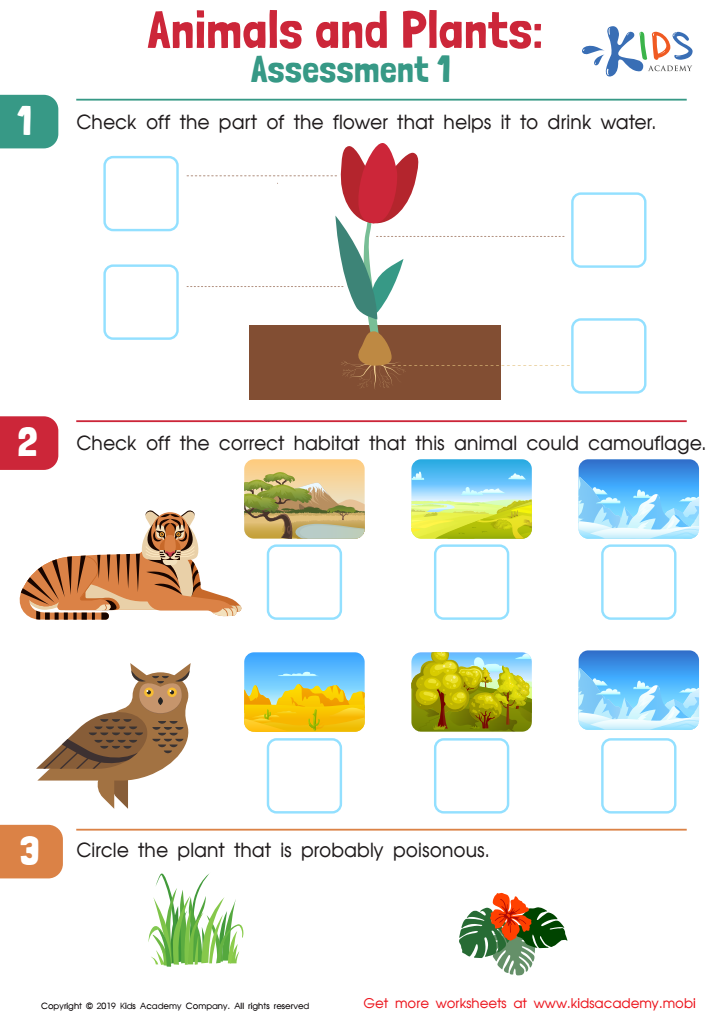
Animals and Plants: Assessment 1 Worksheet
 Assign to My Students







Observational skills are crucial for children aged 6-8, as this developmental stage greatly influences their cognitive and social growth. For parents and teachers, fostering these skills is essential for several reasons.
Firstly, children at this age begin to make sense of their environment and the world around them. Effective observation helps them identify patterns, relationships, and changes, which are foundational for critical thinking and problem-solving. By enhancing these skills, adults enable children to engage more thoughtfully with their surroundings.
Secondly, strong observational skills contribute to improved academic performance. Children learn best when they can actively observe and analyze information across subjects—from science experiments to reading comprehension. Teachers who encourage observation can create hands-on learning experiences that make subjects come alive, enhancing understanding and retention.
Additionally, observational skills support emotional and social development. As children learn to read facial expressions and body language, they become better at empathizing and communicating with peers. This enhances their ability to navigate social situations and build healthy relationships.
In summary, supporting observational skills in children ages 6-8 fosters cognitive development, enhances academic performance, and promotes social-emotional growth, making it a priority for parents and educators alike.








