Phonics practice Worksheets for Ages 6-8 - Page 2
25 filtered results
-
From - To
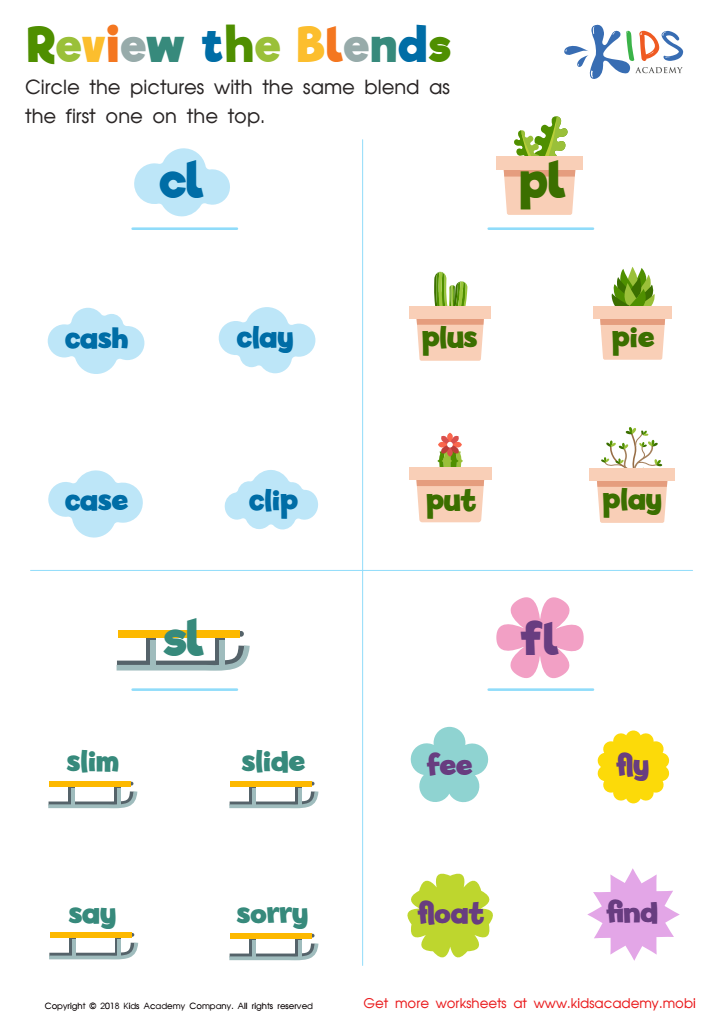
Review the Blends Worksheet
 Assign to My Students








Phonics practice for children aged 6-8 is crucial in developing early literacy skills, making it essential for both parents and teachers. At this foundational stage, children learn to decode words by connecting sounds (phonemes) to their corresponding letters (graphemes). Mastering phonics helps enhance reading fluency, accuracy, and comprehension, allowing children to engage with more complex texts as they progress.
Additionally, phonics instruction fosters critical thinking skills, such as the ability to sound out unfamiliar words and develop spelling knowledge. This not only boosts a child's confidence when reading but also contributes to a positive attitude towards learning.
Moreover, parental and teacher involvement in phonics practice creates a supportive learning environment. When parents and teachers collaboratively reinforce these skills, it creates consistency and encourages children to practice at home and school, leading to improved outcomes.
Furthermore, strong phonics skills are linked to overall academic success, influencing other areas like writing and vocabulary development. By prioritizing phonics practice, parents and teachers can empower children to become proficient readers, enabling them to explore new worlds through literature and fostering a lifelong love for reading.








