Practice counting Worksheets for Ages 6-8
6 filtered results
-
From - To
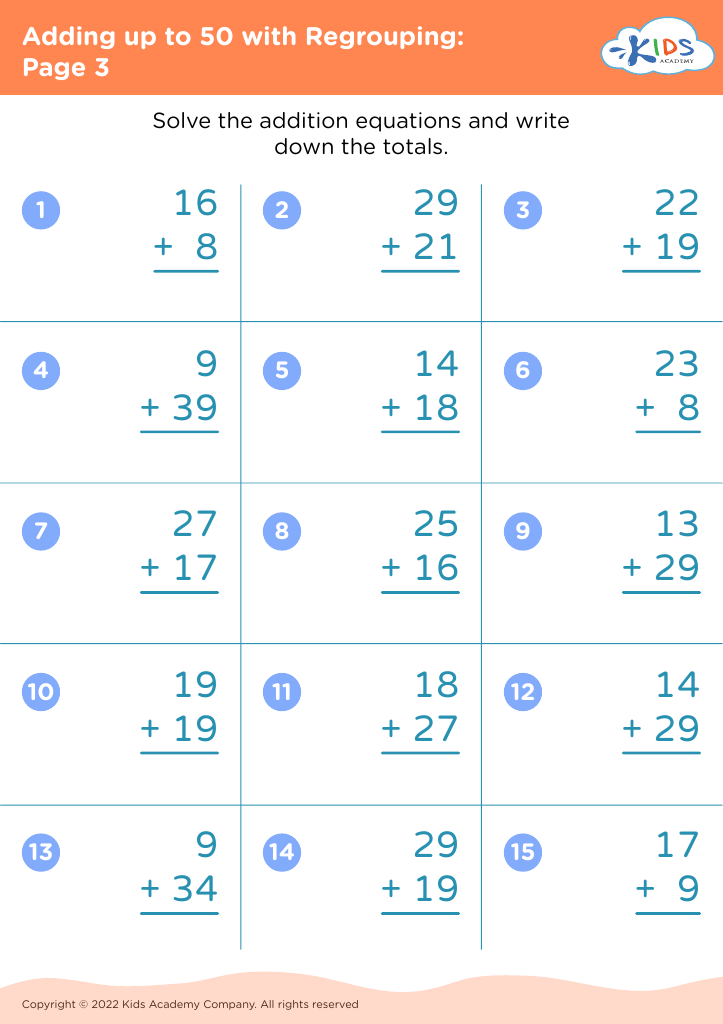
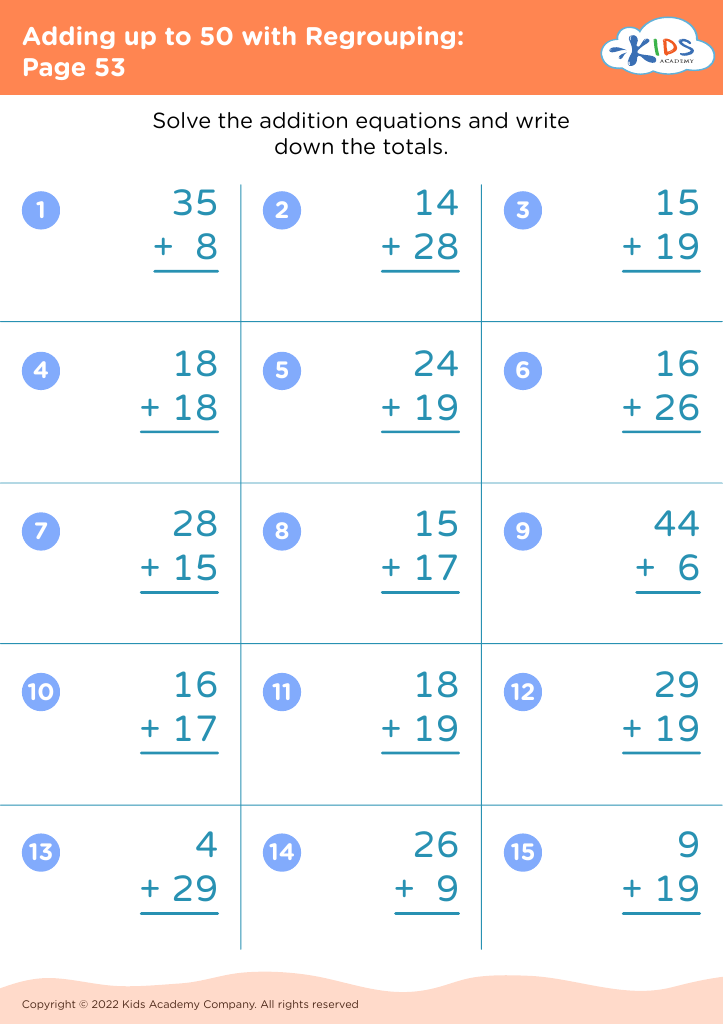
Discover our engaging Practice Counting Worksheets for ages 6-8, designed to enhance foundational math skills in a fun and interactive way! Our worksheets feature captivating visuals and diverse counting exercises, making math accessible and enjoyable for young learners. Children will practice counting objects, identifying numbers, and solving simple addition and subtraction problems. These valuable resources support homeschooling and classroom learning, helping students build confidence in their math abilities. Perfect for reinforcing skills or introducing new concepts, our worksheets are aligned with educational standards to ensure effective learning. Download our Practice Counting Worksheets today and watch your child's math skills grow!
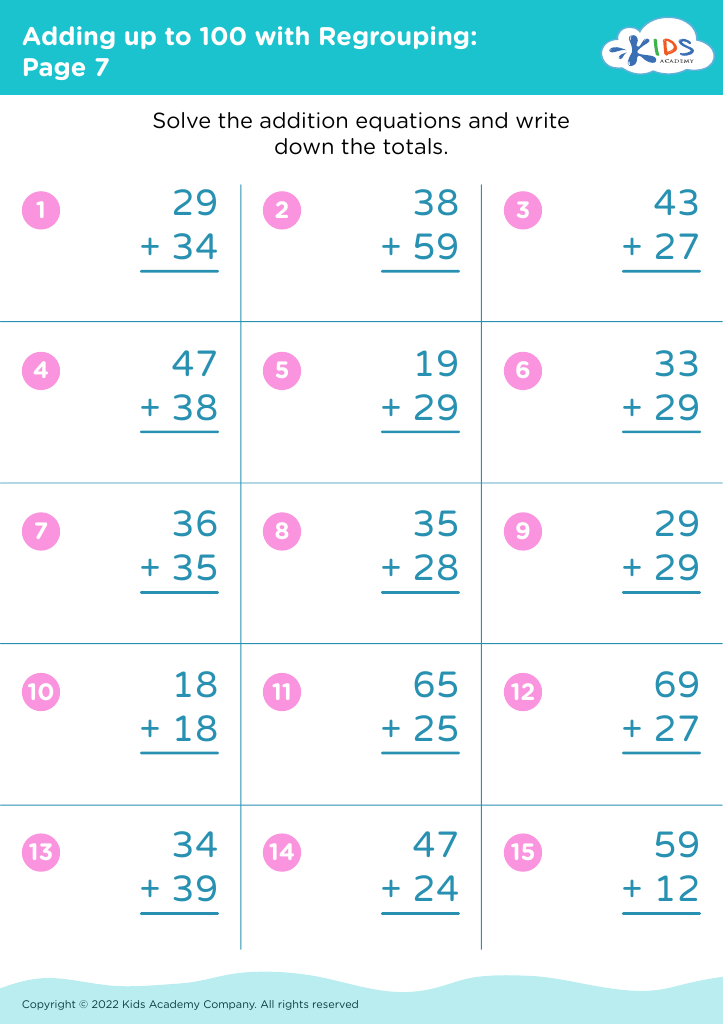
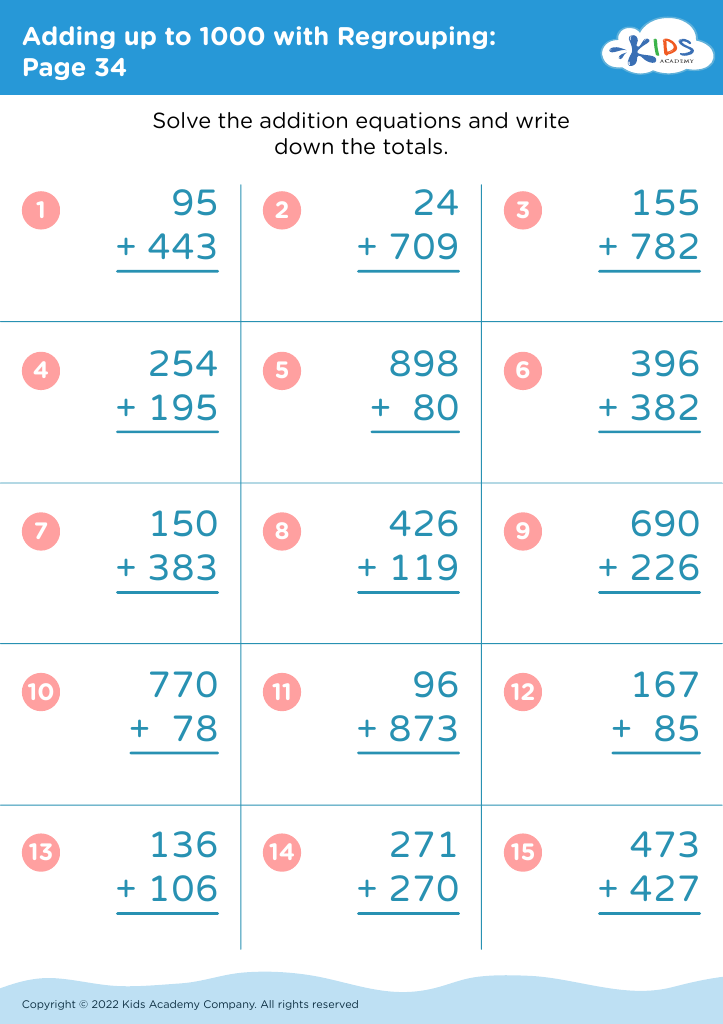
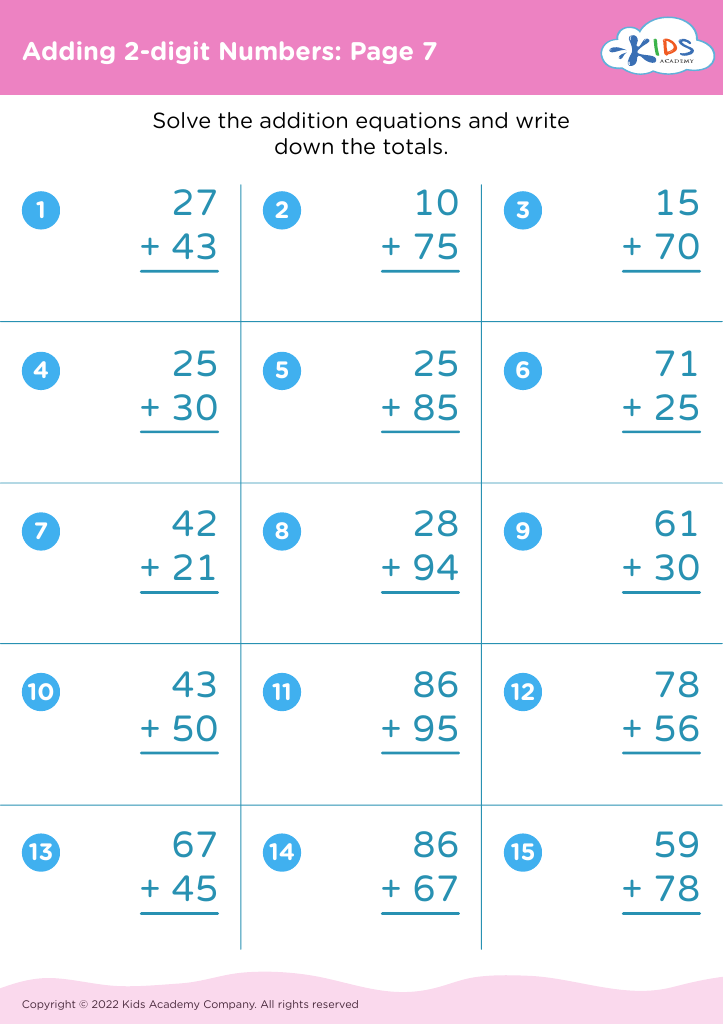
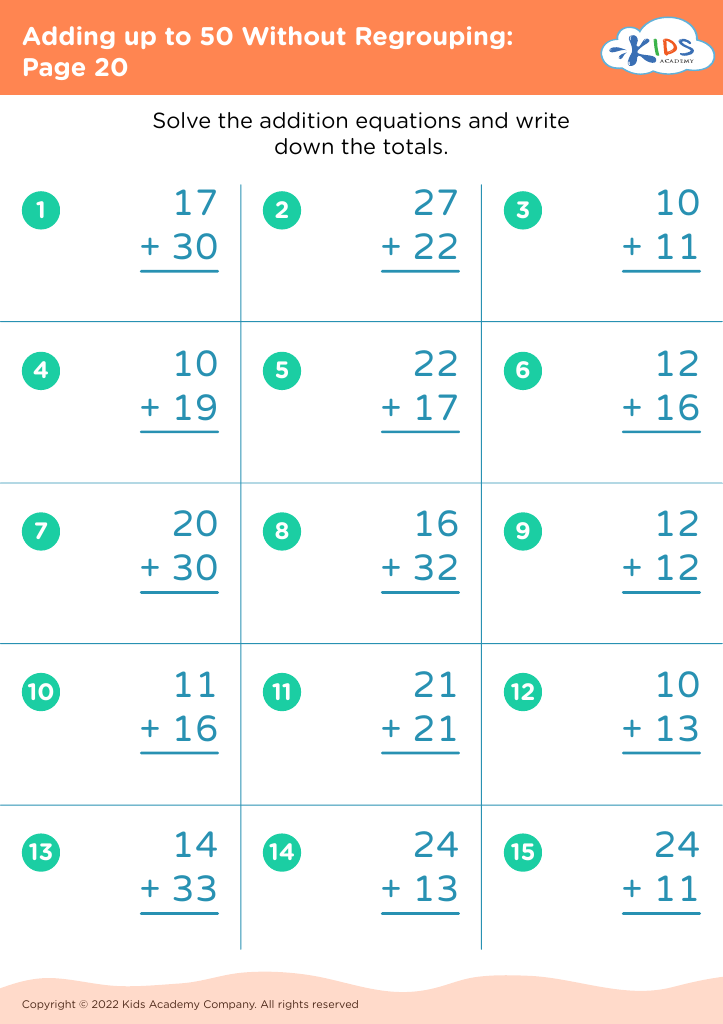







Counting is a foundational skill in early mathematics that has far-reaching implications for a child’s academic success. For parents and teachers, practicing counting with children aged 6-8 is essential because it forms the basis for more advanced concepts, such as addition, subtraction, and understanding number patterns. At this age, children are developing cognitive abilities and a grasp of numerical relationships, so counting activities can enhance their problem-solving and critical-thinking skills.
Moreover, counting fosters a sense of rhythm and structure in learning, helping children to recognize the sequences and hierarchies in everyday life. It also supports language development, as children learn the vocabulary associated with numbers and quantities. Engaging in counting games and activities makes learning interactive and fun, promoting a positive attitude towards math and enhancing children’s confidence.
Additionally, early counting skills can have a significant impact on later academic performance. When children master counting and number recognition, they are better prepared for future math challenges, reducing anxiety and increasing their willingness to engage with more complex concepts. In summary, parents and teachers should prioritize counting practice, as it is crucial for children’s mathematical understanding, overall cognitive development, and fostering a lifelong love of learning.








