Practicing addition Worksheets for Ages 6-8
7 filtered results
-
From - To
Discover a series of engaging practicing addition worksheets designed specifically for children aged 6-8. These carefully crafted activities aim to reinforce essential math skills through fun and interactive exercises. From simple one-digit problems to more complex two-digit additions, our worksheets cater to various learning levels, ensuring every child gains confidence in their mathematical abilities. With colorful illustrations and age-appropriate challenges, your little learners will enjoy practicing addition while developing critical thinking and problem-solving skills. Perfect for classroom use or at-home learning, these worksheets are an effective tool for fostering a solid foundation in mathematics. Start exploring our resources and watch your child's skills flourish!
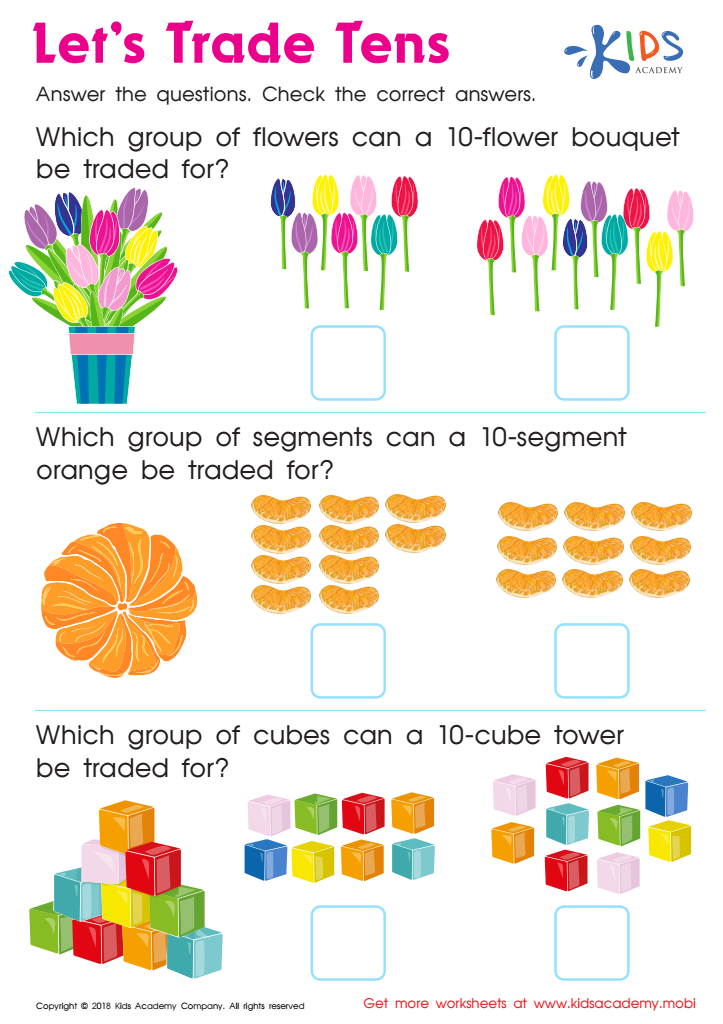
Lets Trade Tens Worksheet
 Assign to My Students
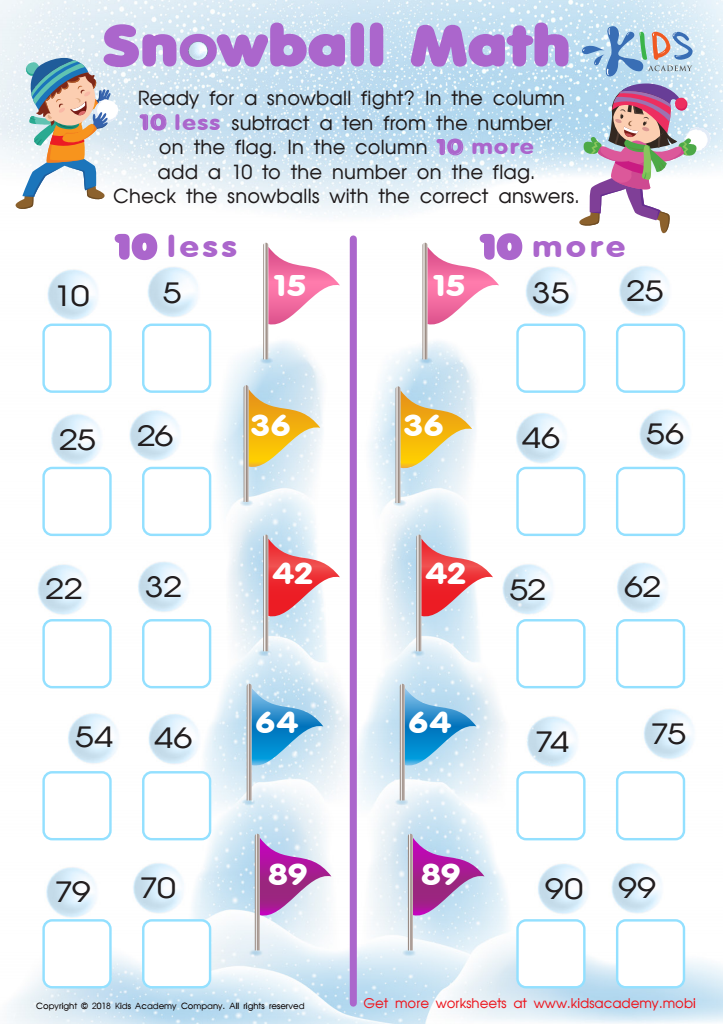
Snowball Math Worksheet
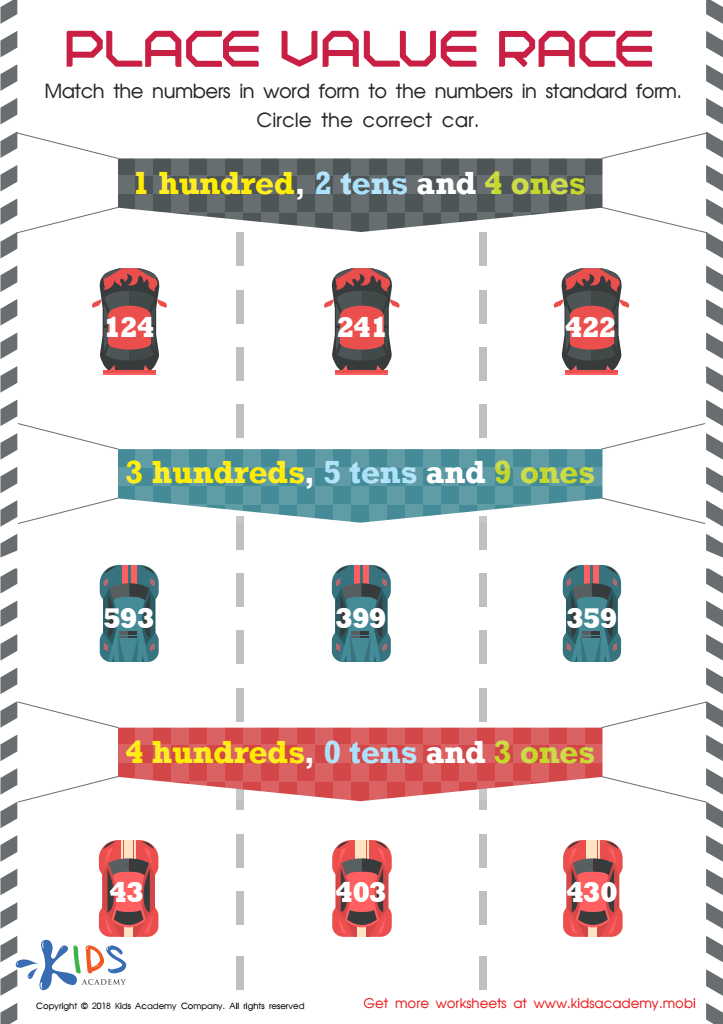
Place Value Race Worksheet
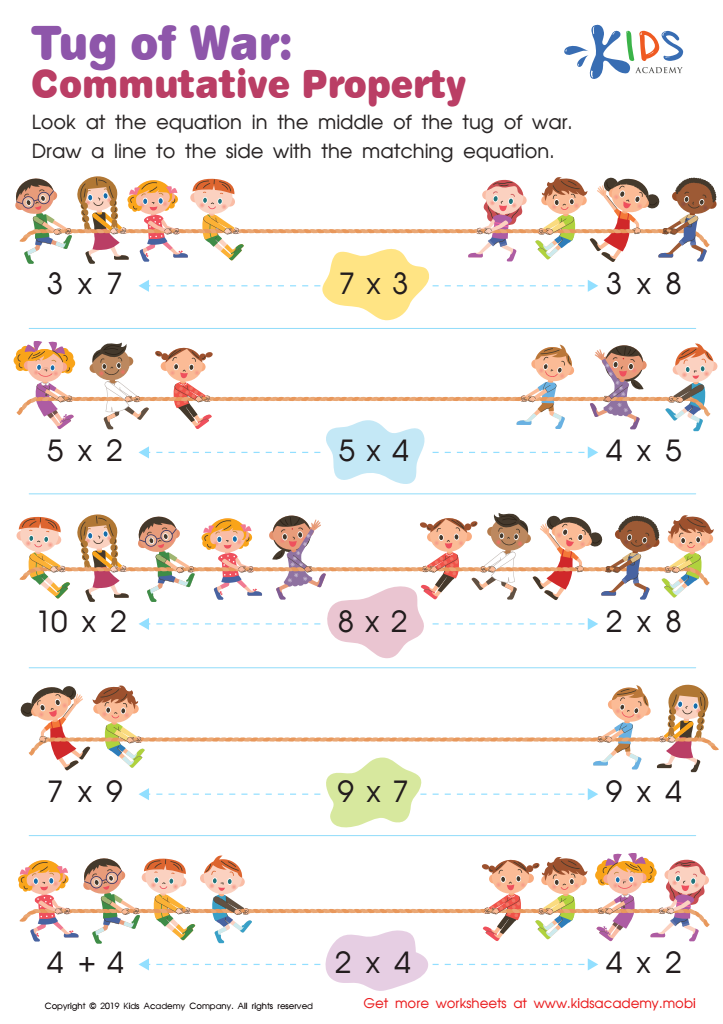
Tug of War: Commutative Property Worksheet
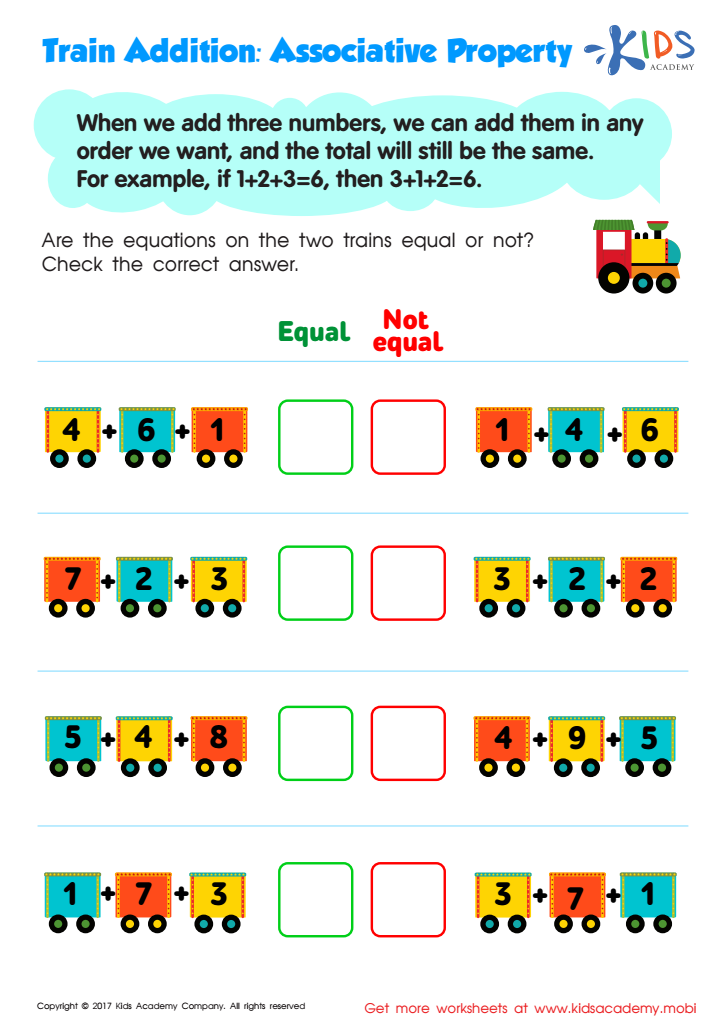
Train Addition: Associative Property Worksheet








Practicing addition for children ages 6-8 is crucial for several reasons. Firstly, mastering addition forms the foundation for more advanced math skills. At this age, children begin to encounter complex mathematical concepts, and a strong understanding of addition enables them to succeed in subtraction, multiplication, and division. By building confidence in their ability to add, students will be better equipped to tackle these challenges.
Additionally, practicing addition enhances cognitive skills such as problem-solving, critical thinking, and logical reasoning. During this developmental stage, children benefit significantly from engaging in hands-on activities and games that encourage mathematical thinking in a fun manner. Such activities aid in making abstract concepts tangible and relatable, fostering a positive attitude towards mathematics.
Moreover, purposeful practice aligns with educational standards emphasizing fluency in basic arithmetic. It also connects to real-life situations, helping children understand the practical applications of math, such as budgeting or sharing items. Encouraging parents and teachers to create an environment that values arithmetic practice ensures that students not only grasp the fundamental concepts but also develop a lifelong appreciation for math as a vital skillset. Overall, the investment in mastering addition during these formative years sets the groundwork for academic success and daily functioning.








