
Recognition skills Worksheets for Ages 6-8
3 filtered results
Difficulty Level
Grade
Age
-
From - To
Subject
Activity
Standards
Unlock your child's potential with our Recognition Skills Worksheets for Ages 6-8! These engaging, age-appropriate activities are designed to help young learners develop essential recognition skills, including letter, number, and shape identification. Each worksheet is tailored to captivate children's interest while enhancing their ability to recognize patterns, letters, and objects in their environment. Perfect for classroom use or at-home learning, our recognition skills worksheets make education fun and interactive. Help your child gain confidence and mastery in foundational skills that are critical for their academic growth. Explore our diverse collection and watch your child thrive in learning!
Favorites
With answer key
Interactive
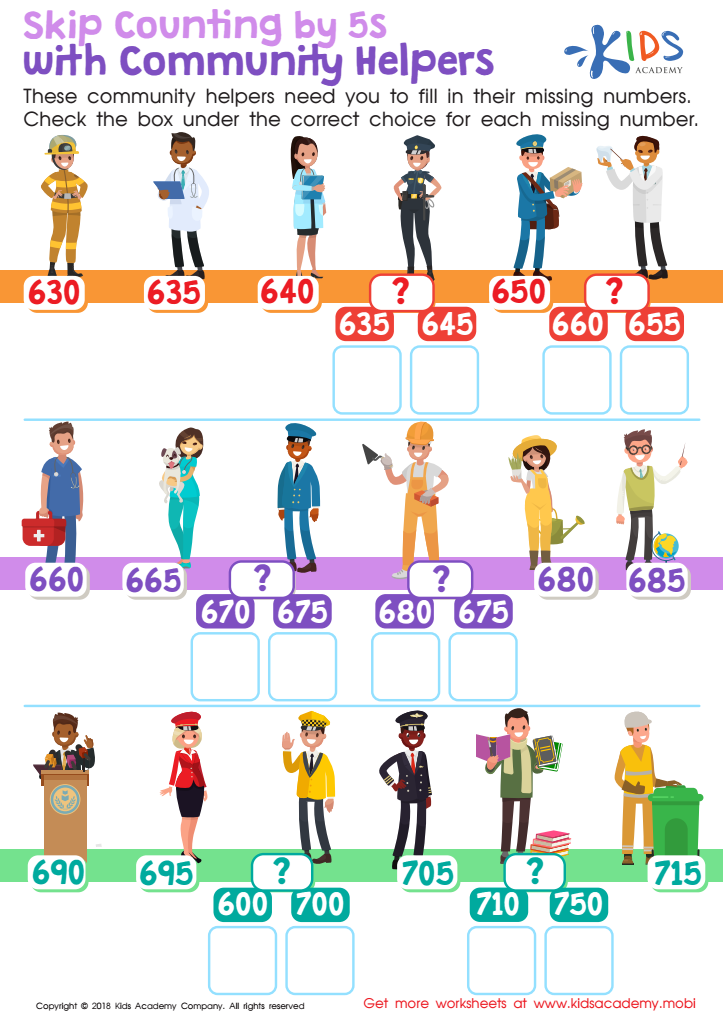
Skip Counting by 5s With Community Helpers Worksheet
This free worksheet combines social studies with math! Kids will practice counting by 5s, rounding numbers and honing their computation skills while also familiarizing themselves with community helpers. Develop your child's number sense and strengthen their math skills - all through a fun and interactive activity.
 Assign to My Students
Skip Counting by 5s With Community Helpers Worksheet
Worksheet
Join Kids Academy for Free
Who is primarily going to use this learning content?







Recognition skills, essential for children aged 6-8, encompass the ability to identify and understand various stimuli, including letters, numbers, words, and emotions. These foundational skills are crucial as they significantly influence a child's academic success and social interactions.
For parents and teachers, fostering recognition skills supports early literacy and numeracy, laying a groundwork for future learning. As children become adept at recognizing letters and numbers, they gain confidence in reading and math, enhancing their academic performance and increasing their enthusiasm for learning. Furthermore, recognition skills help children identify cues in social situations, such as facial expressions and body language, promoting better communication and cooperation with peers.
Additionally, these skills encourage critical thinking and problem-solving abilities. In a world where information is rapidly changing, the ability to recognize patterns, distinguish differences, and make connections is essential.
By nurturing recognition skills, parents and teachers not only prepare children for immediate educational achievements but also equip them with the tools necessary for lifelong learning and social success. Investing time in developing these skills can lead to increased self-esteem, academic readiness, and a more profound understanding of the world around them, ultimately benefiting children's overall growth.








