Recognizing equal parts Worksheets for Ages 6-8
3 filtered results
-
From - To
Discover our engaging "Recognizing Equal Parts" worksheets designed specifically for children ages 6-8. These interactive resources help young learners grasp the concept of fractions by identifying and coloring equal parts of various shapes. Through fun activities, children practice mathematical reasoning and visual recognition skills, making learning enjoyable and effective. The worksheets are tailored to accommodate different learning styles, enhancing comprehension and promoting a solid foundation in basic math concepts. Ideal for classroom settings or at-home activities, our worksheets foster a love for learning while building confidence in young mathematicians. Explore our collection and watch your child's understanding of fractions grow!
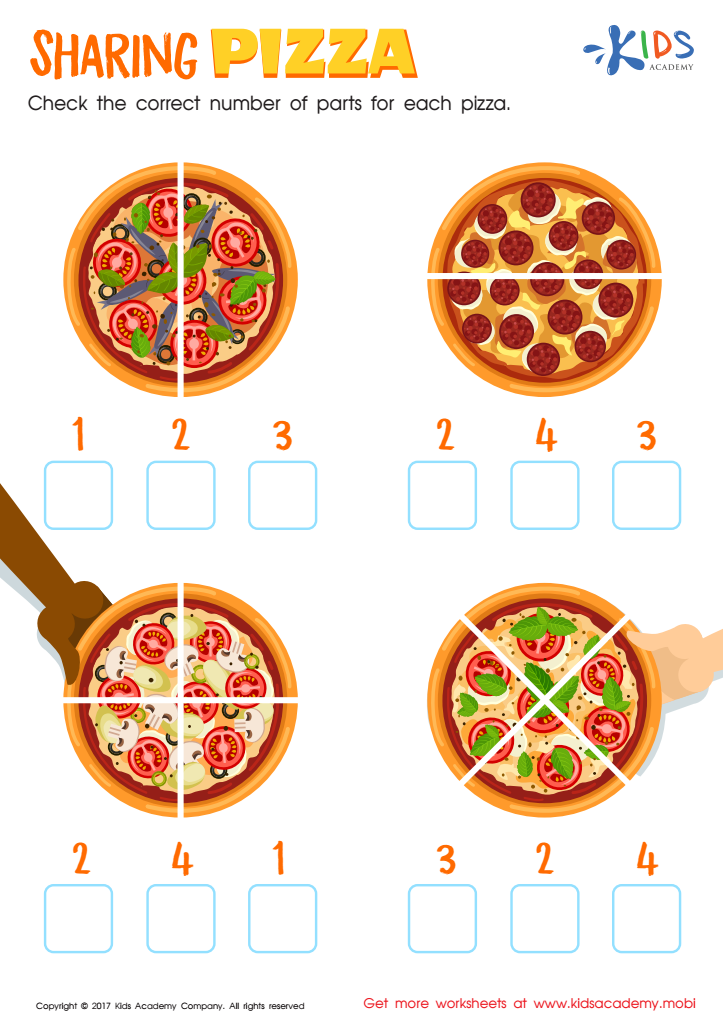
Sharing Pizza Worksheet
 Assign to My Students
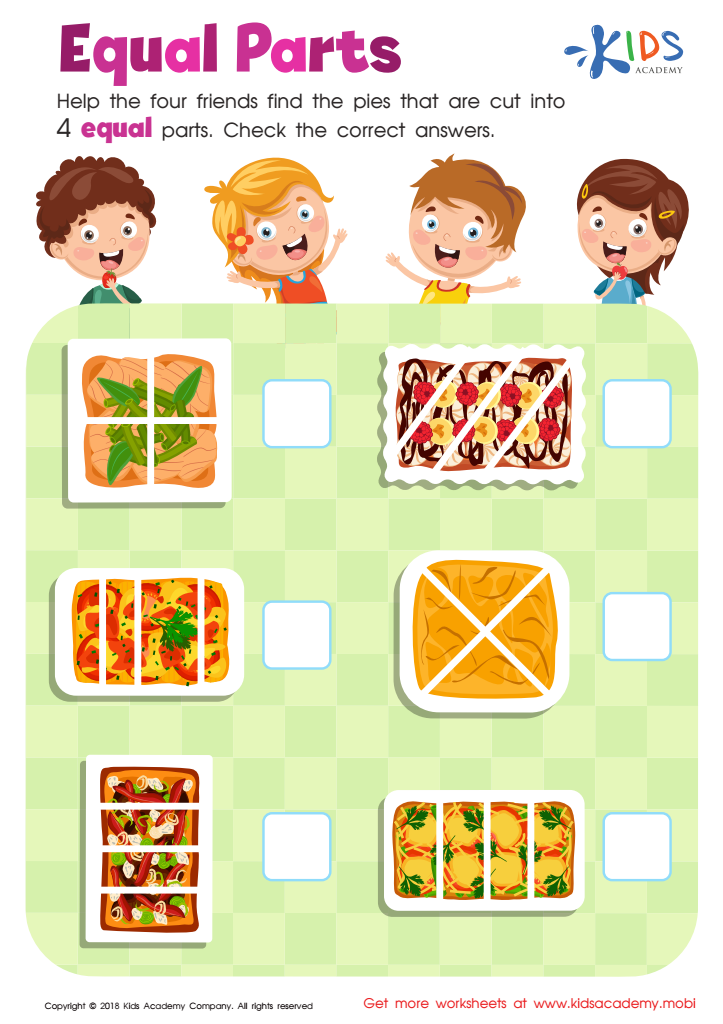
Equal Parts: Food Worksheet






Recognizing equal parts is a foundational concept in early education that plays a crucial role in a child's mathematical development, particularly for children aged 6-8. Understanding equal parts helps children grasp the basics of fractions, paving the way for more complex mathematical concepts in later grades. When children learn to recognize and create equal parts, they develop skills in division, sharing, and proportion, which are essential for everyday problem-solving.
For parents and teachers, it is vital to emphasize the importance of recognizing equal parts because it strengthens children's critical thinking and reasoning abilities. Activities involving equal parts, such as dividing a pizza or sharing toys, also encourage collaborative play and social skills.
Furthermore, understanding equal parts links mathematics to real-world experiences, making learning more engaging and meaningful. This type of understanding fosters confidence in young learners, empowering them to tackle more challenging math concepts as they grow. Ultimately, by nurturing the ability to recognize equal parts, parents and teachers equip children with a toolkit of skills that extends beyond math, encouraging flexibility, creativity, and a deeper appreciation for learning in various subjects.








