Recognizing number patterns Worksheets for Ages 6-8
5 filtered results
-
From - To
Discover our "Recognizing Number Patterns Worksheets for Ages 6-8," designed to enhance your child's mathematical skills while making learning fun. These engaging worksheets help young learners identify and extend number patterns, fostering critical thinking and problem-solving abilities. Perfect for students in their early grades, each activity is crafted to build foundational math skills, spark curiosity, and boost confidence. Whether used in the classroom or at home, these expertly designed resources support your child’s education journey. Step up their math game today with Kids Academy's creative and effective worksheets!
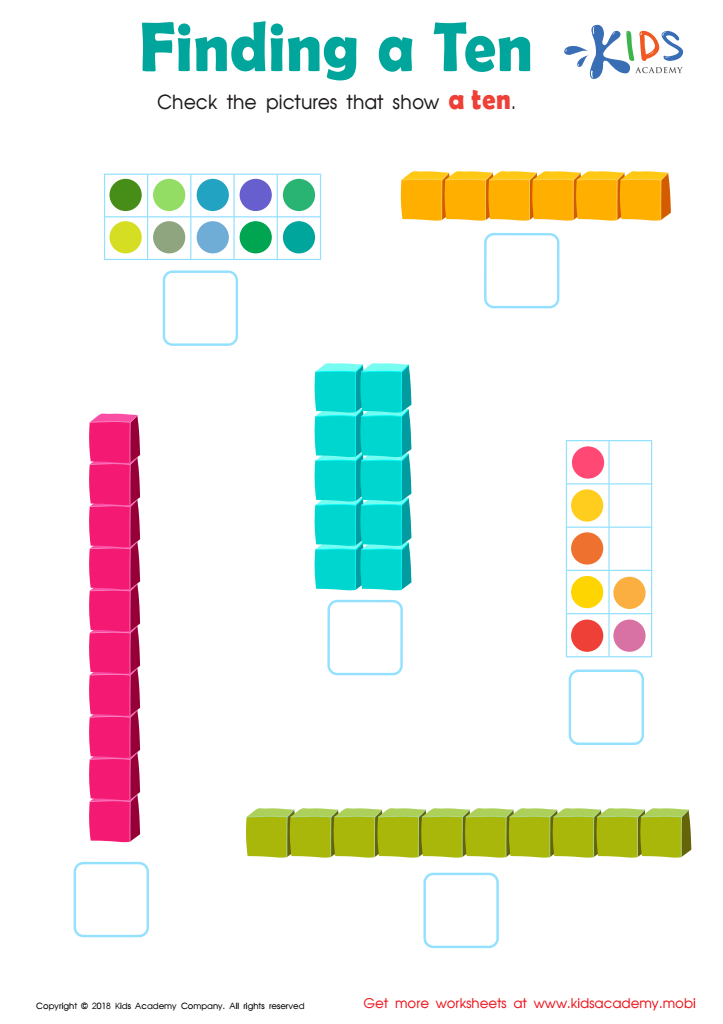
Finding a Ten Worksheet
 Assign to My Students
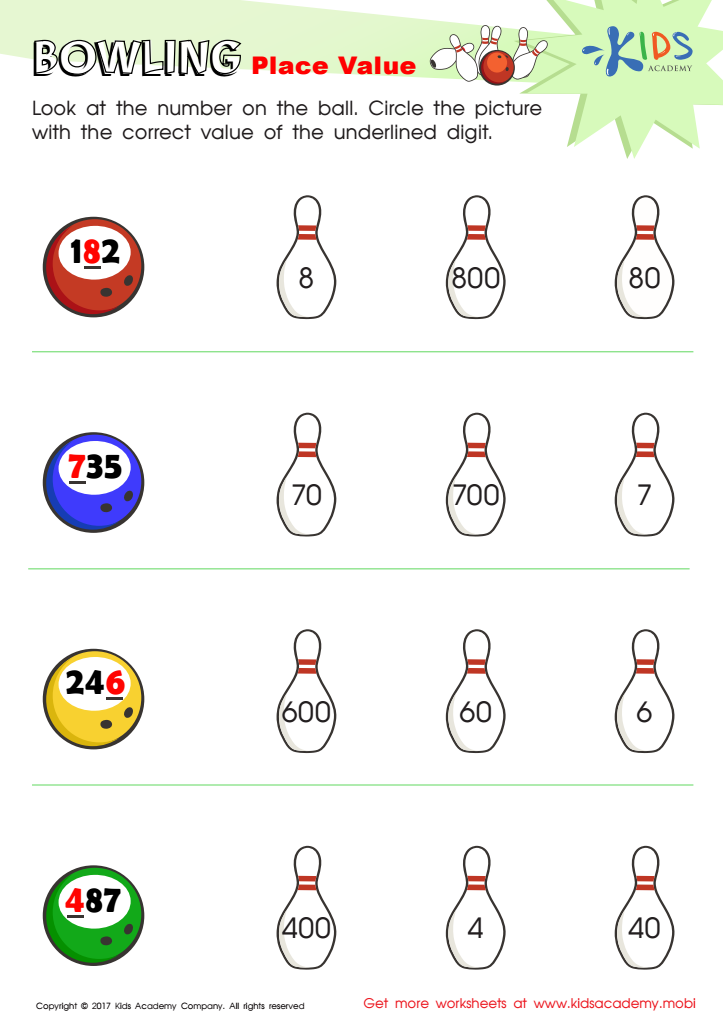
Place Value Worksheet
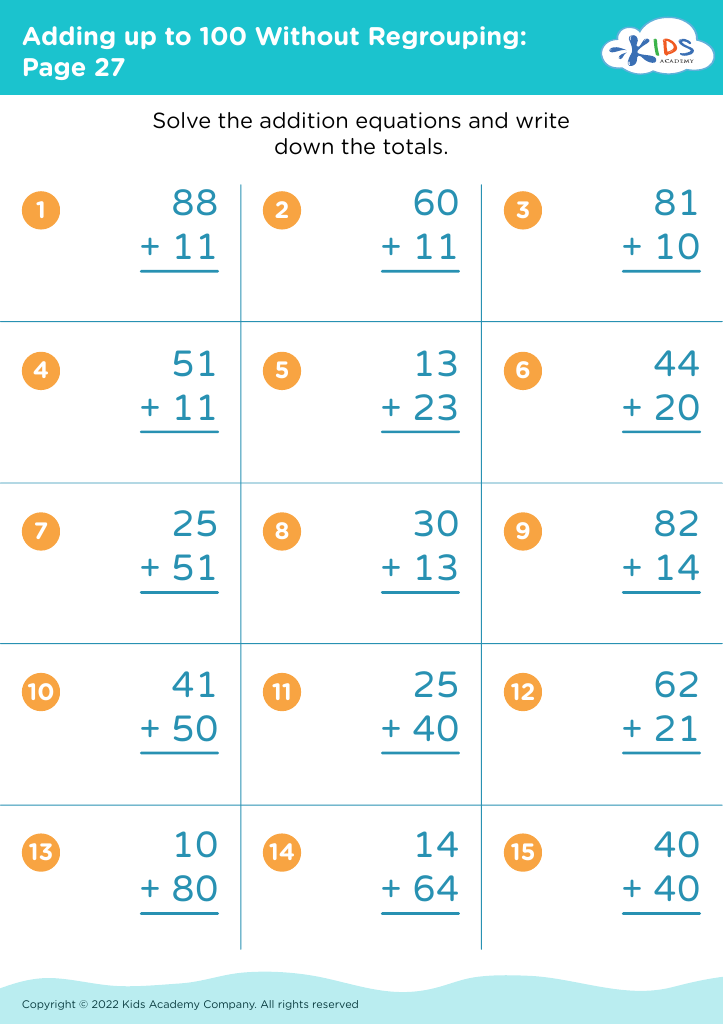
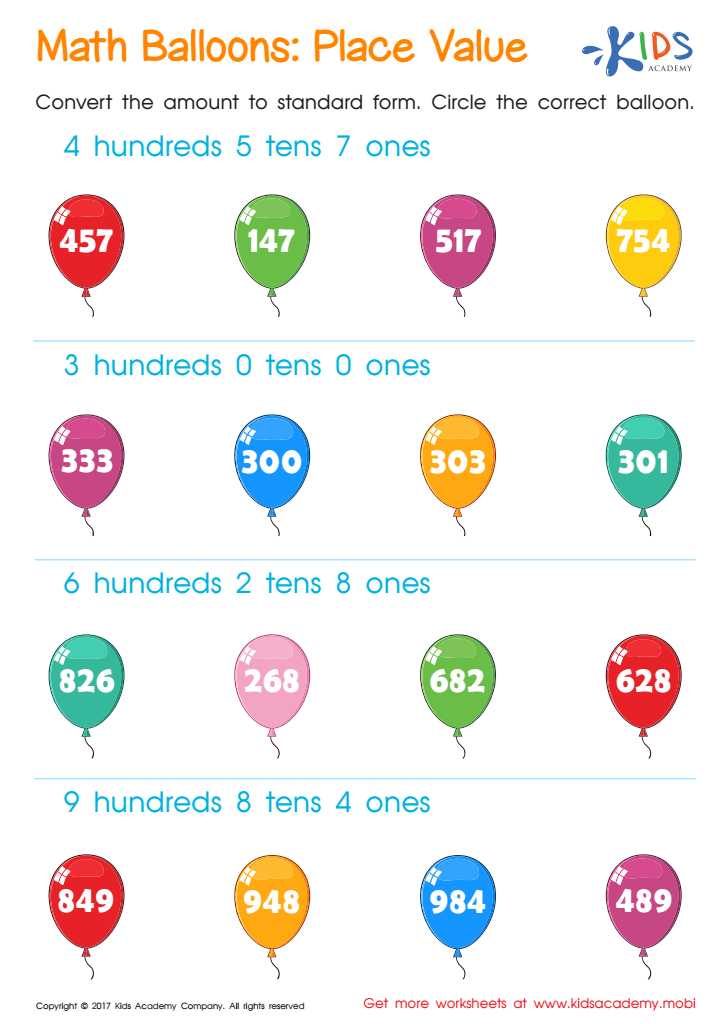
Place Value Printable Worksheet
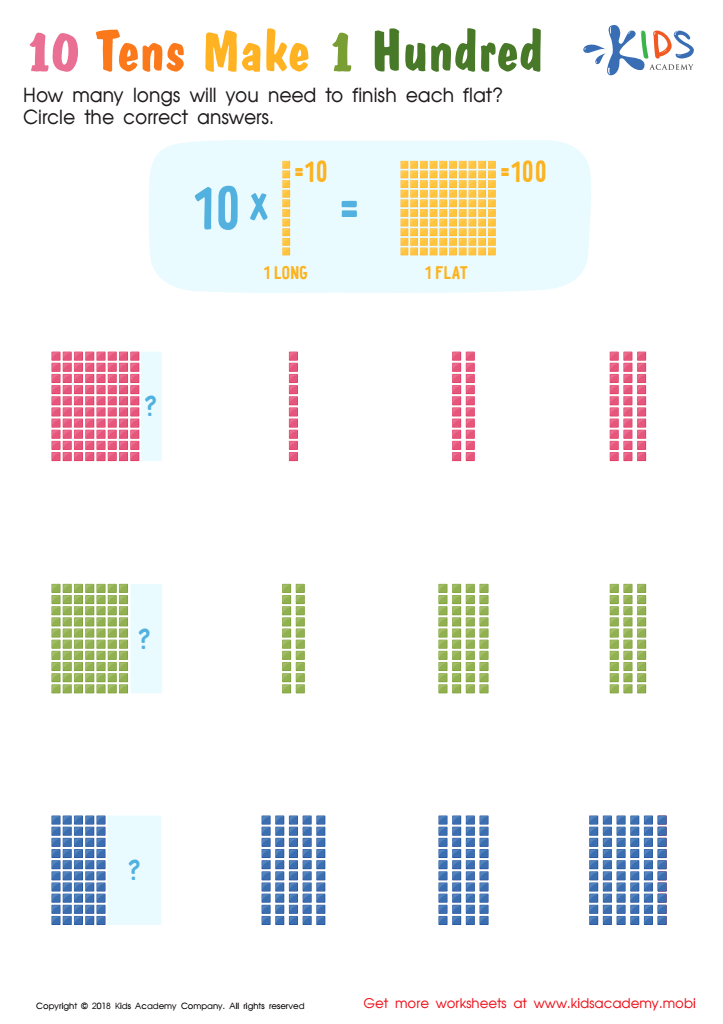
10 Tens Make 1 Hundred Worksheet








Recognizing number patterns is crucial for children aged 6-8 as it lays the foundation for essential mathematical skills and logical thinking. At this developmental stage, kids are naturally curious and primed to absorb new concepts, making it the perfect time to introduce patterns, a fundamental aspect of math and problem-solving.
Encountering patterns helps children make predictions and understand relationships between numbers, which are skills transferable across various subjects. For example, simple patterns can illustrate addition and subtraction, while more complex sequences can highlight multiplication and division. Early recognition of patterns encourages mental arithmetic, enhancing speed and accuracy.
Beyond math, recognizing patterns fosters critical thinking and analytical skills. When children identify and predict sequences, they learn to approach problems methodically, an ability essential for science, reading, and even art.
Additionally, patterns are integral to the natural world and daily life. Clocks, calendars, and seasons are all based on repetitive sequences, so understanding these can help children grasp time, predict events, and develop organizational skills.
Thus, incorporating pattern recognition in early education supports cognitive development, equipping children with the tools needed for academic success and for understanding the patterned world they live in. Parents and teachers who emphasize this area cultivate early math competence and holistic intellectual growth.








