Shape comparison Worksheets for Ages 6-8
3 filtered results
-
From - To
Unlock creative learning with our Shape Comparison Worksheets for ages 6-8! These engaging and educational worksheets are designed to help young learners distinguish and compare different shapes, enhancing their visual and spatial reasoning skills. Through a variety of fun activities, children will practice identifying shapes, understanding their properties, and recognizing similarities and differences. Perfect for both classroom and home use, these worksheets will make learning geometry enjoyable and interactive. Prepare your kids for a solid mathematical foundation with our expertly crafted, educational resources. Get ready for a delightful journey into the world of shapes!
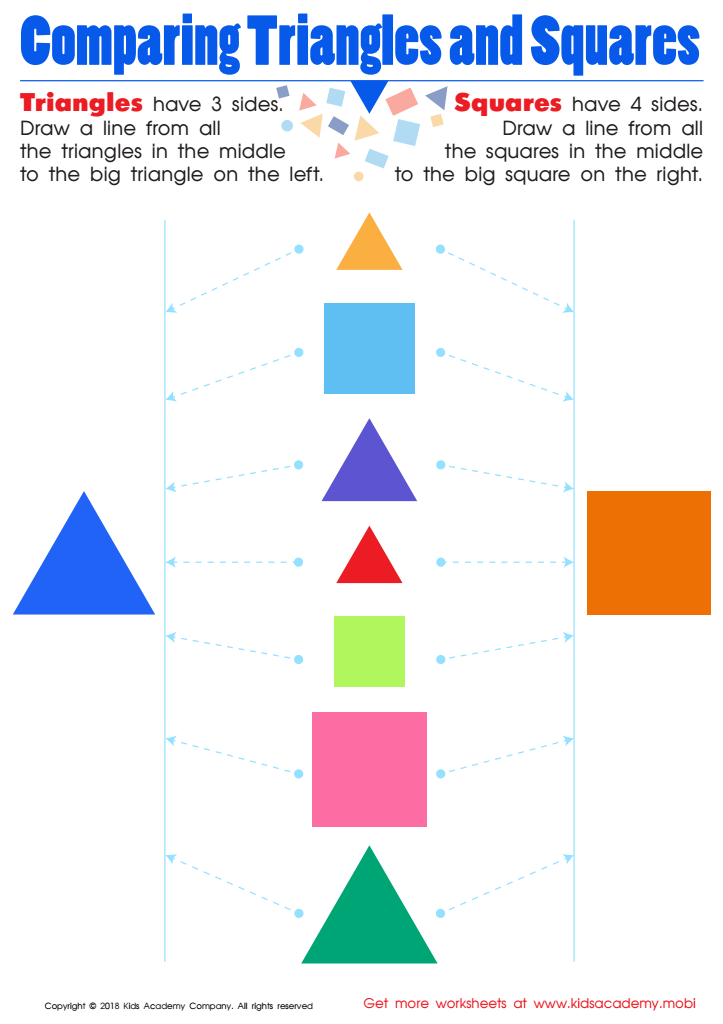
Comparing Triangles Squares Worksheet
 Assign to My Students
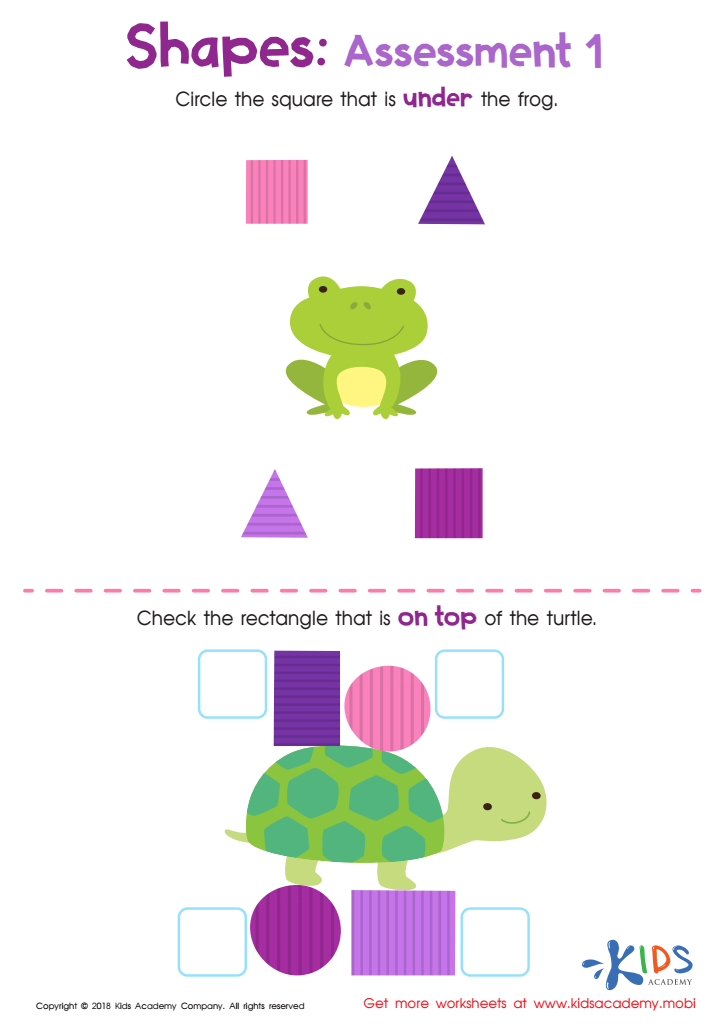
Geometry – Assessment 1 Worksheet
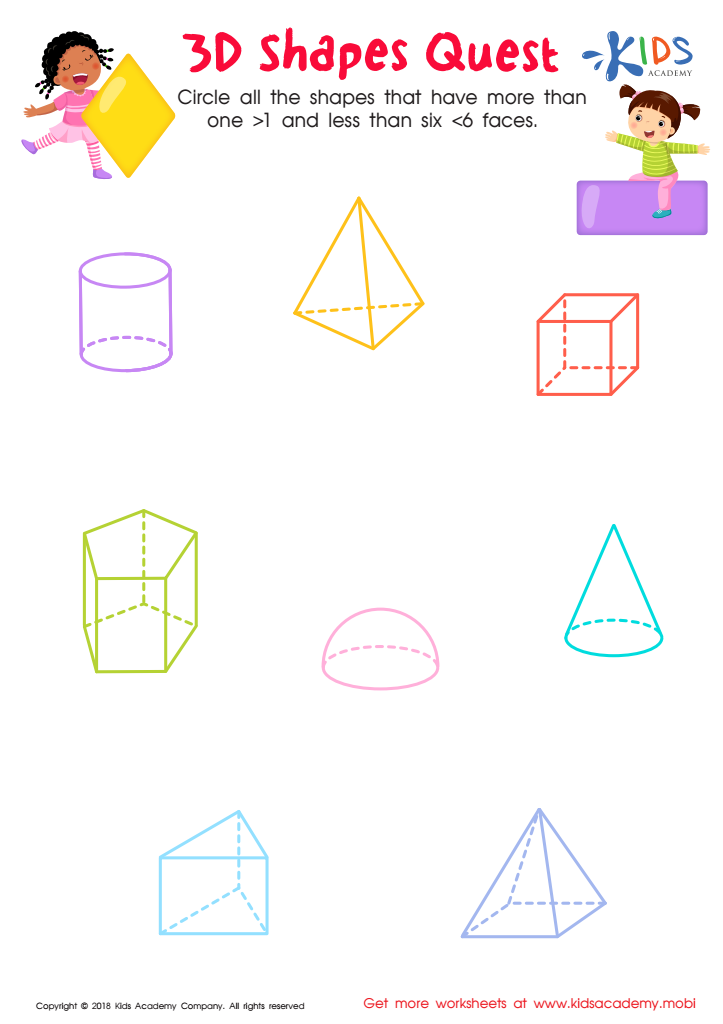
3D Shapes Quest Worksheet




.jpg)

Shape comparison is a fundamental aspect of early childhood education, particularly for kids aged 6-8. Understanding shapes and their attributes lays the groundwork for more advanced mathematical concepts and helps develop critical thinking and problem-solving skills.
Firstly, being able to compare shapes enhances spatial awareness. When children distinguish between circles, squares, and triangles, they learn to recognize and appreciate the different dimensions and properties of each shape. This visual discrimination is crucial for understanding more complex geometric principles encountered in later grades.
Moreover, shape comparison fosters analytical thinking and reasoning. Kids learn to compare and contrast shapes based on attributes like the number of sides, angles, and symmetry. These actions not only enhance their geometry skills but also translate to better abilities in reasoning and sorting information in various other subjects, from science to reading comprehension.
Another important aspect is the development of language skills. Describing shapes and their differences helps children articulate thoughts more precisely and expands their vocabulary with terms like "edges," "vertices," and "angles."
Shape comparison activities also often incorporate elements of play, making learning enjoyable while encouraging curiosity and creativity. Whether through puzzles, drawing, or interactive games, kids engage socially and collaboratively, developing teamwork and communication skills along the way.
Ultimately, paying attention to shape comparison helps build a robust cognitive foundation, setting the stage for future academic success.








