Shape Recognition Worksheets for Ages 6-8 - Page 6
127 filtered results
-
From - To
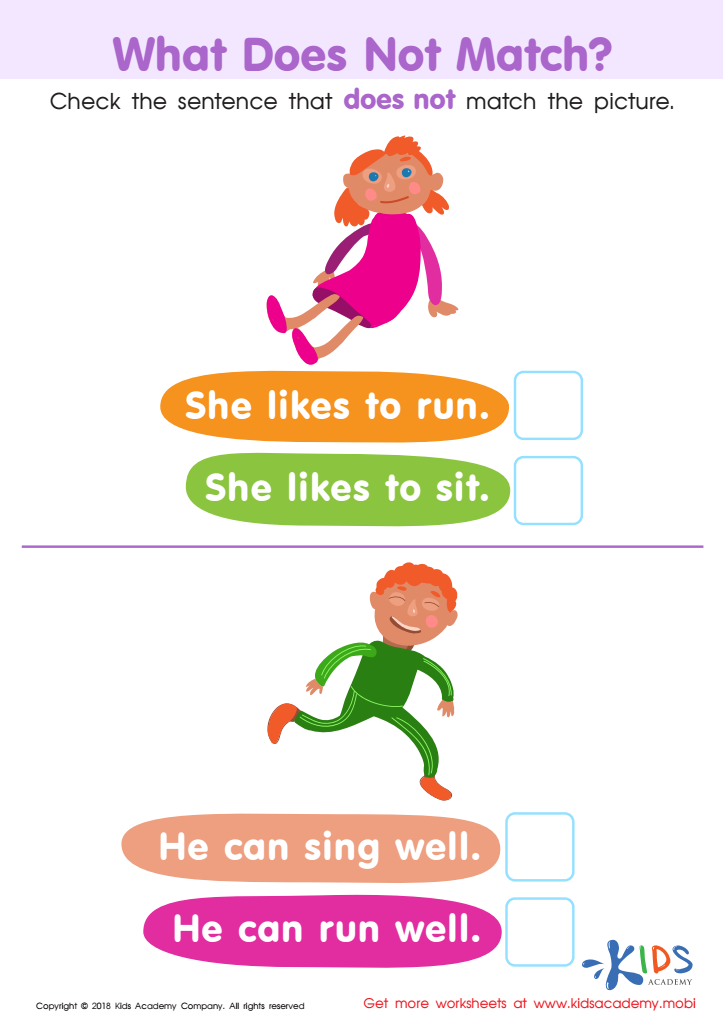
What Does Not Match? Worksheet
 Assign to My Students







Shape recognition is a foundational skill that significantly contributes to a child’s cognitive development and academic success, particularly for those aged 6 to 8. At this stage, children are expanding their understanding of the world and learning to identify and categorize different objects. Recognizing shapes helps develop spatial awareness, a critical component in subjects like math and science. For instance, a solid grasp of shapes aids in understanding geometry, as children learn to visualize and manipulate objects.
Moreover, shape recognition enhances children’s problem-solving skills and supports their ability to make connections between different ideas. It also plays a key role in early literacy, as many letters and numbers are based on simple shapes. Early exposure can facilitate quicker reading skills, as children learn to recognize and differentiate letters and numbers.
Additionally, engaging in shape-related activities fosters creativity, as children can use shapes in art and design projects. By encouraging shape recognition at this crucial developmental stage, parents and teachers lay the groundwork for lifelong learning. They also provide children with essential tools to navigate and interpret their environment, build confidence, and promote critical thinking skills, ultimately aiding their overall academic and personal growth.








