Sorting and categorizing Worksheets for Ages 6-8
3 filtered results
-
From - To
Discover our engaging "Sorting and Categorizing Worksheets" designed specifically for children aged 6-8. These worksheets help young learners develop essential cognitive skills, such as critical thinking and organization, by guiding them through fun exercises that promote sorting based on color, shape, size, and category. Ideal for classroom or home practice, our worksheets encourage children to explore their world, make connections, and enhance their problem-solving abilities. With vibrant graphics and relatable themes, your child will enjoy hours of educational fun while mastering these foundational skills. Dive into our curated collection and watch your child thrive in their learning journey!
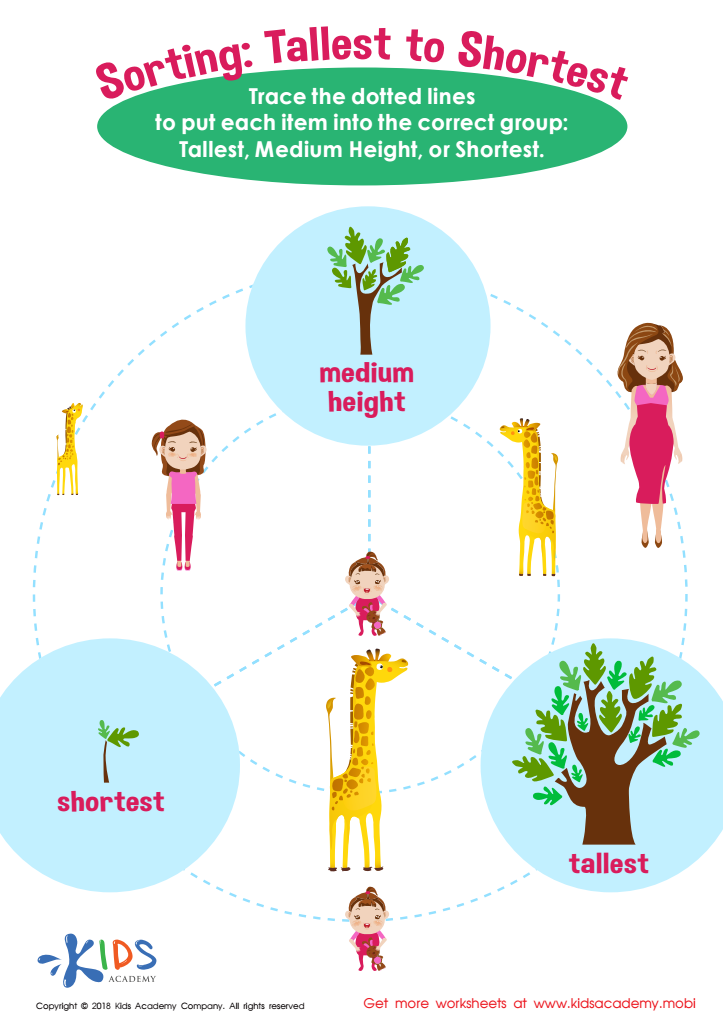
Sorting: Tallest to Shortest Worksheet
 Assign to My Students







Sorting and categorizing are crucial skills for children aged 6-8, and both parents and teachers should prioritize them. At this developmental stage, children are starting to make sense of the world around them, and sorting helps them understand relationships between different objects and ideas. When children categorize based on size, color, shape, or function, they learn how to identify similarities and differences, which enhances critical thinking and problem-solving abilities.
Furthermore, sorting activities boost language skills. As children articulate their reasoning for categorization, they're practicing vocabulary and improving communication. These activities also foster cognitive development as they engage in logical reasoning; for instance, understanding why certain objects belong together while others do not.
Social skills are also enhanced through sorting and categorizing when children collaborate during group activities. They learn important lessons in teamwork, negotiation, and respect for differing opinions. Lastly, incorporating sorting into everyday scenarios—like organizing toys or arranging books—makes learning fun and relevant, encouraging a lifelong love for discovery. By emphasizing sorting and categorizing, parents and teachers can support holistic development, pave the way for advanced learning, and equip children with foundational skills essential for academic success and daily life.








