Times table familiarity Worksheets for Ages 6-8
3 filtered results
-
From - To
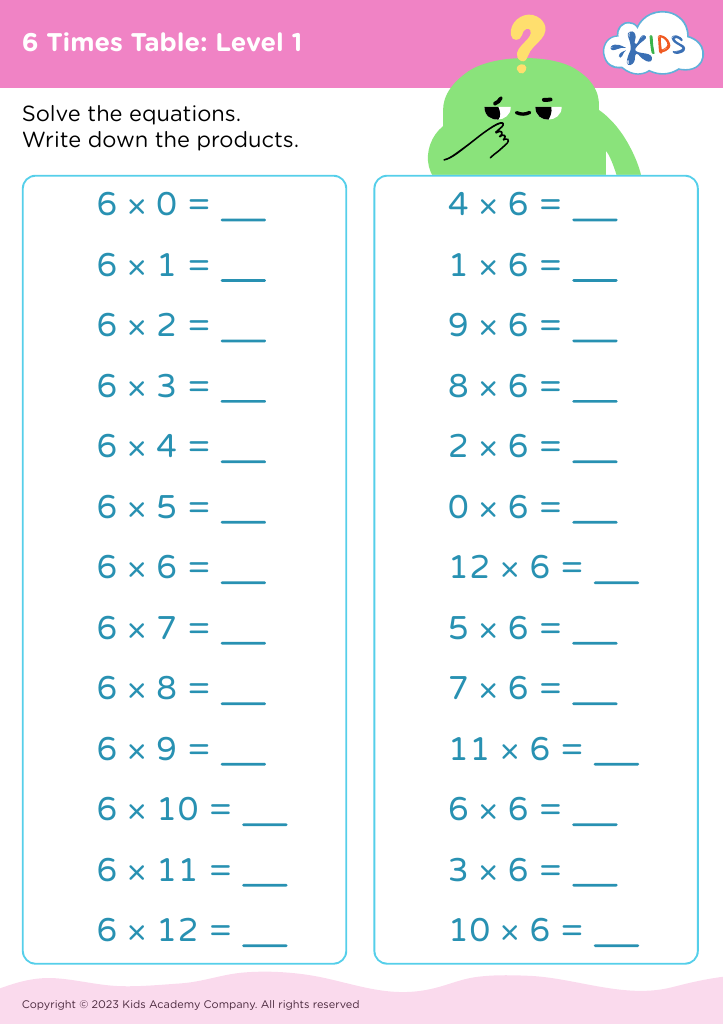
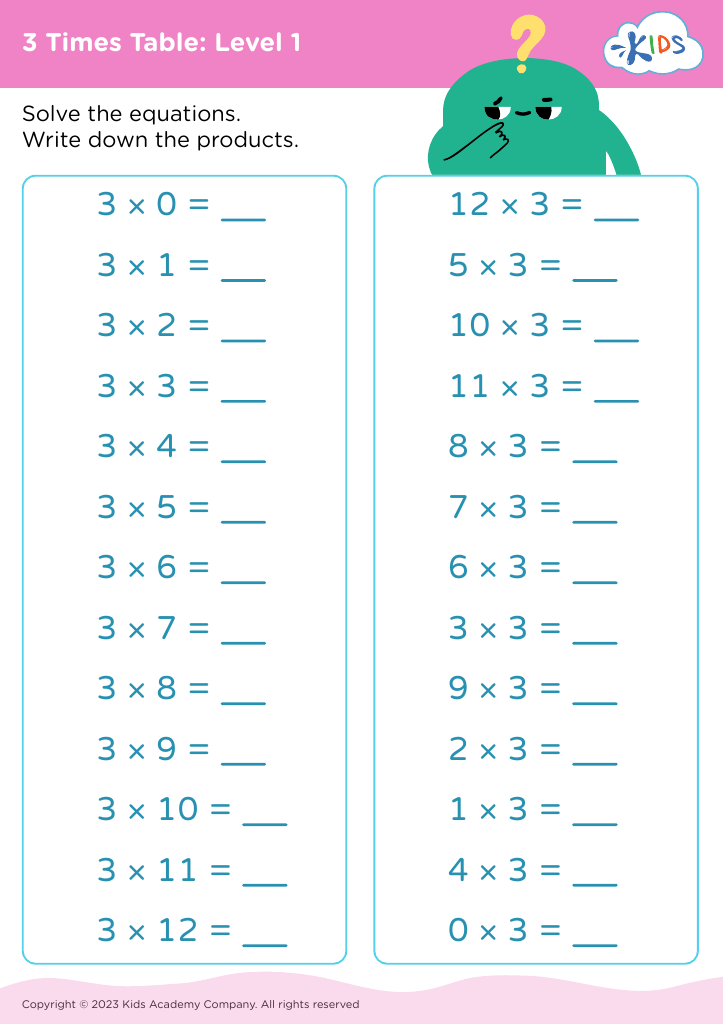
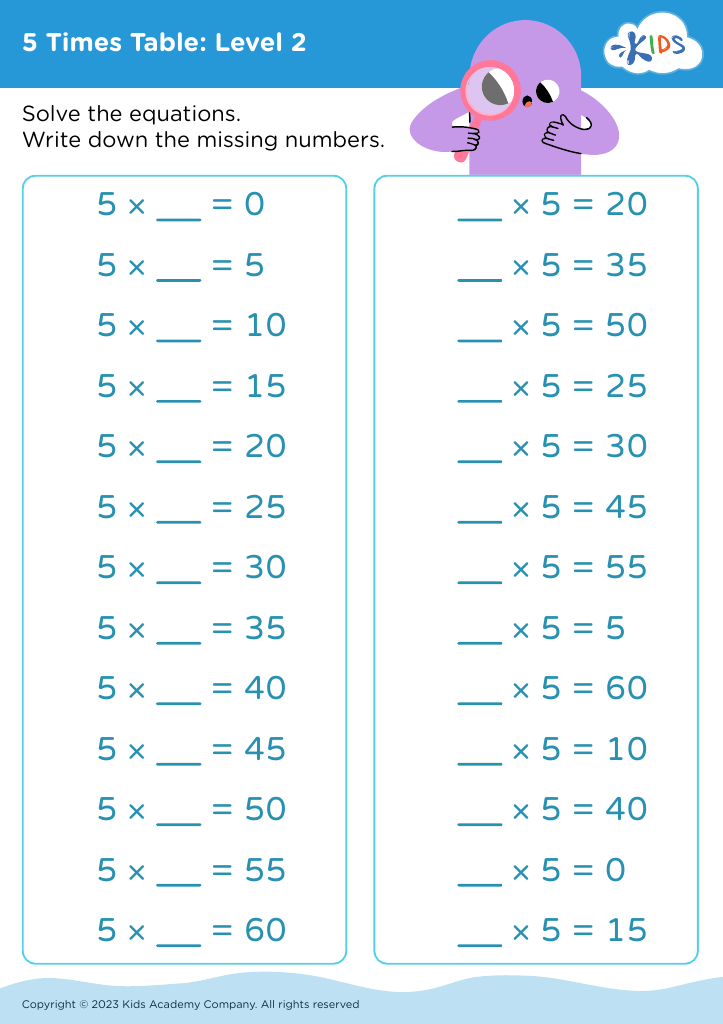
Boost your child's mathematical confidence with our engaging Times Table Familiarity Worksheets designed specifically for kids ages 6-8. These fun and interactive worksheets help young learners master basic multiplication through a variety of exercises, including fill-in-the-blanks, matching games, and quizzes. By practicing their times tables regularly, children develop essential math skills that form the foundation for future learning success. Our worksheets are colorful, appealing, and crafted to make learning enjoyable, ensuring that kids stay motivated. Perfect for use at home or in the classroom, these resources provide the systematic practice needed for children to excel in math!





Familiarity with times tables is crucial for children aged 6-8 for several reasons. First, mastering multiplication fosters a strong mathematical foundation, aiding in the understanding of more complex concepts, such as division, fractions, and algebra later on. When children have quick recall of their times tables, they become more confident in their mathematical abilities, which can lead to enhanced engagement and a positive attitude toward math as a whole.
Additionally, times tables serve as a practical tool in everyday life, from calculating expenses during shopping to measuring ingredients for cooking. Early proficiency can help children develop problem-solving skills, enhance critical thinking, and encourage them to tackle challenges without hesitation.
Moreover, struggling with multiplication can create frustration and anxiety, potentially leading to a negative perception of math. By emphasizing times table familiarity, parents and teachers can create a supportive learning environment that reduces these fears.
In summary, ensuring that children between ages 6-8 are comfortable with their times tables is essential, as it lays the groundwork for future mathematical success, strengthens daily problem-solving skills, and nurtures a lifelong appreciation for math. By prioritizing this skill, adults can help shape confident and mathematically proficient learners.








