Understand multiplication Worksheets for Ages 6-8
6 filtered results
-
From - To
Introduce your 6-8 year old to the world of multiplication with our engaging worksheets from Kids Academy! Designed to build a strong foundation, these worksheets offer fun and interactive ways to understand the basic concepts of multiplication. Through colorful exercises, your child will explore patterns, groupings, and visual aids that make learning enjoyable. Perfect for early graders, these resources help develop critical thinking and problem-solving skills. Empower your young learner to succeed in math with our expertly crafted multiplication worksheets. Join Kids Academy and take the first step towards mathematical mastery today!
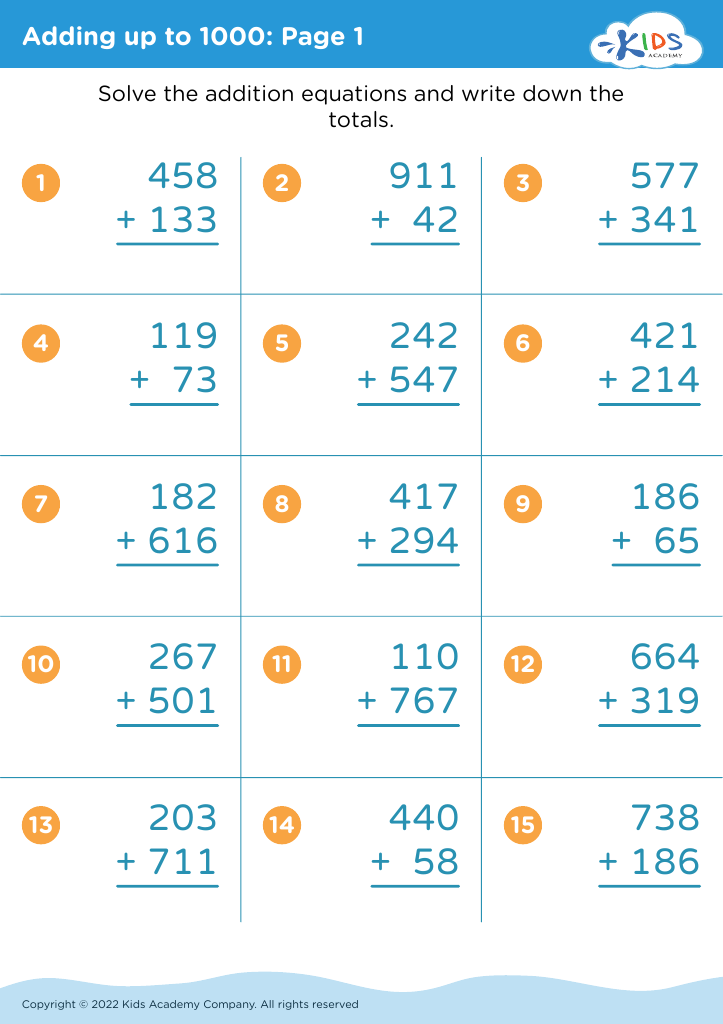
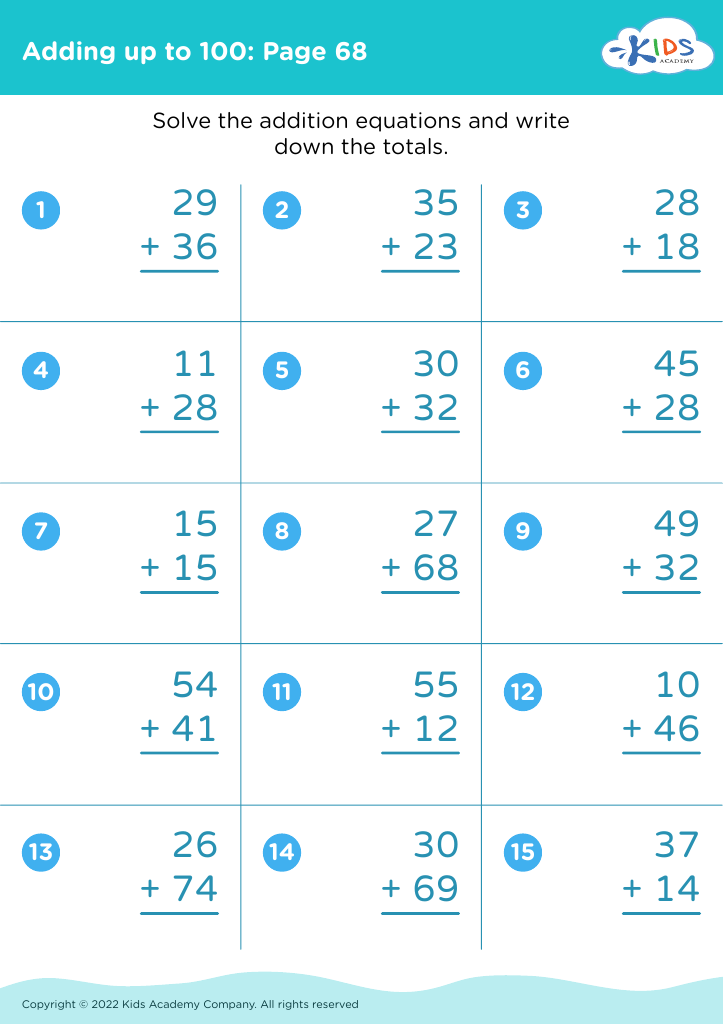



.jpg)




Understanding multiplication at an early age, particularly between the ages of 6 and 8, is crucial for several reasons. Firstly, it forms the foundation for more complex mathematical concepts that children will encounter later in their educational journey, such as division, fractions, and algebra. Grasping multiplication early helps children develop critical thinking and problem-solving skills.
Secondly, multiplication is a skill used in everyday life. Whether it’s calculating the total cost of multiple items, determining the number of items needed for a project, or encountering multiplication-related problems in sports or games, this fundamental skill is deeply integrated into daily activities.
Early mastery of multiplication also builds confidence in young learners. When children understand basic multiplication, they often feel more competent in their math abilities. This confidence can translate into a positive attitude toward math, encouraging them to tackle more challenging problems with enthusiasm and persistence.
Moreover, learning multiplication helps improve memory and cognitive function. Regular practice requires memorization of times tables, which enhances memory and recall capabilities. It allows children to see patterns and relationships between numbers, boosting their analytical skills.
Therefore, parents and teachers should prioritize helping children grasp multiplication early to set the groundwork for their mathematical education and enhance their overall cognitive development.








