Understanding democracy Worksheets for Ages 6-8
3 filtered results
-
From - To
Unlocking young minds with our "Understanding Democracy Worksheets for Ages 6-8" offers a fun and engaging way to introduce the concept of democracy to children. These thoughtfully designed activities will help kids grasp basic democratic principles, such as voting, fairness, and community involvement. Through interactive worksheets, colorful illustrations, and clear explanations, children will learn the importance of having a voice in decision-making processes. Perfect for classroom and at-home learning, these materials empower students to become active and informed citizens. Explore the world of democracy today with our exciting and educational worksheets!
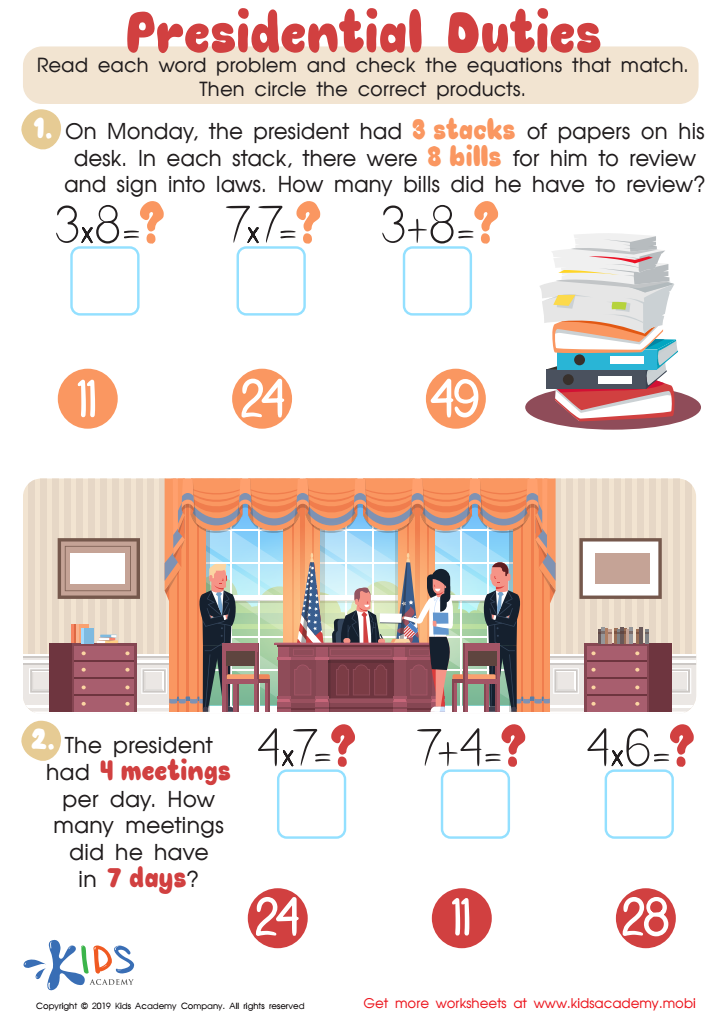
Presidential Duties Worksheet
 Assign to My Students
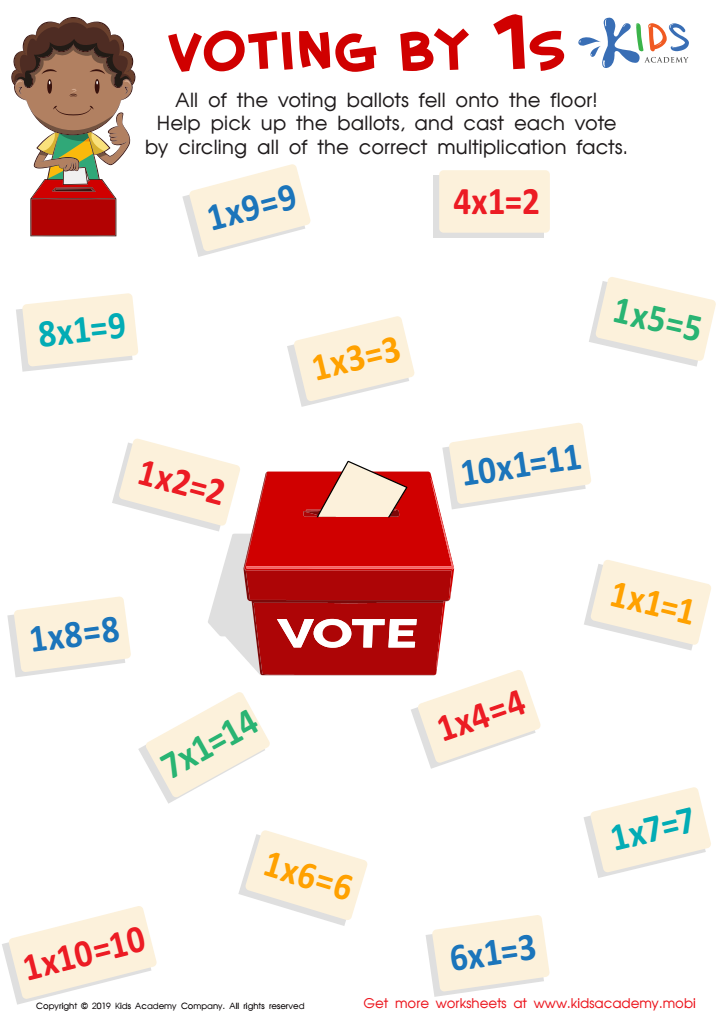
Voting by 1s Worksheet
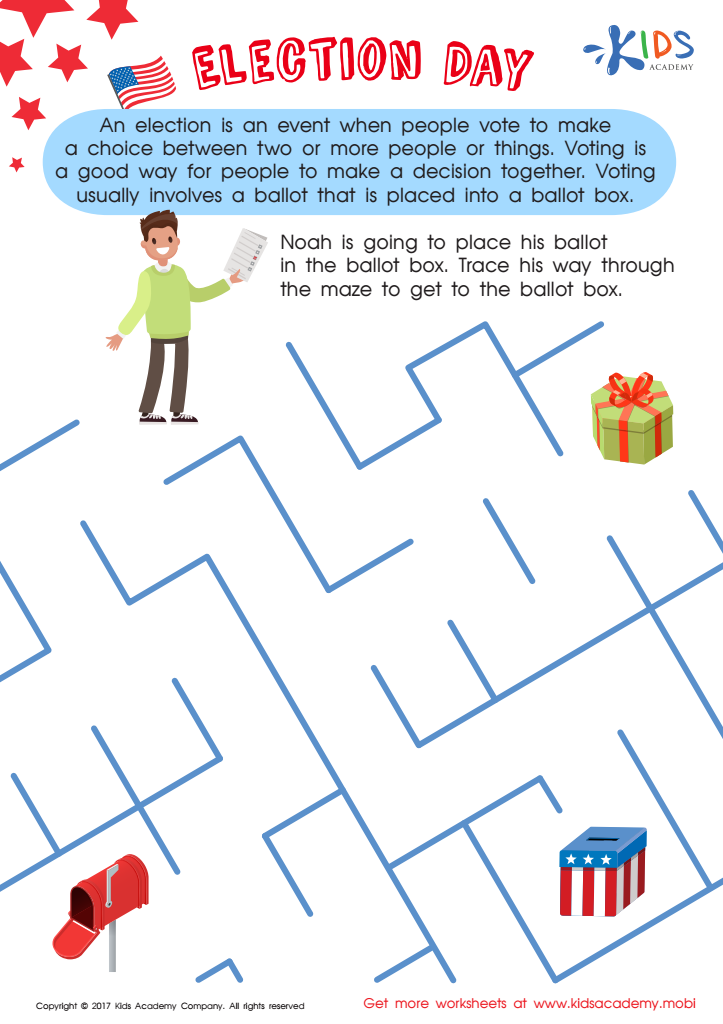
Election Day Worksheet








Understanding democracy at an early age helps children grasp the concepts of fairness, responsibility, and community participation. Parents and teachers who introduce democratic principles to children aged 6-8 foster critical thinking skills, enabling kids to express their opinions and listen to others—crucial aspects of personal development. At their developmental stage, children are naturally curious and open to learning about the world around them. By explaining how decisions are made in a democratic society, adults can help children appreciate diversity, empathy, and respect for different viewpoints.
Moreover, cultivating a sense of civic duty early on empowers children to understand their roles within the community and the wider world. They begin to see the impact of collective actions and the importance of contributing positively, whether at home, school, or in other social groups. This foundational understanding of democracy shapes more engaged, informed, and responsible future citizens.
In settings like classrooms, implementing democratic practices—such as allowing students to vote on certain decisions—can make the learning environment more inclusive and participative. This hands-on experience makes abstract democratic concepts more concrete. Ultimately, early education on democracy lays the groundwork for a lifetime of active involvement and informed decision-making, essential components of a healthy, functioning society.








