Understanding force Worksheets for Ages 6-8
3 filtered results
-
From - To
Explore our "Understanding Force Worksheets" designed for children aged 6-8! These engaging worksheets introduce young learners to basic concepts of force through fun activities and real-life examples. Perfect for classroom and home use, our resources help kids grasp important scientific principles, such as push and pull, while enhancing their critical thinking and problem-solving skills. Through interactive exercises, coloring pages, and puzzles, children will discover the fascinating world of physics in a playful way. Empower your child’s learning journey with our thoughtfully crafted worksheets that make understanding force exciting and accessible! Transform playtime into a valuable learning experience today!
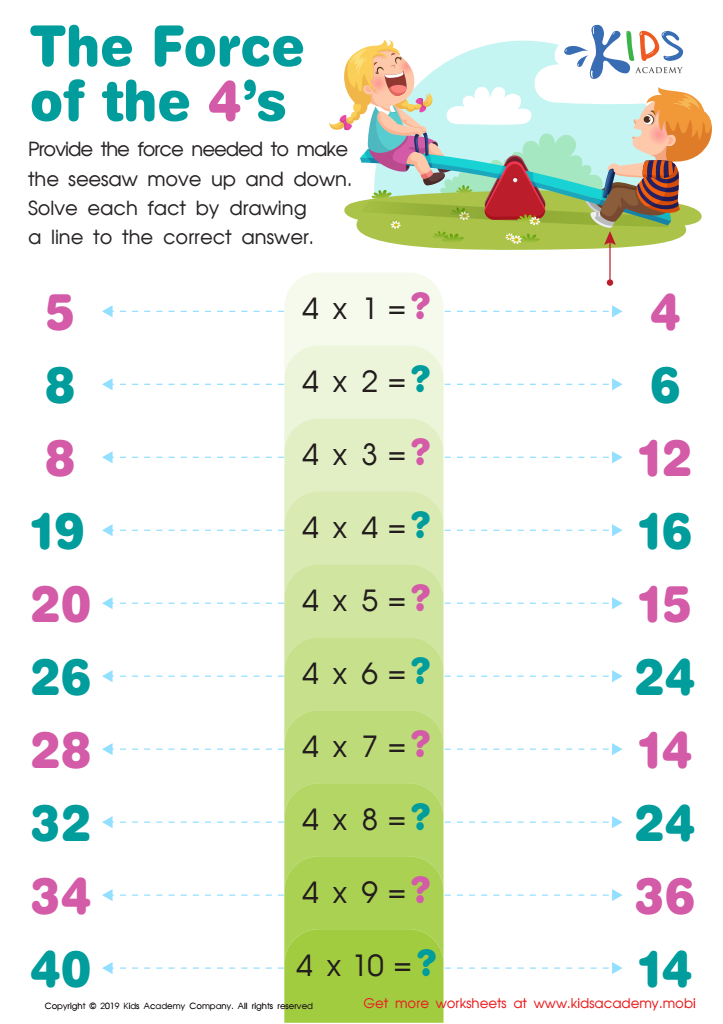
The Force of the 4's Worksheet
 Assign to My Students
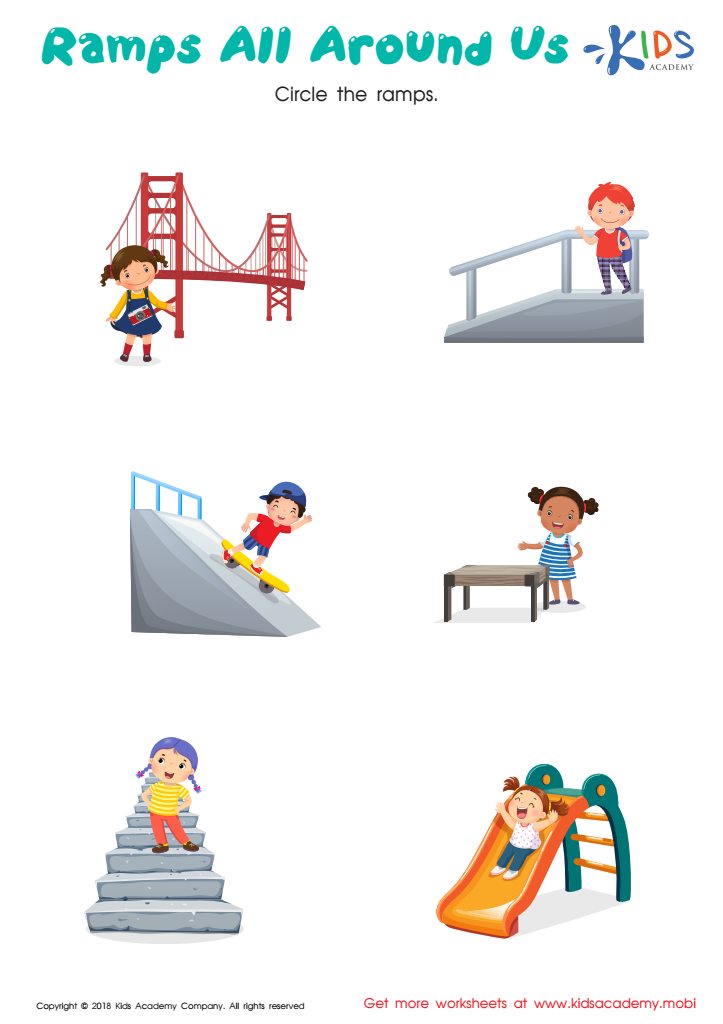
Ramps All Around us Worksheet
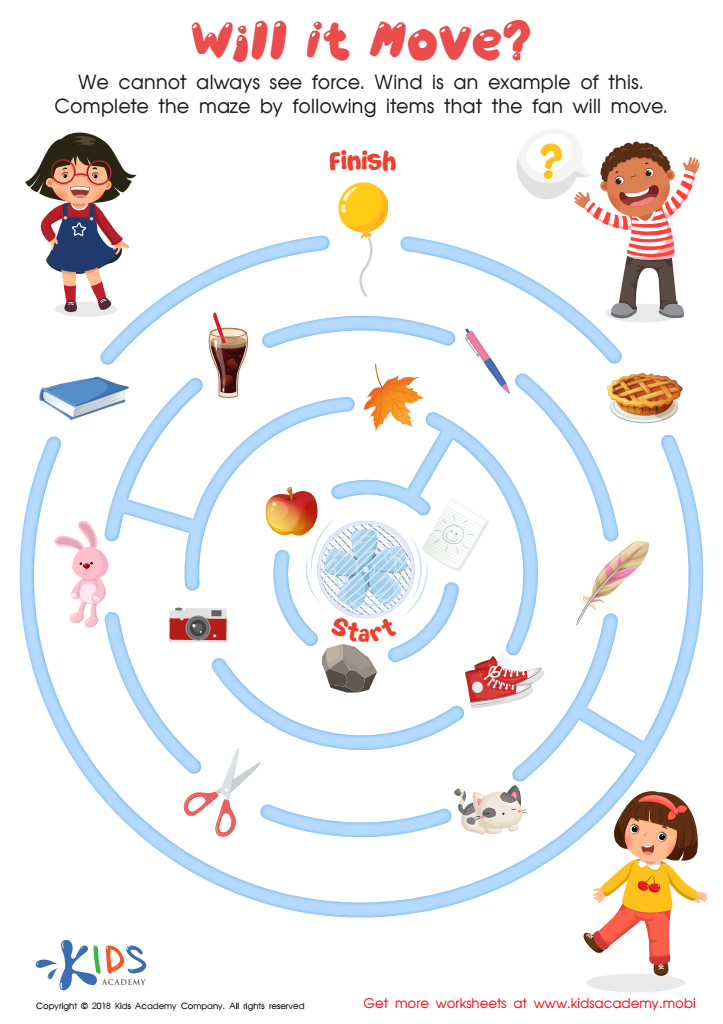
Will it Move? Worksheet







Understanding force is critical for children aged 6-8, as it lays the foundation for their comprehension of the physical world around them. At this age, children are naturally curious and inquisitive about how things move and interact. By learning about force, they grasp essential concepts like push and pull, which are fundamental to understanding more complex scientific principles later in life.
Knowledge of force helps children engage with their environment to explore everyday phenomena, from why a ball rolls to how cars move. This can stimulate active participation in hands-on experiments that make learning enjoyable and memorable. When parents or teachers emphasize understanding force, they can encourage children to ask questions, make observations, and develop critical thinking skills.
Moreover, learning about force introduces children to concepts of measurement, quantities, and relationships, which are aligned with mathematical thinking. This interdisciplinary learning not only supports scientific literacy but also promotes reasoning and problem-solving abilities.
Lastly, nurturing an understanding of force instills a sense of wonder about science and encourages a lifelong interest in discovery. By caring about these foundational concepts, parents and teachers help cultivate informed, curious, and capable young learners who can navigate and appreciate the world around them.








