Understanding greater/less than Worksheets for Ages 6-8
4 filtered results
-
From - To
Explore our engaging "Understanding Greater/Less Than Worksheets" designed for children aged 6-8! These worksheets provide a fun and interactive way for early learners to grasp the concepts of comparison in mathematics. Our carefully crafted activities help students identify greater than, less than, and equal to symbols, enhancing their critical thinking skills. Through a variety of exercises—including number comparisons, visual aids, and real-world applications—children can solidify their understanding while building confidence in their mathematical abilities. Perfect for classroom use or at-home practice, these worksheets will make learning about numbers both enjoyable and effective. Start your child's math journey today!
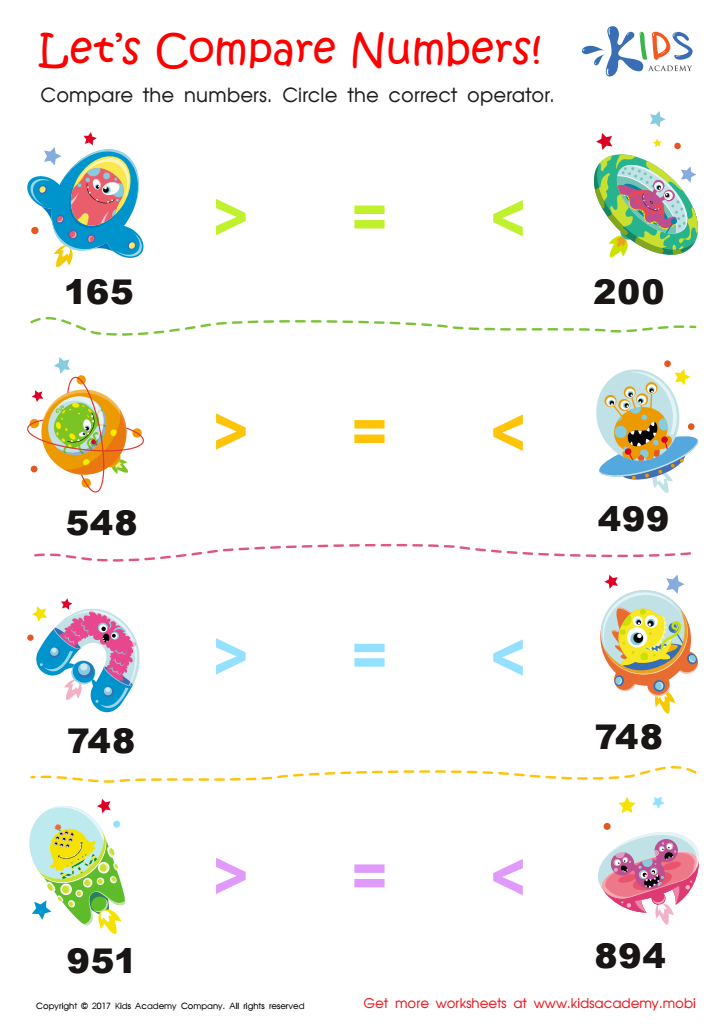
Comparing Numbers Worksheet for 2nd Grade
 Assign to My Students
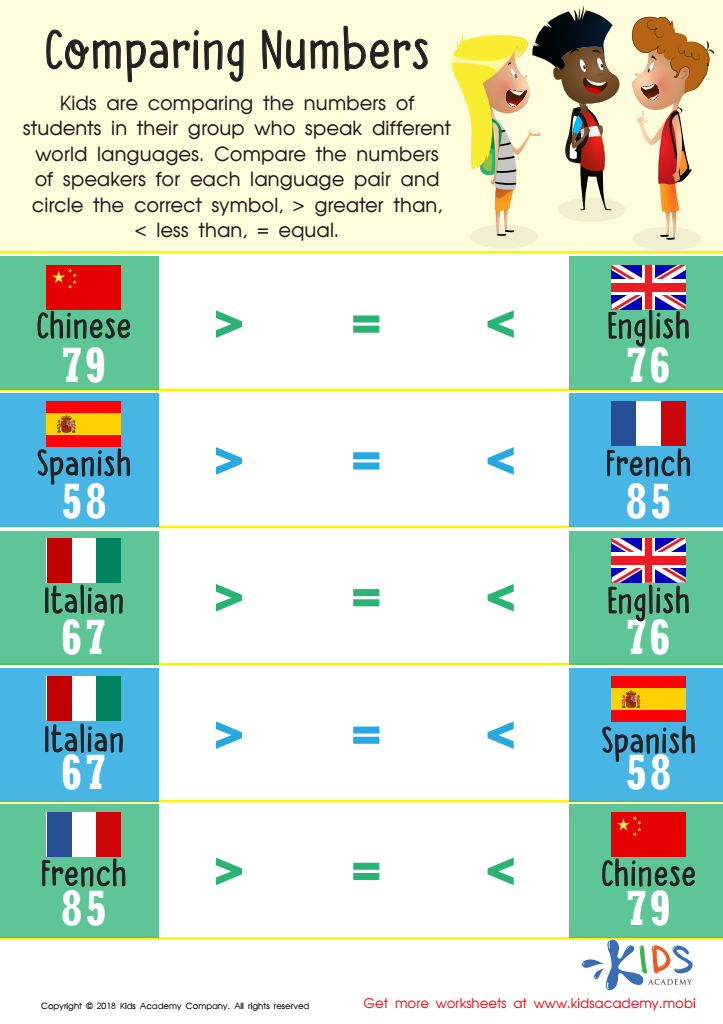
Comparing Numbers Worksheet for 1st Grade
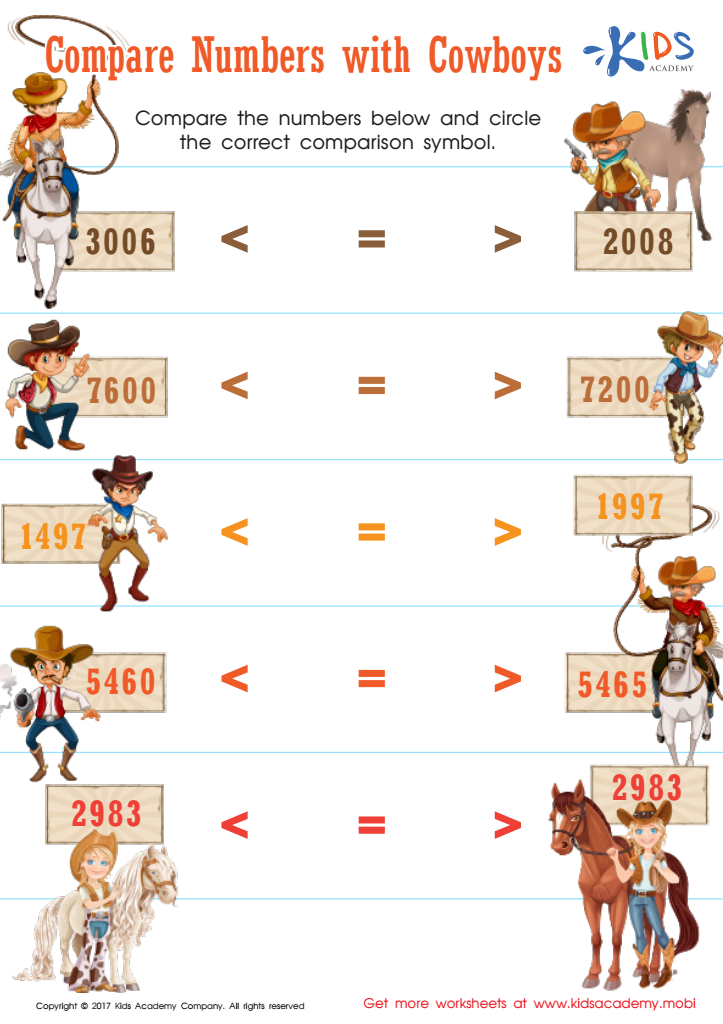
Compare Numbers Worksheet for 3rd Grade




.jpg)



Understanding greater than and less than concepts is essential for children ages 6-8 as it forms the foundation for their mathematical reasoning. At this stage, children are developing critical thinking and problem-solving skills, and grasping these concepts is crucial for their academic progression.
Firstly, mastery of these comparative concepts helps young learners with basic arithmetic, enabling them to understand number lines, basic operations, and how to compare quantities or values. It encourages them to develop number sense, which is vital for advanced mathematics later on.
Secondly, applying the greater than and less than concepts fosters analytical skills. Children learn to classify information, enabling them to make informed decisions—a skill that goes beyond mathematics.
Moreover, understanding these concepts assists children not only in academics but also in real-life situations, such as understanding temperature scales, evaluating scores in games, or making budget decisions in allowance management.
Lastly, consistent engagement in these concepts supports parental and teacher interaction, enriching the child’s learning experience and building their confidence in mathematics. In summary, recognizing the significance of greater than and less than at this young age ultimately contributes to a child's overall cognitive and emotional development.








