Understanding grouping Worksheets for Ages 6-8
3 filtered results
-
From - To
"Understanding Grouping Worksheets for Ages 6-8" introduces young learners to essential math concepts through fun and engaging activities. Designed for children between first to third grades, these worksheets help students grasp the idea of grouping objects to simplify counting and solve basic arithmetic problems, like addition and subtraction. With colorful visuals and age-appropriate exercises, Kids Academy ensures that kids develop critical thinking skills and a solid foundation in mathematics. By turning learning into an exciting adventure, these worksheets are ideal for both classroom and at-home practice, supporting educational development in an enjoyable and effective way.
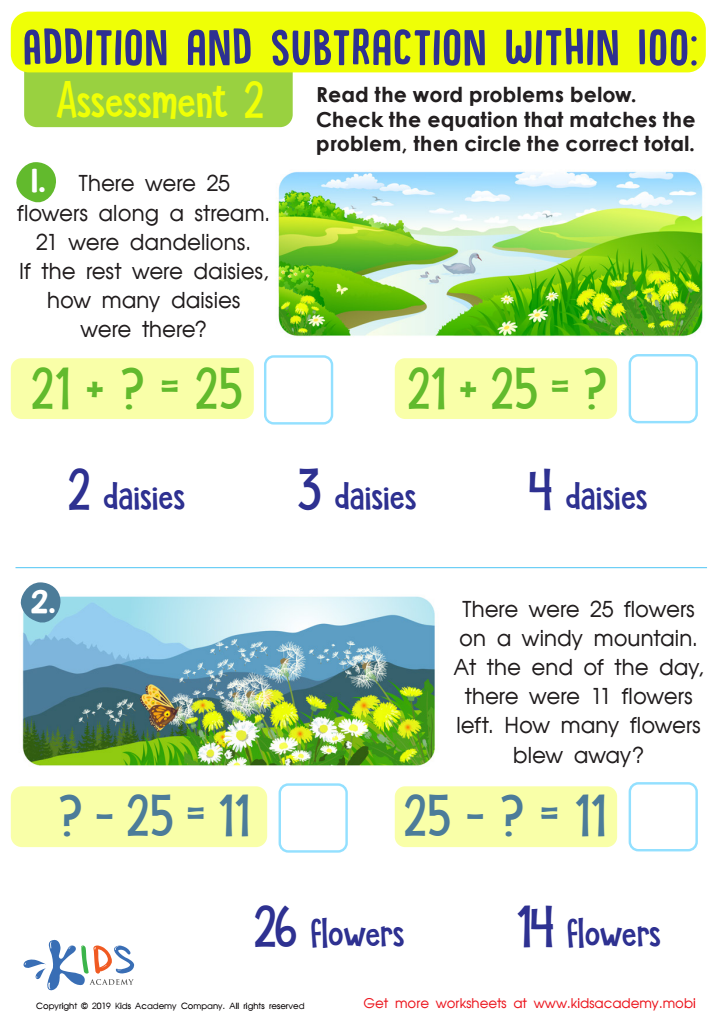
Assessment 2 Math Worksheet
 Assign to My Students
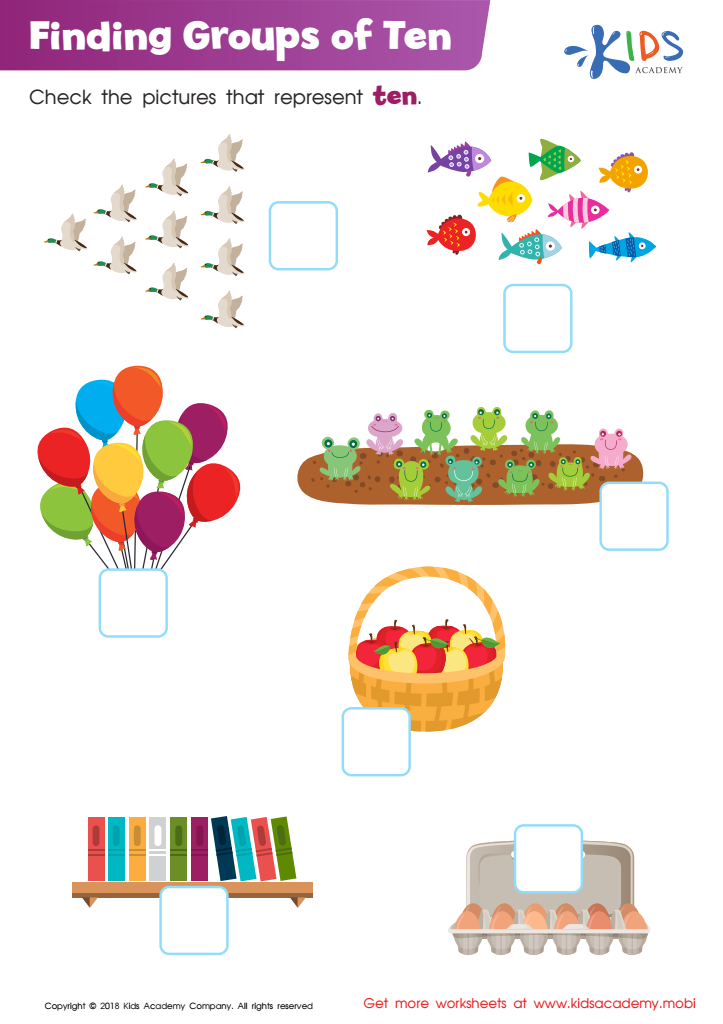
Finding Groups of Ten Worksheet
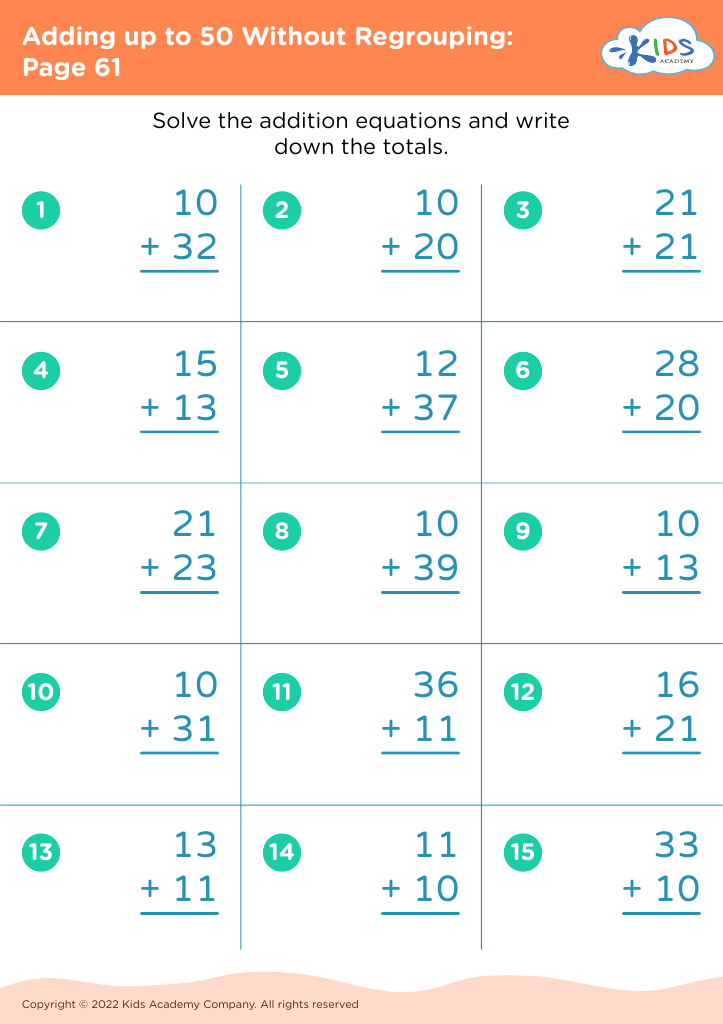







Understanding grouping for children aged 6-8 is crucial because it forms the foundation for essential mathematical concepts they will encounter later. When children grasp grouping, they learn to organize and categorize objects, which enhances their problem-solving skills, critical thinking, and cognitive development. These skills are not just important for math, but for subjects across the curriculum and real-life situations.
For parents, fostering an understanding of grouping builds a child's confidence and enthusiasm for learning. It primes them for financial literacy by introducing basic ideas of addition, subtraction, and multiplication, which are applied when handling money. Engaging in grouping activities, such as sorting toys or counting snacks, provides opportunities for quality, educational bonding time.
Teachers, on the other hand, leverage grouping to introduce base-ten systems, place value, and early arithmetic. These are fundamental for understanding more complex operations such as carrying over numbers in addition and borrowing in subtraction. Grouping also aids in classroom management by creating an organized learning environment and allowing the teacher to tailor instruction to meet varying student needs.
Additionally, understanding grouping can improve a child's ability to work collaboratively and follow multi-step instructions, important ingredients for future academic and social success. Ultimately, when children from 6 to 8 years old grasp grouping concepts, they build a toolkit of skills that will support their academic journey and everyday problem-solving.








