Understanding life cycles Worksheets for Ages 6-8
8 filtered results
-
From - To
Explore our engaging "Understanding Life Cycles Worksheets" designed for children ages 6-8. These worksheets are crafted to help young learners grasp the fascinating concept of life cycles in nature. Through a variety of fun and interactive activities, children will discover the stages of growth in plants and animals. Our resources promote critical thinking as students identify and match life cycle stages, enhancing their observational skills. Perfect for classroom or home practice, these worksheets encourage a love for science and foster an appreciation of the natural world. Dive into learning and watch your students thrive as they decode the wonders of life cycles!
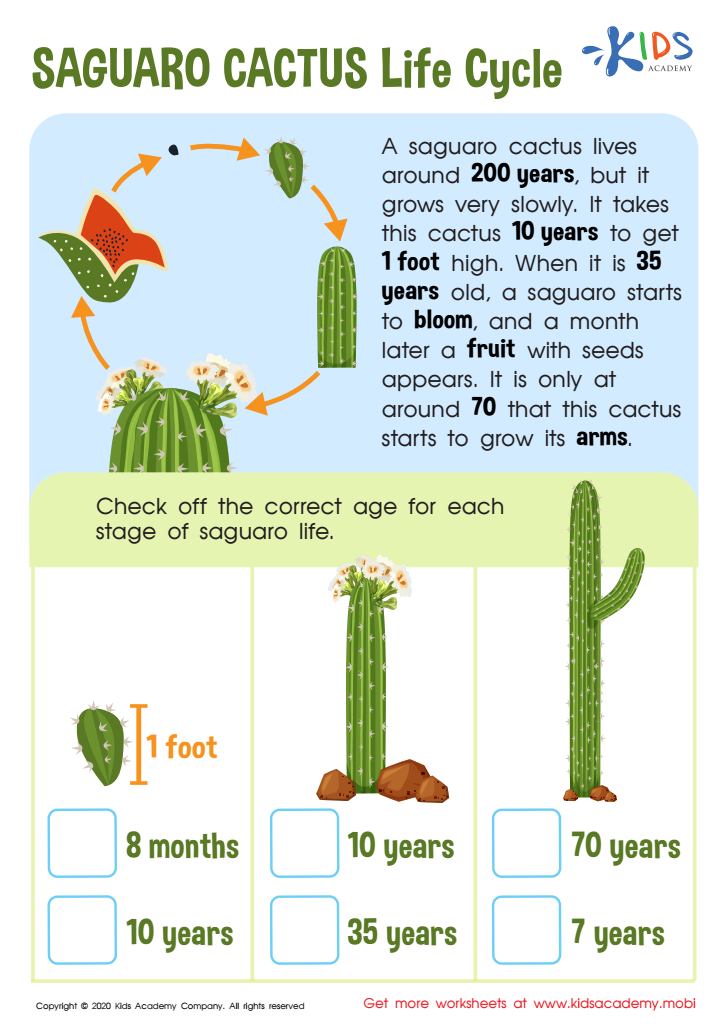
Saguaro Cactus Life Cycle Worksheet
 Assign to My Students
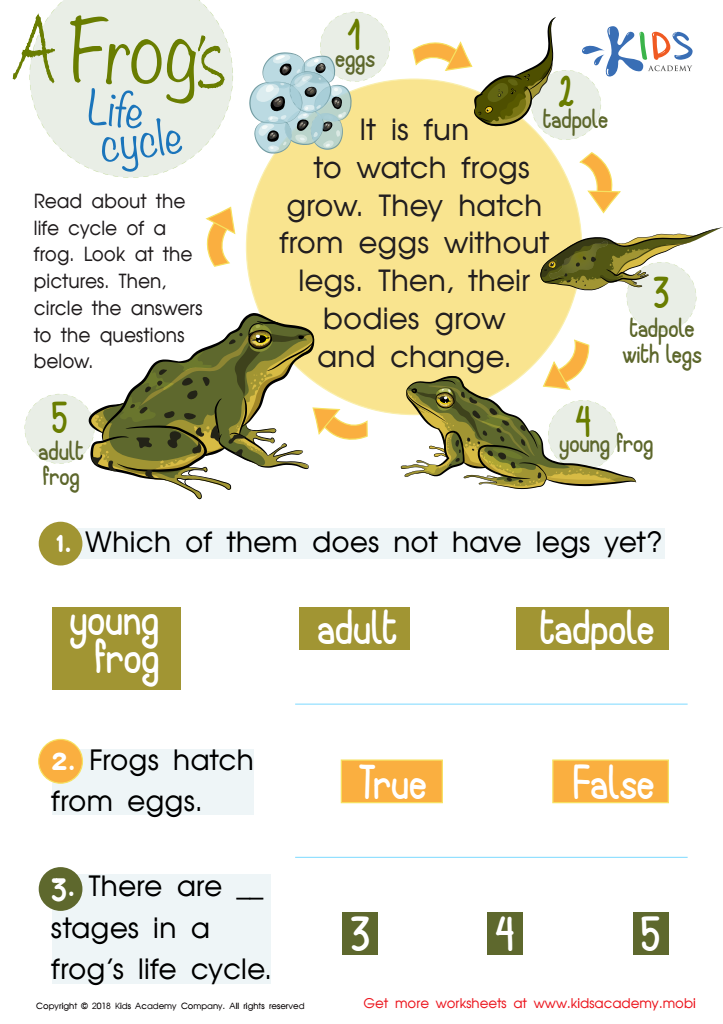
A Frog’s Life Cycle Worksheet
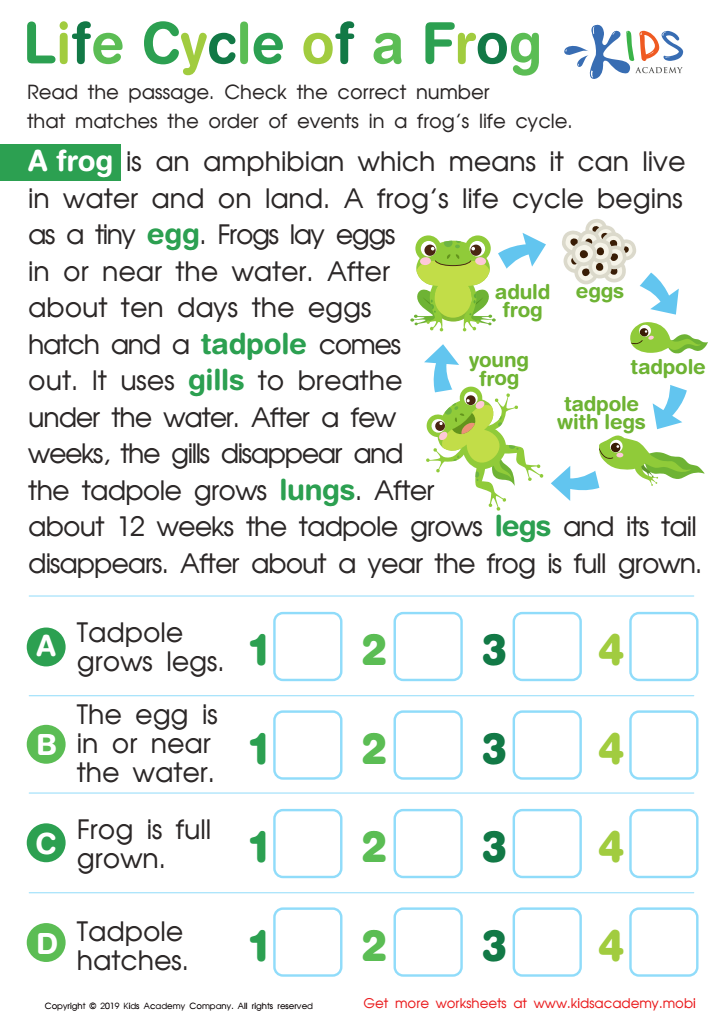
Life Cycle of a Frog Worksheet
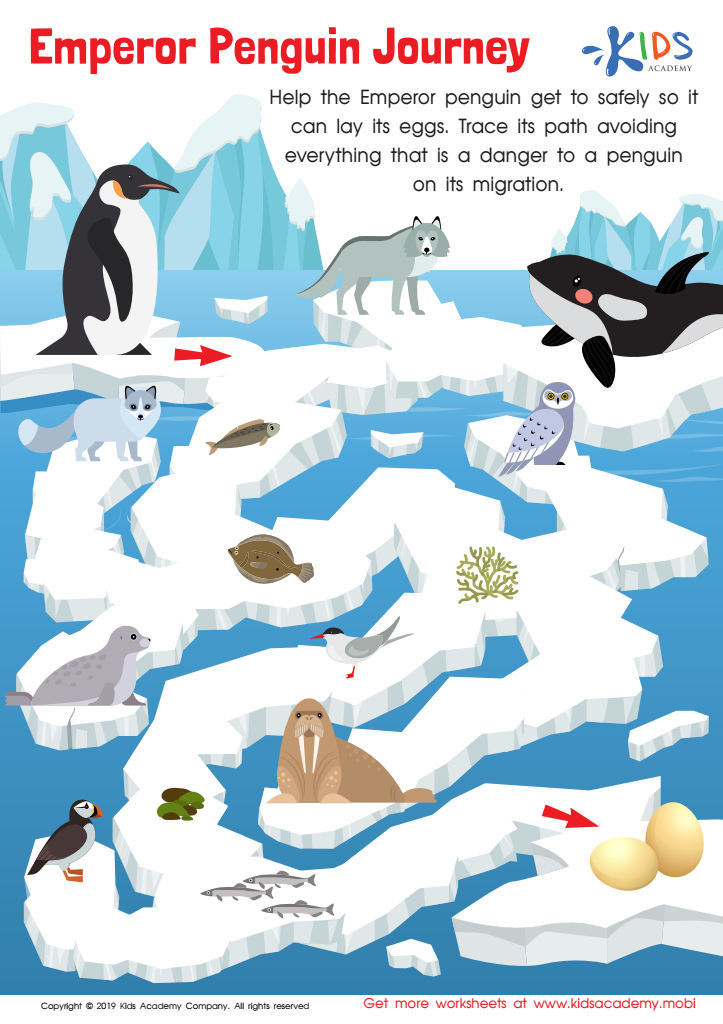
Emperor Penguin Journey Worksheet
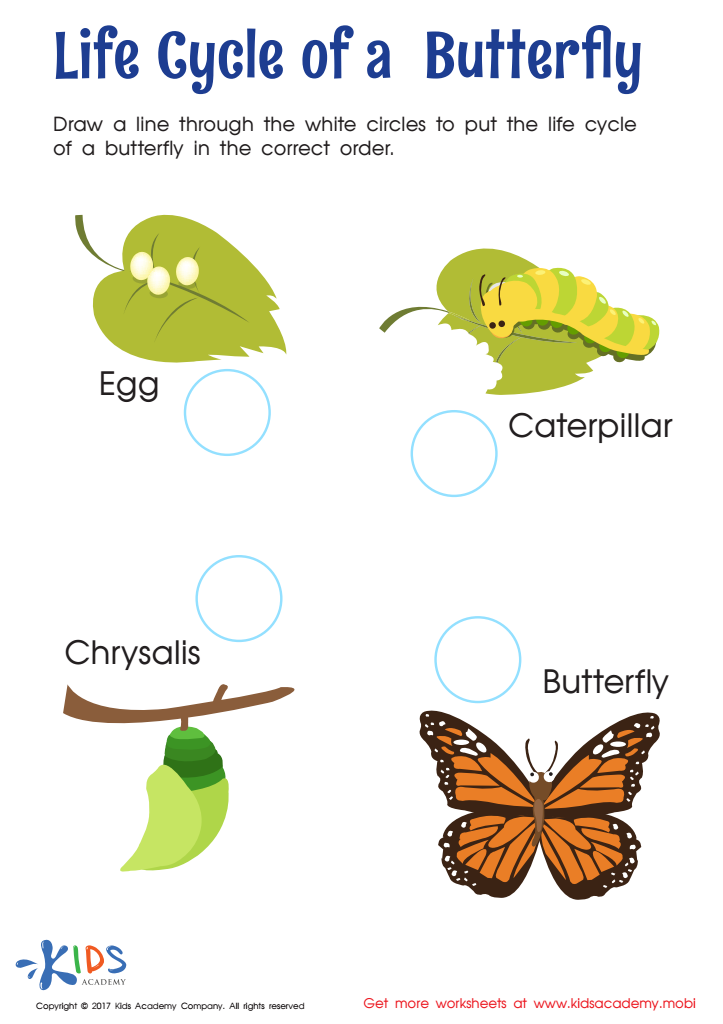
Life Cycle of Butterfly Worksheet
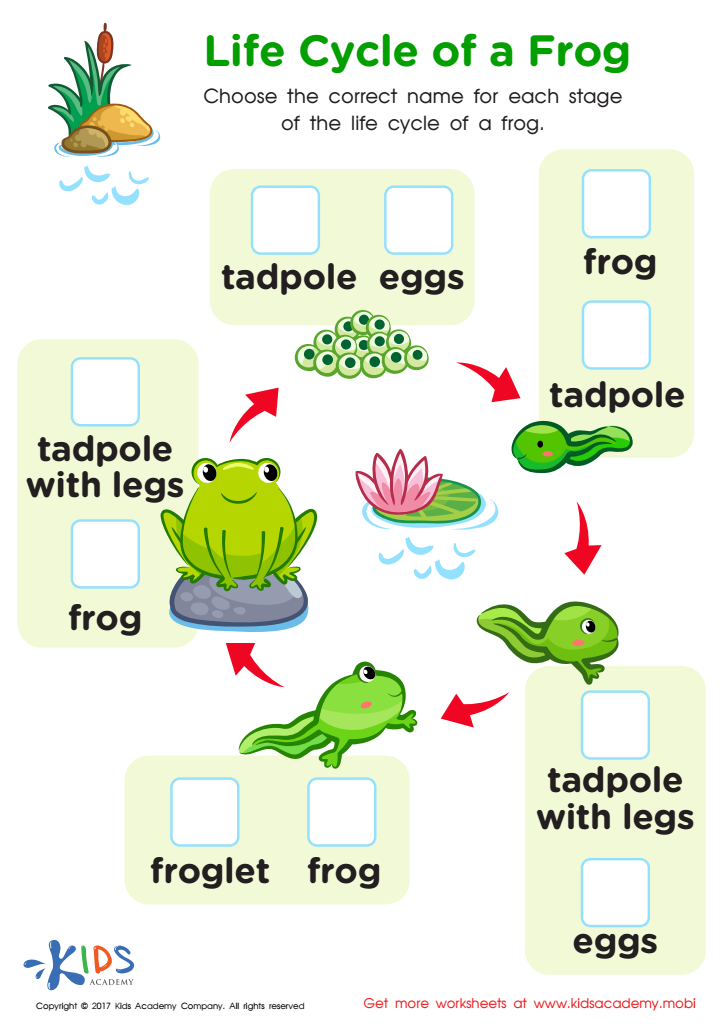
Life Cycle Frog Printable
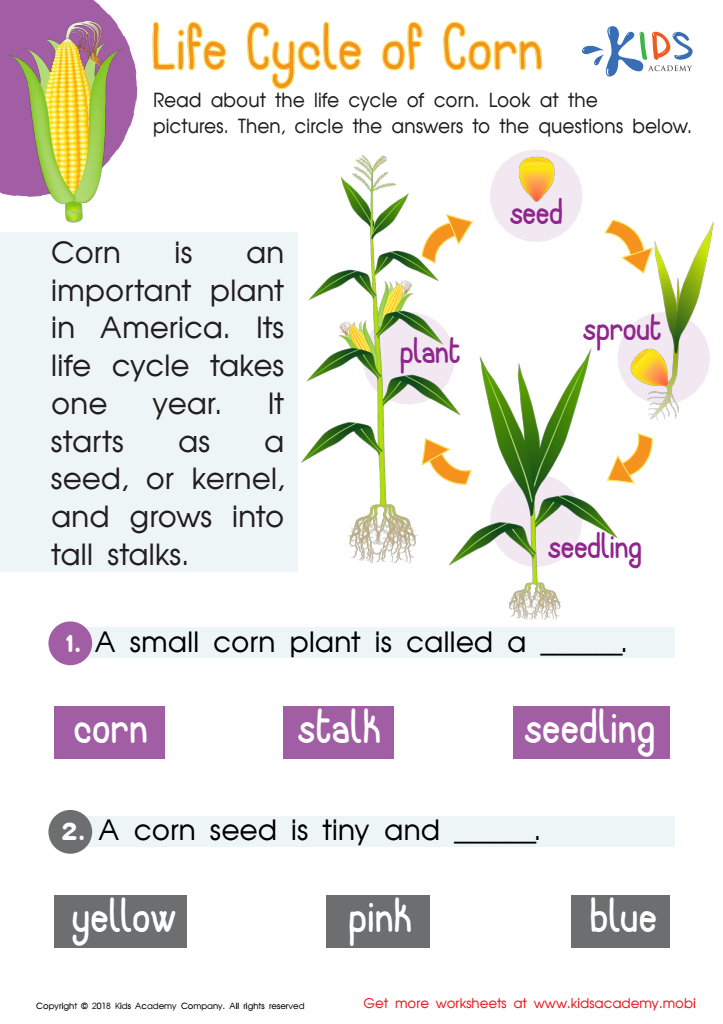
Life Cycle of Corn Worksheet
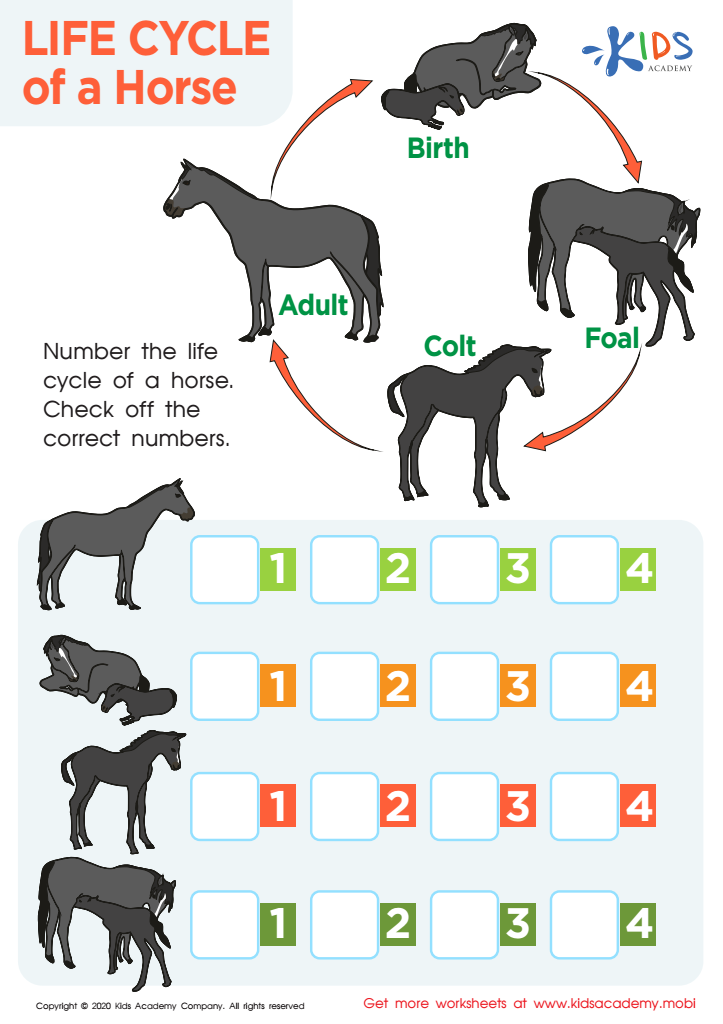
Life Cycle of a Horse Worksheet


.jpg)




Understanding life cycles is crucial for children aged 6-8, as it fosters essential skills and knowledge that resonate throughout their development. Firstly, exploring life cycles enhances curiosity about the natural world, promoting observational skills and critical thinking. Children learn to recognize the stages of life—from birth and growth to reproduction and death—within plants, animals, and even humans. This understanding can cultivate a respectful attitude towards life, encouraging empathy and stewardship of the environment.
Moreover, life cycles present opportunities for hands-on learning. Engaging in activities, such as observing the metamorphosis of a butterfly or planting seeds and tracking their growth, promotes experiential learning, retention, and excitement about science. Such engagement nurtures a sense of responsibility and connection to nature, important qualities for future environmental advocates.
Additionally, discussing life cycles helps children process concepts of change and the passage of time, which can be instrumental in developing emotional resilience and understanding personal growth. It also serves as a springboard to integrate broader subjects, such as health, survival, and ecosystems, laying foundational knowledge across disciplines.
In summary, understanding life cycles is key to instilling curiosity, emotional intelligence, environmental responsibility, and integrated learning in young children.








