Understanding patterns Worksheets for Ages 6-8 - Page 3
58 filtered results
-
From - To
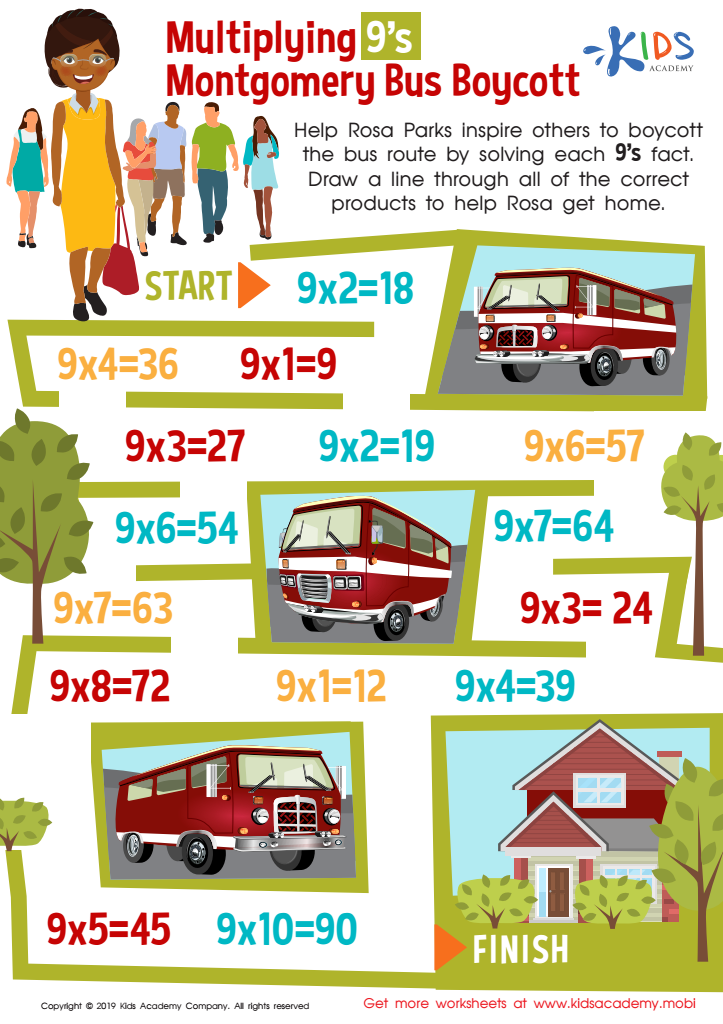
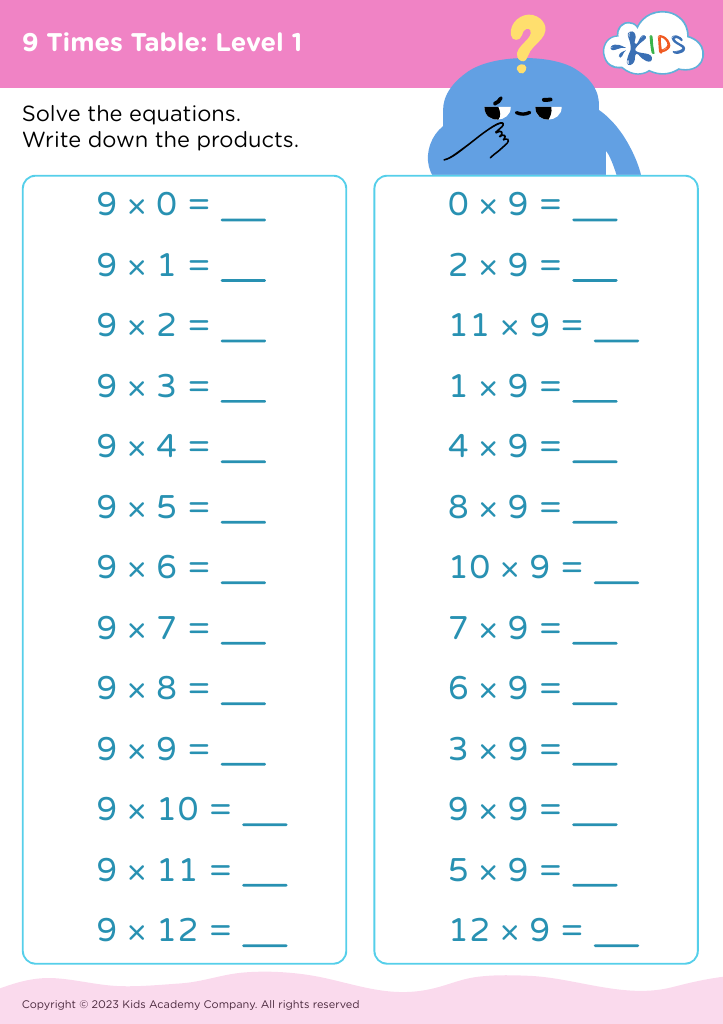
Multiplying 9’s Montgomery Bus Boycott Worksheet
 Assign to My Students






Understanding patterns is a foundational skill for children ages 6-8, and it deserves attention from both parents and teachers. Recognizing and creating patterns helps kids develop critical thinking and problem-solving abilities that are used in various areas of learning and everyday life. Patterns are fundamental in mathematics; they underpin concepts in numbers, sequencing, and algebra. Grasping these concepts early sets the stage for more complex math skills in later grades.
Moreover, patterns are not limited to math alone. They play a role in reading and writing as well. Recognizing letter sequences, word families, and sentence structures all rely on understanding patterns. In science, patterns help children understand natural phenomena and the cycles in nature.
Additionally, understanding patterns also enhances children's abilities to make predictions and understand the rhythm of activities and routines, which aids in smoother classroom and home life management. Creativity and artistic expression often rely on pattern recognition, whether through music, art, or dance.
Therefore, fostering an awareness and understanding of patterns during these formative years builds a strong foundation for future learning, enhancing cognitive development and easing the navigation of their increasingly complex world.








