Understanding perspectives Worksheets for Ages 6-8
3 filtered results
-
From - To
Explore our "Understanding Perspectives Worksheets" designed specifically for children aged 6-8! These engaging worksheets help young learners develop essential social-emotional skills by teaching them to recognize and appreciate different viewpoints. Through fun exercises such as stories, illustrations, and relatable scenarios, children enhance their empathy and critical thinking abilities. Perfect for classroom or home use, our worksheets cater to various learning styles, making lessons enjoyable and effective. Empower your child to navigate social interactions with confidence and understanding. Check out our collection today and foster a deeper understanding of perspectives in your child's learning journey!
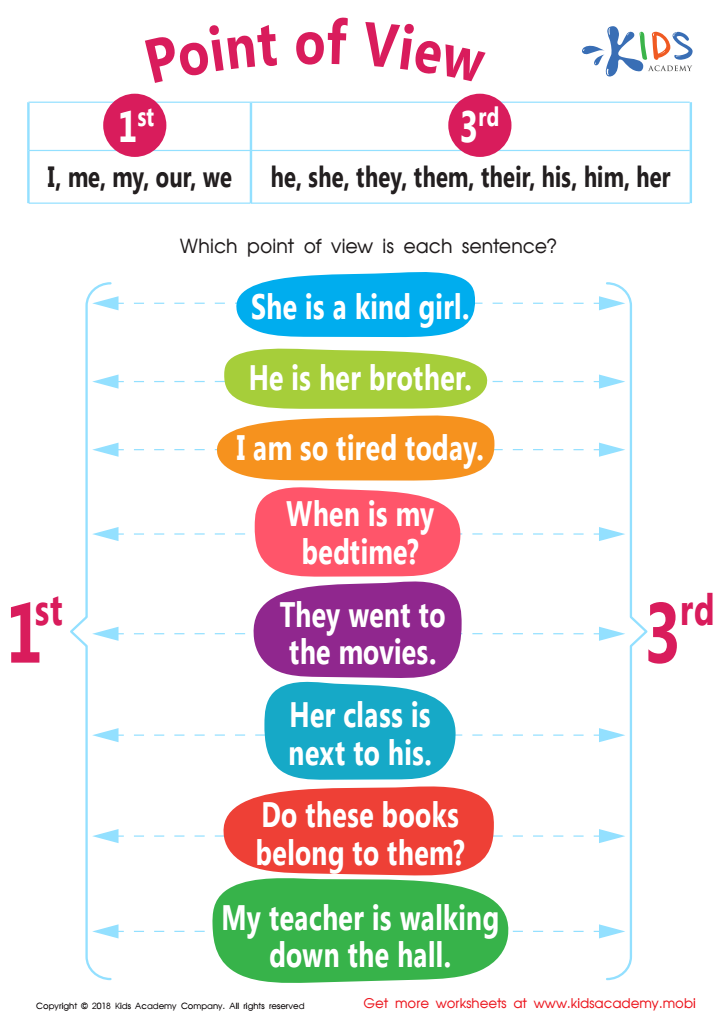
Point of View Worksheet
 Assign to My Students
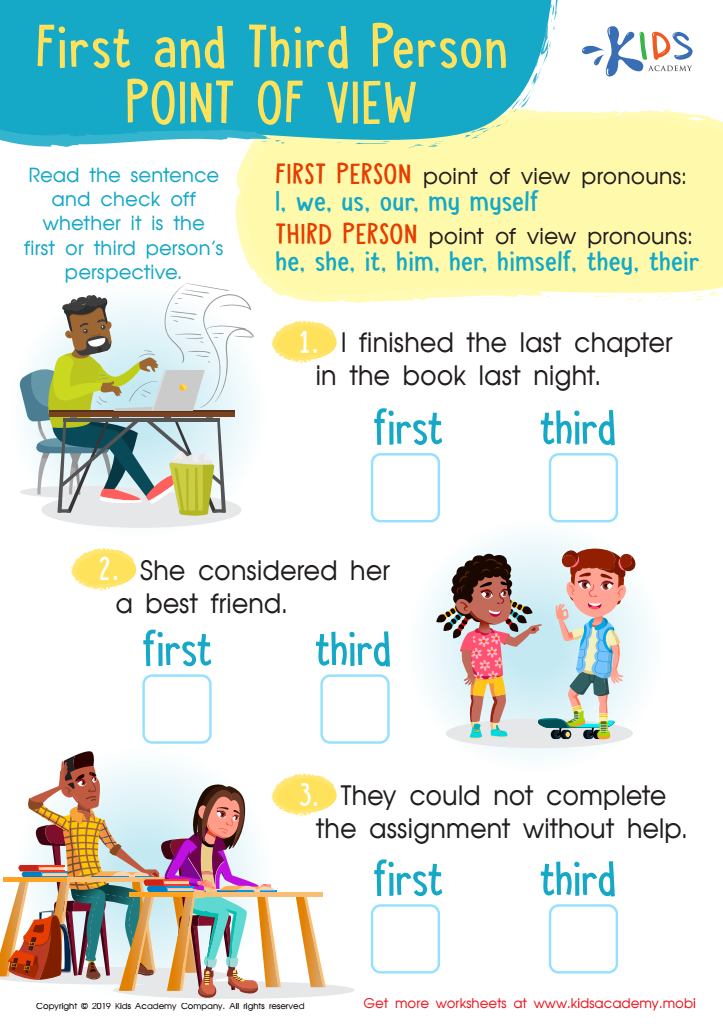
First and Third Person Point of View Worksheet
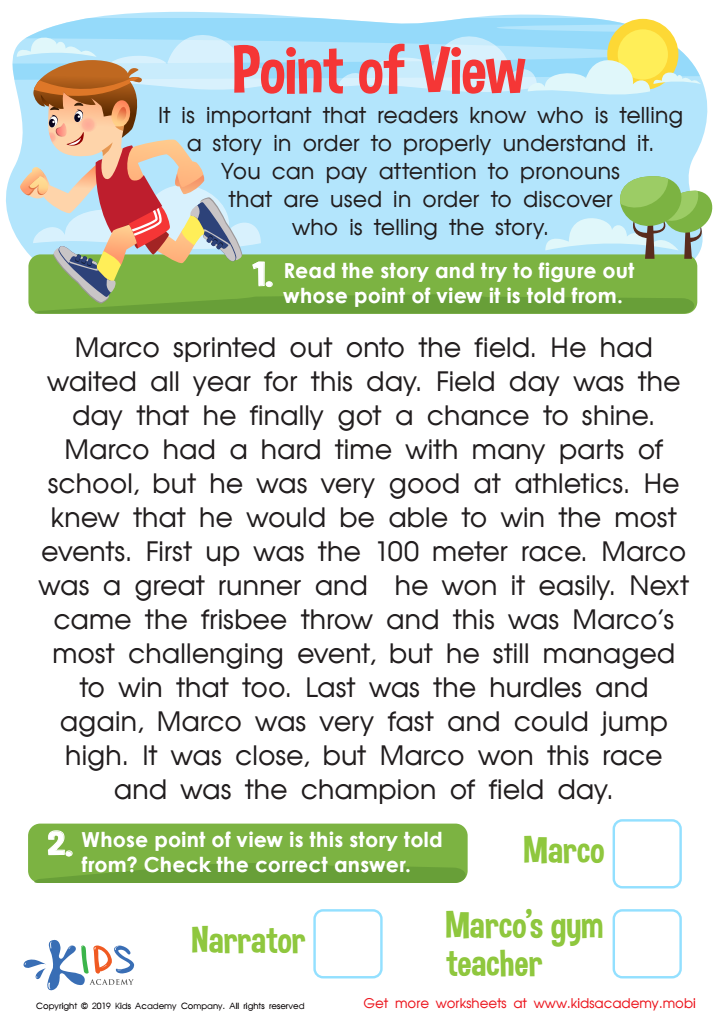
Point of View Worksheet







Understanding perspectives is crucial for children ages 6-8 as it lays the foundation for their social and emotional growth. At this age, children are beginning to develop empathy, which helps them recognize and respect the feelings and viewpoints of others. This skill enables them to engage in healthy relationships with peers, fostering cooperation and reducing conflict.
When teachers and parents emphasize understanding perspectives, they equip children with critical thinking skills. Children learn to analyze situations from different angles, enhancing their problem-solving ability. This can be applied in reading comprehension, where grasping multiple viewpoints enriches their understanding of stories and characters.
Moreover, depending on their environment, children may encounter diverse ideas and cultural backgrounds. Cultivating perspective-taking promotes inclusivity, acceptance, and appreciation for differences, which are essential values in our increasingly interconnected world.
By integrating activities that encourage discussion about various viewpoints—through storytelling, role-playing, or conflict resolution scenarios—adults help children build a supportive and compassionate community. Ultimately, nurturing this skill not only aids academic performance but also prepares youngsters to become thoughtful and responsible members of society, equipping them for future interpersonal interactions.








