Understanding pollination Worksheets for Ages 6-8
4 filtered results
-
From - To
Discover our engaging "Understanding Pollination Worksheets" designed specifically for ages 6-8! These educational printables help young learners explore the fascinating world of pollination through fun activities and colorful illustrations. By identifying key pollinators, plant parts, and the pollination process, children develop a deeper understanding of nature's life cycles. These worksheets encourage critical thinking, enhance vocabulary, and promote an appreciation for the environment. Perfect for classroom or home use, our worksheets make learning about pollination interactive and enjoyable, helping kids build essential science skills while fostering a love for nature. Download today and watch your child's curiosity bloom!
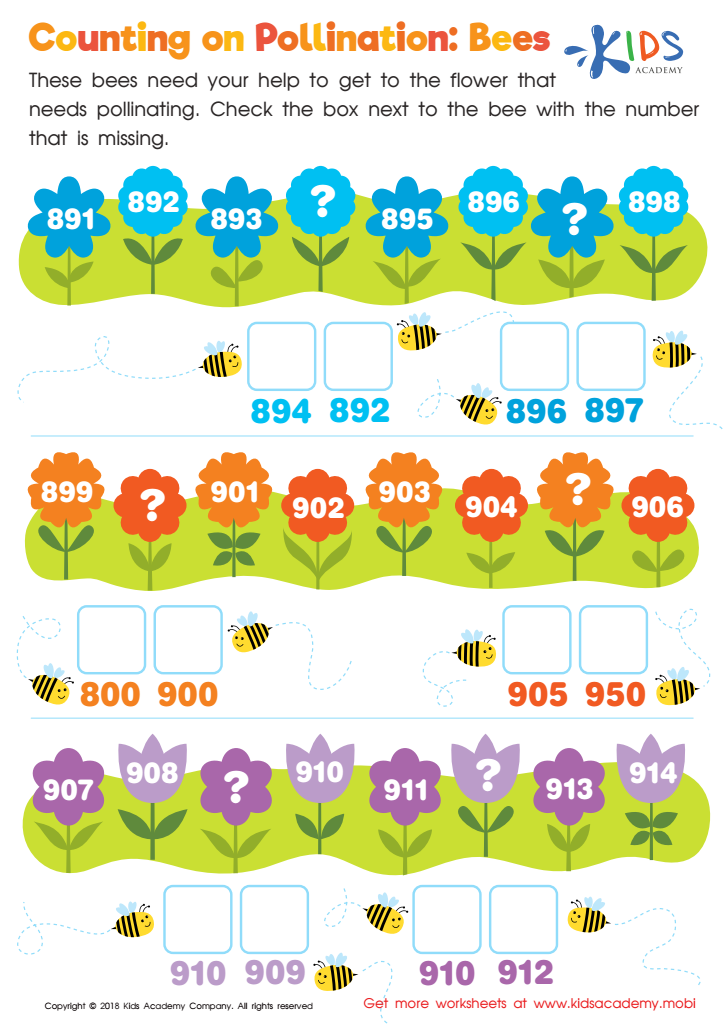
Counting on Pollination: Bees Worksheet
 Assign to My Students
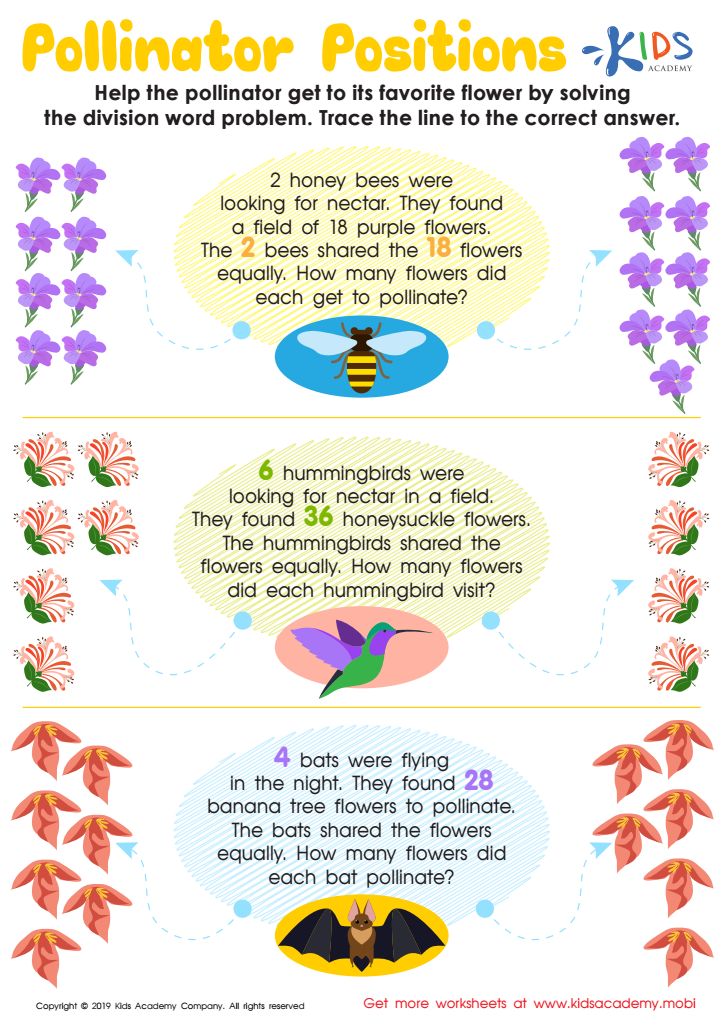
Pollinator Positions Worksheet
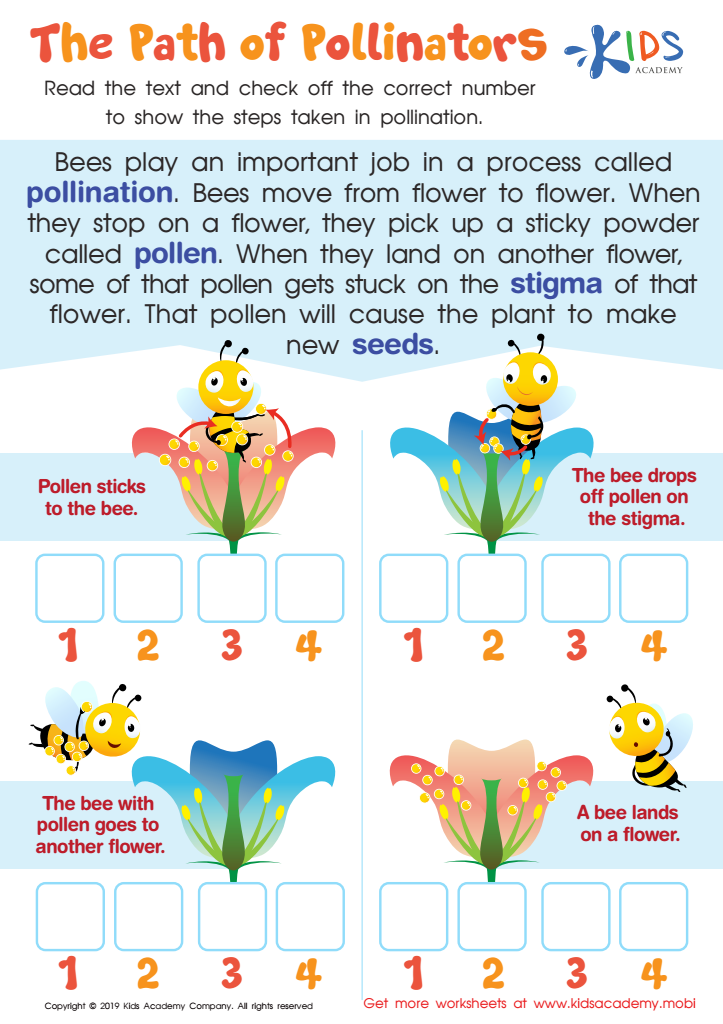
The Path of Pollinators Worksheet
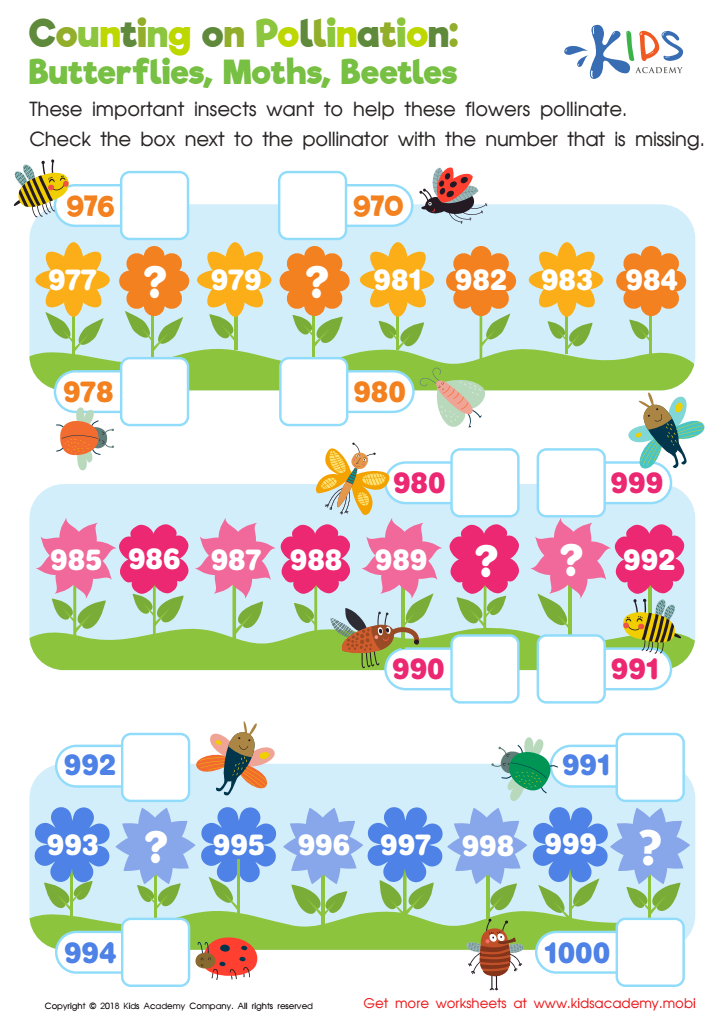
Counting on Pollination: Butterflies, Moths, Beetles Worksheet







Understanding pollination is essential for children aged 6-8, as it lays the foundation for their awareness of the natural world and environmental stewardship. For parents and teachers, this knowledge can greatly enhance a child's curiosity and respect for nature, critical aspects for their holistic development. At this age, children are naturally curious and open to learning new concepts, making it an ideal time to introduce them to how plants reproduce and contribute to our ecosystem.
Teaching about pollination can be a fun, hands-on way to engage young learners, using activities like gardening, observing bees and butterflies, or simple science experiments. By understanding that bees, butterflies, birds, and even wind can help plants grow by transferring pollen, kids begin to appreciate the interconnectedness of life. This knowledge also sets the stage for discussions about the importance of biodiversity and the roles different species play in the environment.
Additionally, learning about pollination can promote responsible behaviors, such as protecting pollinators and planting native flowers, fostering environmental empathy early on. This awareness could inspire children to make eco-friendly choices and develop a lifelong respect for nature. In essence, introducing the concept of pollination helps nurture young minds to become thoughtful, informed, and proactive caretakers of our planet.








