Understanding Rhymes Worksheets for Ages 6-8
4 filtered results
-
From - To
Unlock the joy of learning with our "Understanding Rhymes Worksheets for Ages 6-8." Specially designed for young learners, these activities enhance reading and phonemic skills through engaging, fun-packed exercises. Kids will delight in identifying, matching, and creating rhymes, fostering a love for language and literacy. Each worksheet is curated to be developmentally appropriate for ages 6 to 8, helping to build a solid foundation in reading comprehension and vocabulary. Nurture your child's learning journey with exercises that blend education and imagination, setting the stage for academic success and lifelong enjoyment of reading.
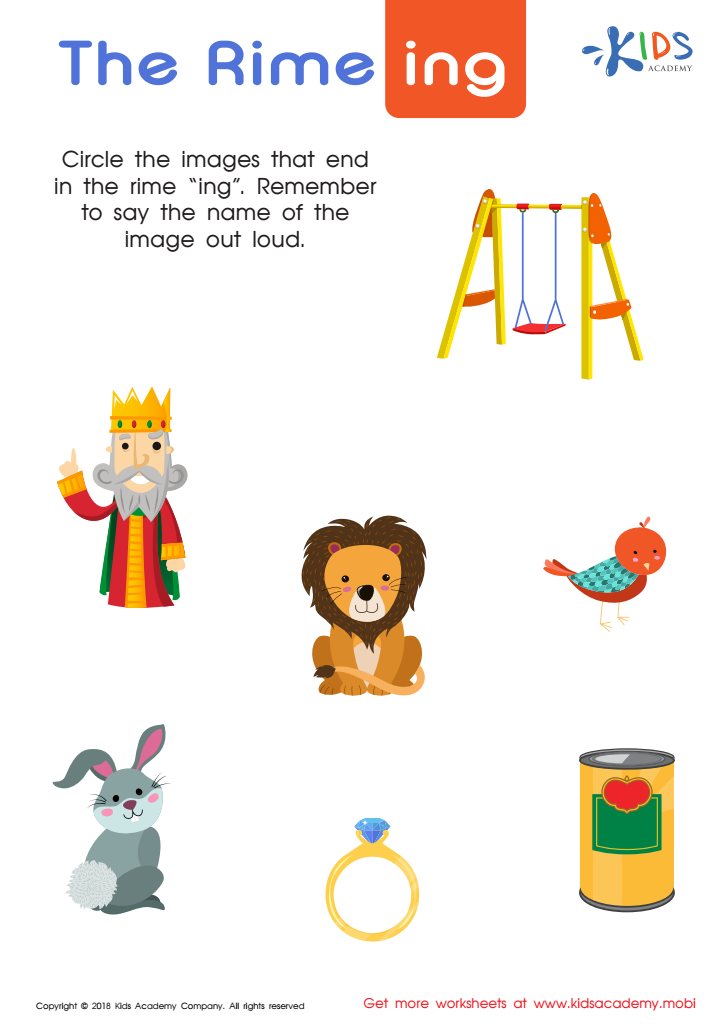
The Rime "ing" Worksheet
 Assign to My Students
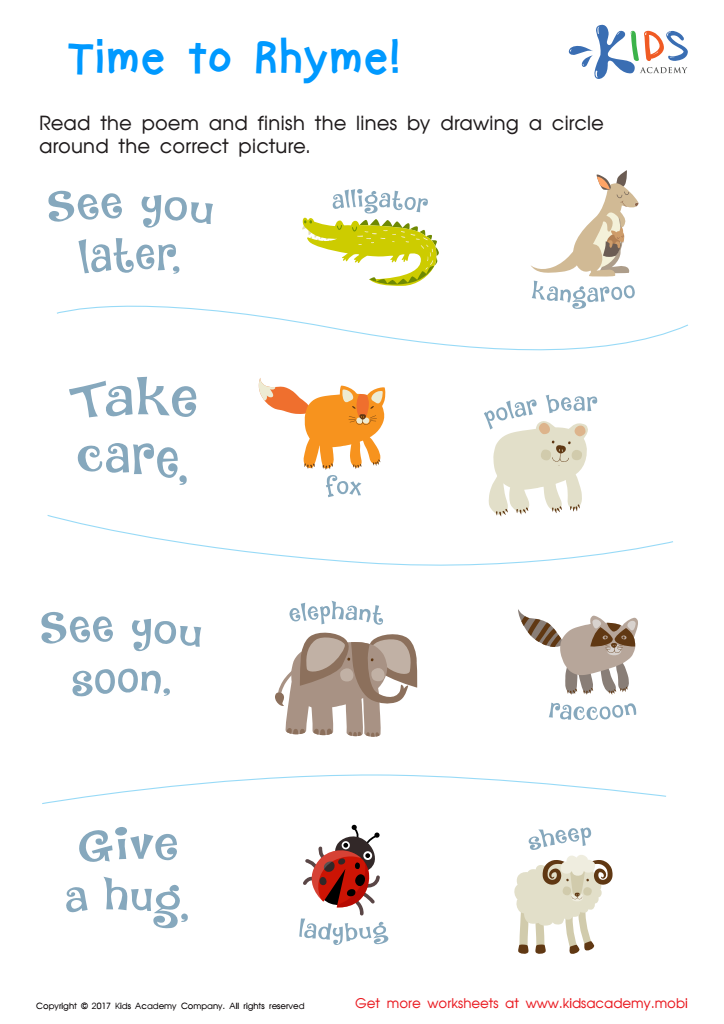
Time to Rhyme Rhyming Worksheet
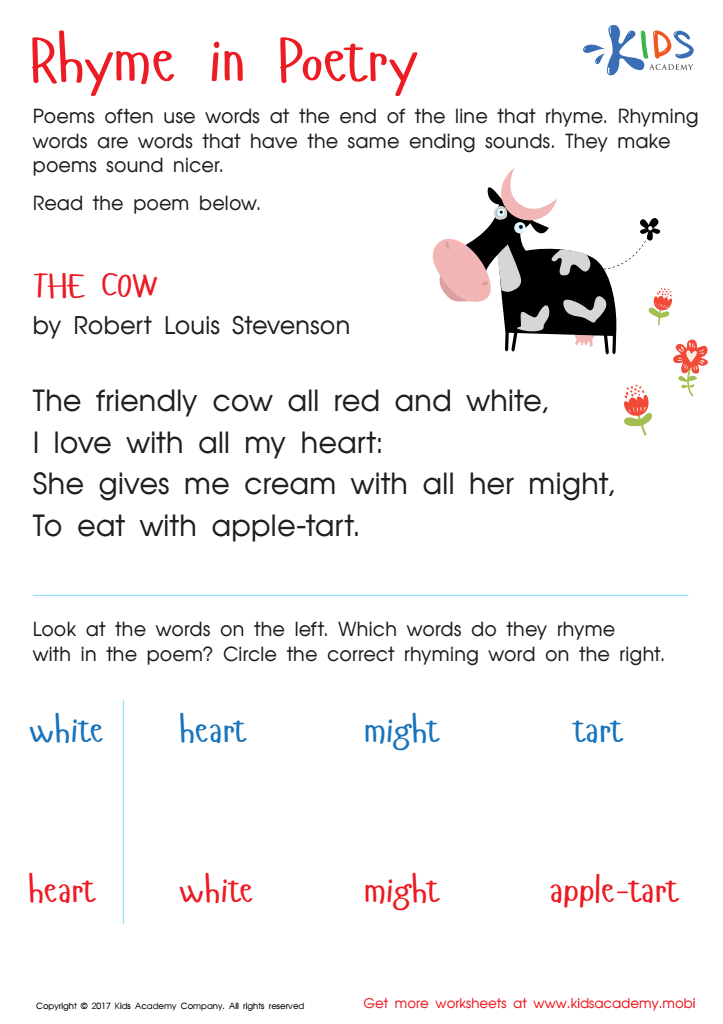
Rhyme In Poetry Worksheet







Rhymes play a crucial role in the early literacy development of children aged 6-8, making it essential for parents and teachers to prioritize their understanding. First and foremost, rhymes enhance phonemic awareness, which is the ability to recognize and manipulate sounds in words. This foundational skill is pivotal for reading success, as it helps children decode new words and improve their spelling.
Additionally, rhymes aid in the development of memory and recall. Repeating nursery rhymes or poems strengthens neural connections, improving cognitive functions. This can boost a child’s ability to remember other crucial information, such as vocabularies, math facts, and general knowledge.
Understanding rhymes can also be a fun and engaging way to introduce the rhythm and patterns found in the English language. This rhythmic intelligence can transcend into various academic domains, performing a crucial link to more advanced poetic and literary understanding later in their schooling.
Moreover, rhymes foster a love for language and can enhance imaginative play and creativity. When children experiment with rhyming words, they engage their sense of humor and imagination, which are integral parts of healthy psychological growth.
Parents and teachers nurturing a child's familiarity with rhymes help cultivate a robust linguistic foundation, ensuring improved reading abilities, cognitive function, and lifelong learning enthusiasm.








