Understanding tally marks Worksheets for Ages 6-8
5 filtered results
-
From - To
Explore our engaging "Understanding Tally Marks Worksheets" designed specifically for children ages 6-8. These interactive worksheets provide a hands-on approach to learning tally marks—a foundational skill in counting and data representation. Through various exercises, kids will practice interpreting and creating tally marks, enhancing their numerical understanding and critical thinking skills. Each worksheet is crafted to promote fun learning, ensuring children grasp the concept while developing their counting abilities. Perfect for at-home learning or classroom use, these resources will spark curiosity and make math enjoyable. Dive in today and watch your child unlock the power of tally marks!
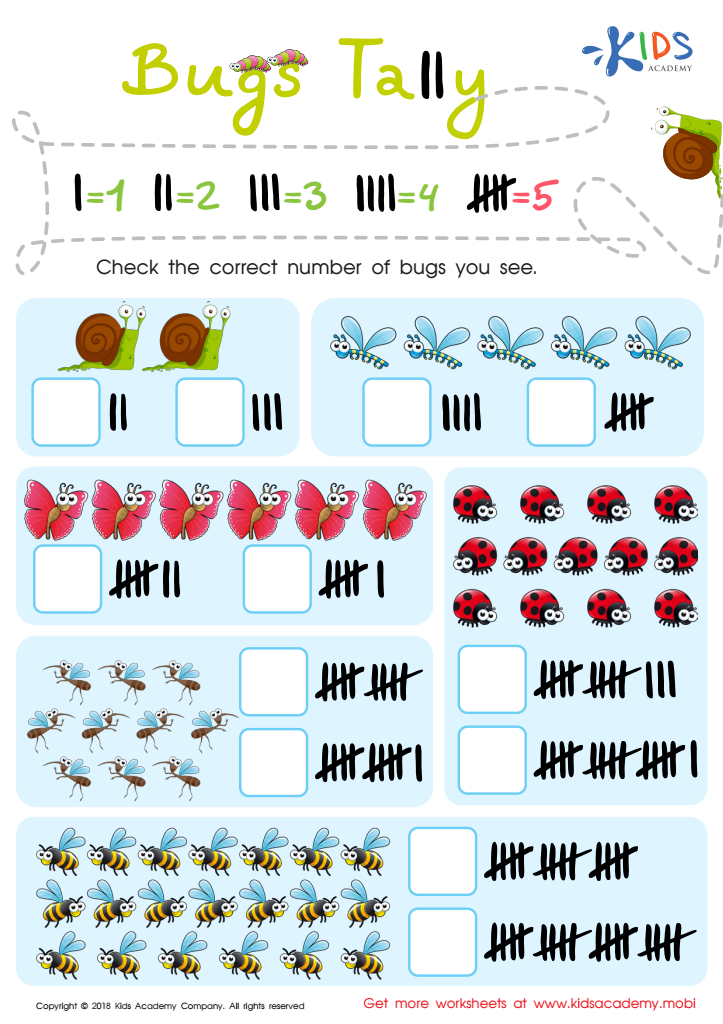
Bugs Tally Worksheet
 Assign to My Students
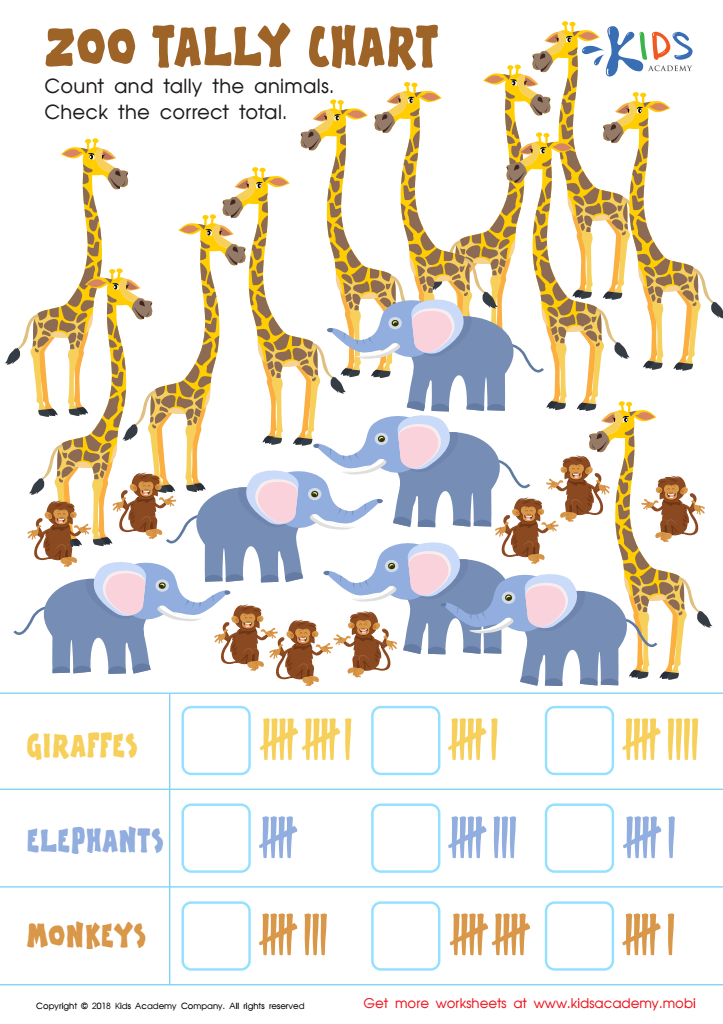
Zoo Tally Chart Worksheet
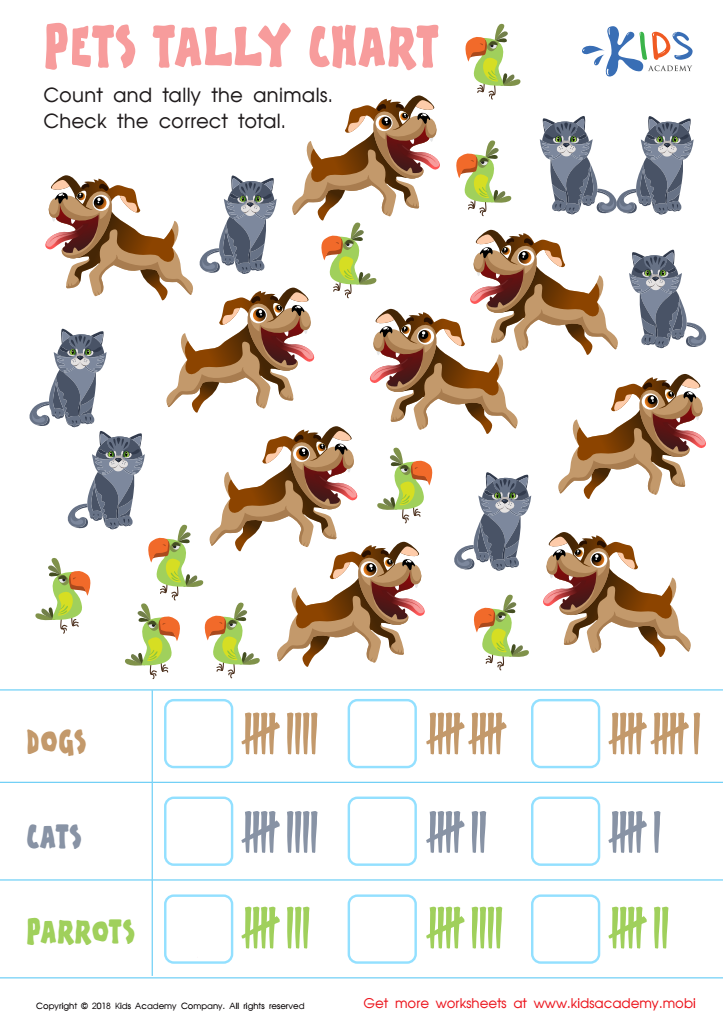
Pets Tally Chart Worksheet
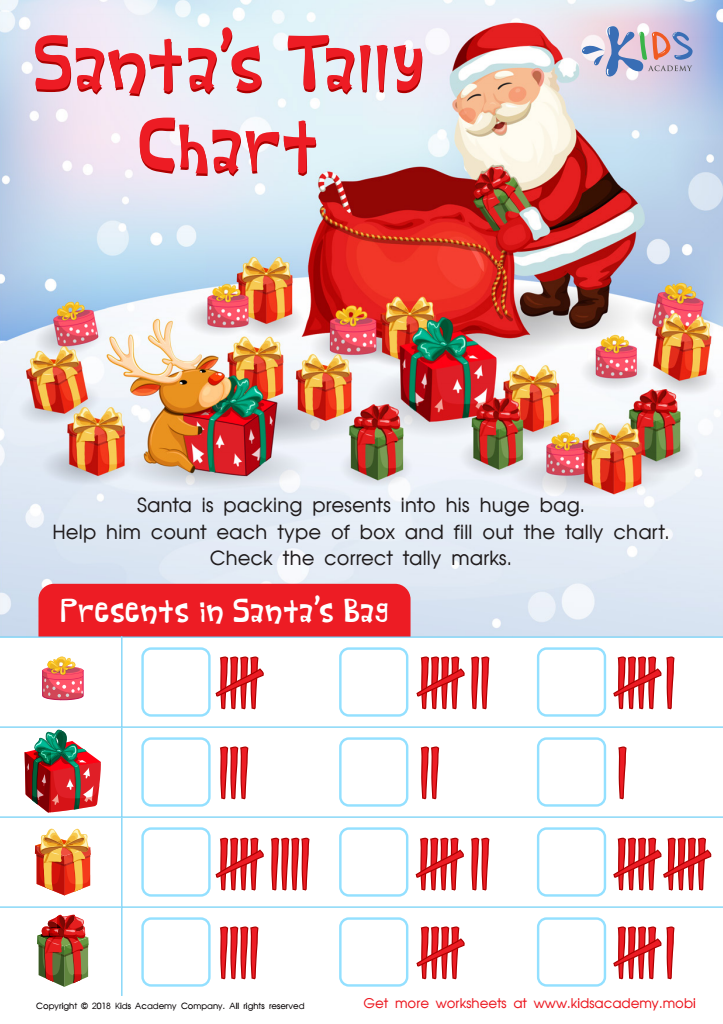
Santa Tally Chart Worksheet
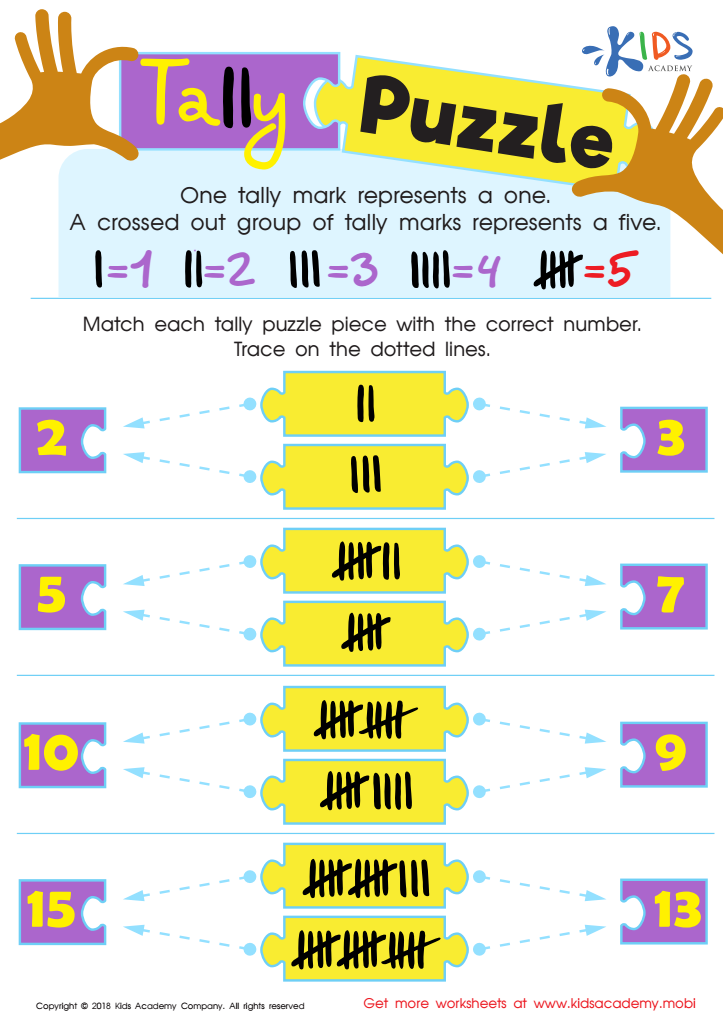
Tally Puzzle Worksheet







Understanding tally marks is essential for children aged 6-8, as it introduces them to fundamental concepts of counting, organization, and data representation. Tally marks, a simple way to record quantities using vertical lines and groups of five, help children visualize numbers and reinforce basic counting skills. By learning to use tally marks, children develop number sense and become more comfortable with numerical operations.
For parents and teachers, proficiency in tally marks fosters essential cognitive skills. It promotes critical thinking by encouraging students to organize and categorize information effectively. As children encounter real-life situations, such as counting items or tracking scores, the ability to use tally marks empowers them to engage with data meaningfully. This foundational knowledge assists in later math learning, including addition and subtraction, as seen in statistics and probability.
Moreover, tally marks can help develop communication skills, allowing children to present their findings visually to others. This aspect is particularly important in collaborative activities, where sharing results becomes vital for teamwork. Ultimately, understanding tally marks not only nurtures academic growth but also enhances children's everyday problem-solving abilities, making it a vital skill for their education and future success.








