Understanding water cycle Worksheets for Ages 6-8
3 filtered results
-
From - To
Explore our "Understanding Water Cycle Worksheets" designed specifically for children aged 6-8! These engaging and interactive worksheets help young learners grasp the essential concepts of the water cycle in a fun and accessible way. With colorful illustrations and age-appropriate activities, students will discover processes like evaporation, condensation, and precipitation. Our resources support critical thinking and promote environmental awareness while aligning with educational standards. Ideal for home or classroom use, these worksheets encourage curiosity about nature and the world around us. Dive into learning and watch your child's understanding of the water cycle flourish! Access our printable resources today!
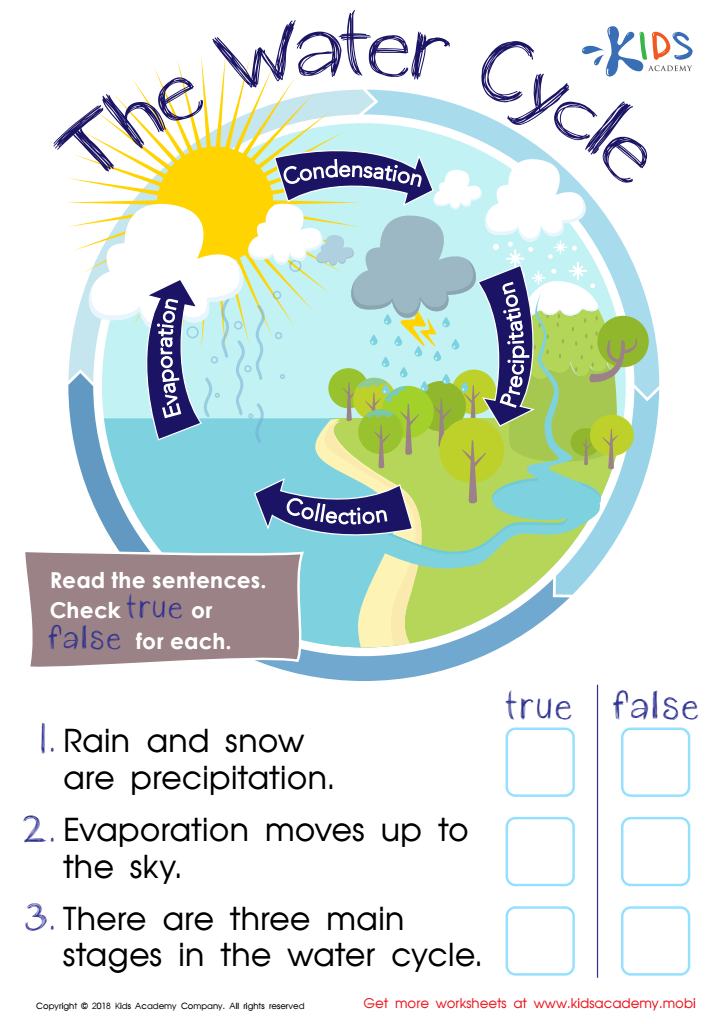
The Water Cycle Worksheet
 Assign to My Students
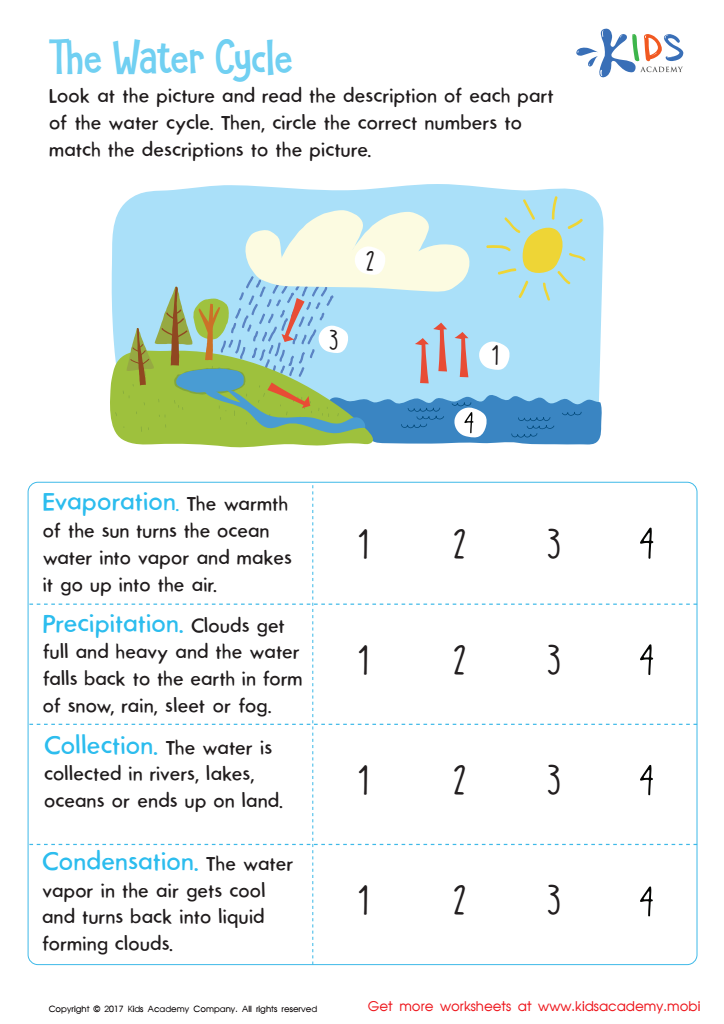
The Water Cycle Worksheet
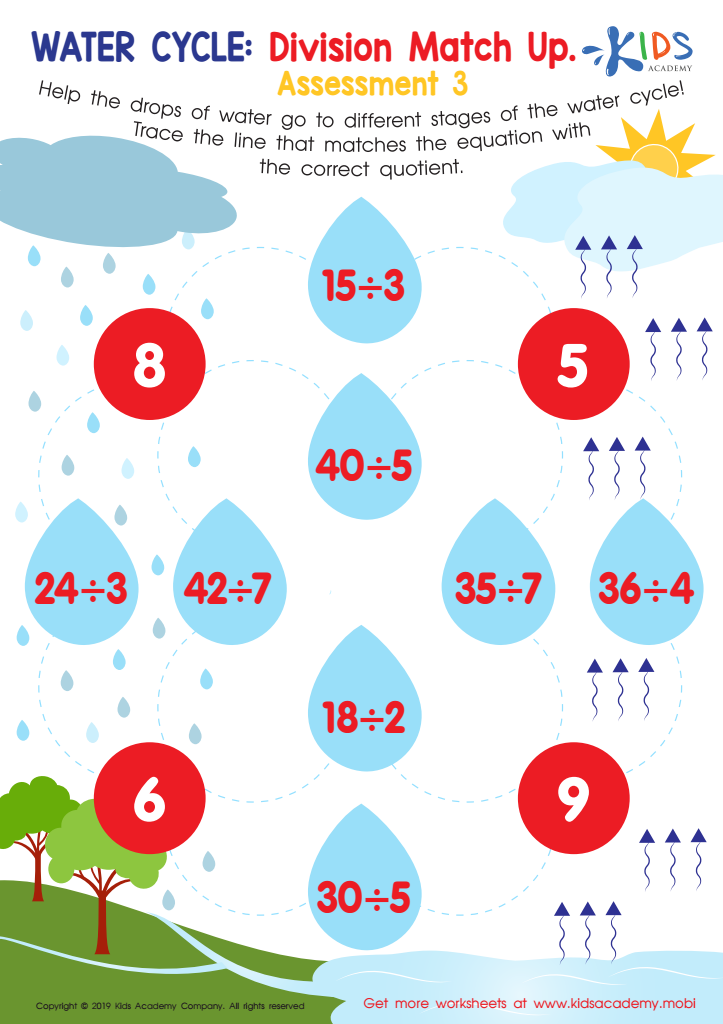
Water Cycle Division Match Up Assessment 3 Worksheet








Understanding the water cycle is essential for children aged 6-8 as it lays the foundation for scientific literacy and environmental awareness. At this age, children are naturally curious about the world around them, and introducing them to concepts like evaporation, condensation, and precipitation fosters this curiosity. Learning about the water cycle helps children appreciate the interconnectedness of natural systems. They begin to understand how weather patterns affect their daily lives and the importance of water conservation.
Teachers and parents should care about this because knowledge of the water cycle can lead to informed decision-making about conserving water and protecting ecosystems. As future citizens of the planet, children who grasp the significance of the water cycle may be more likely to engage in sustainable practices and advocate for environmental responsibility as they grow. Additionally, teaching the water cycle can be an engaging and interactive experience, using various activities and experiments that make learning enjoyable. This approach not only cultivates critical thinking but also enhances their observational skills, which are vital for future learning. In essence, understanding the water cycle empowers children with knowledge that is crucial for their development and our planet’s future health.








