Understanding word problems Worksheets for Ages 6-8
3 filtered results
-
From - To
Explore our "Understanding Word Problems" worksheets designed specifically for children aged 6-8! These engaging resources help young learners develop critical thinking and problem-solving skills while tackling relatable scenarios. Fostering a love for math, the worksheets use interactive exercises that guide students in breaking down word problems into manageable steps. Designed to align with early math concepts, they encourage children to apply their understanding in real-world contexts. Each worksheet offers varying levels of difficulty, ensuring that every student can progress at their own pace. Download these valuable tools today and watch your child’s confidence in math soar!
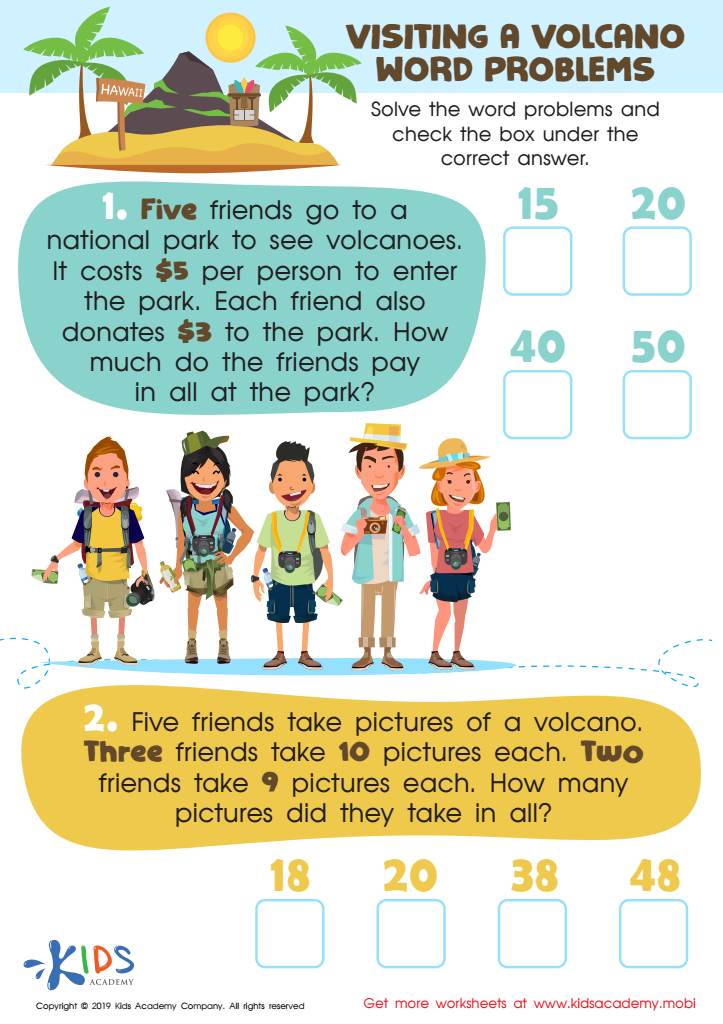
Visiting a Volcano Word Problems Worksheet
 Assign to My Students
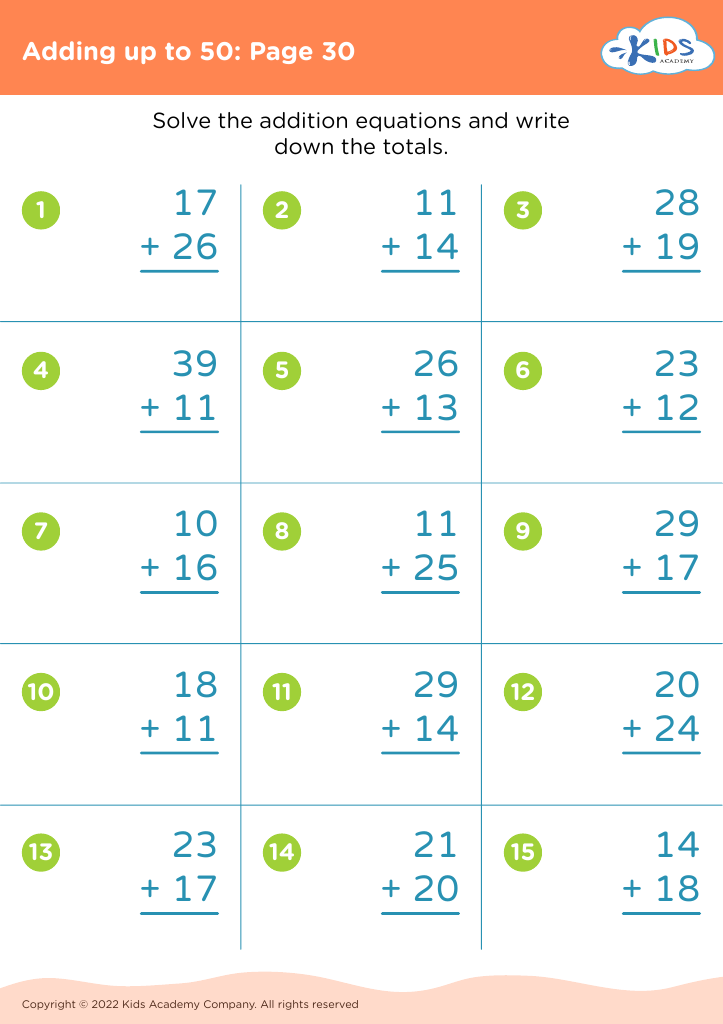
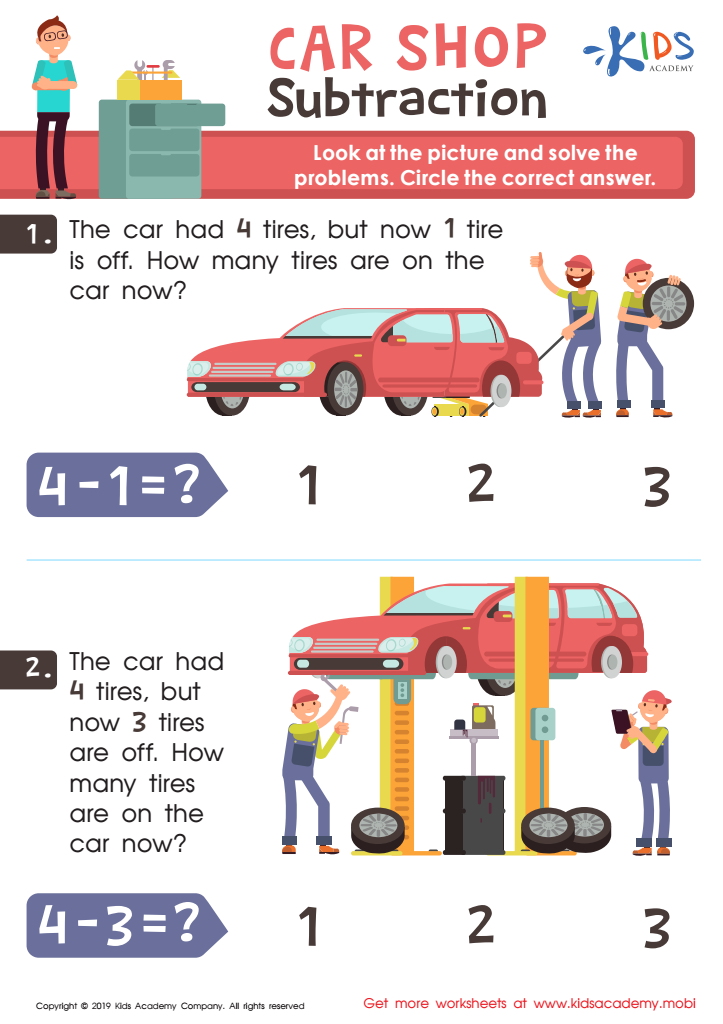
Car Shop Subtraction Worksheet








Understanding word problems is crucial for children ages 6-8 as it closely ties to their overall mathematical development and critical thinking skills. At this age, children transition from basic arithmetic to applying these skills in real-world situations, which are often presented as word problems. By grasping how to interpret and solve these problems, kids develop essential skills like reading comprehension, logical reasoning, and critical thinking, which will serve them well beyond mathematics.
Moreover, word problems help foster a deeper understanding of mathematical concepts, such as addition, subtraction, multiplication, and division, allowing students to see the practical value of math in everyday life. When parents and teachers support children in tackling word problems, they encourage resilience and perseverance in problem-solving, essential traits for lifelong learners.
Additionally, engaging with word problems together can strengthen the connection between parents and children, turning math into a collaborative and enjoyable experience. Ultimately, nurturing this understanding in young children lays a strong foundation for future academic success and enhances their confidence in tackling challenges. For these reasons, it is crucial that parents and teachers champion the importance of understanding word problems in young learners.








