Visual learning stimulation Worksheets for Ages 6-8
3 filtered results
-
From - To
Boost your child's cognitive development with our Visual Learning Stimulation Worksheets for Ages 6-8. Designed to sharpen critical thinking and visual perception skills, these engaging activities make learning enjoyable and effective. Each worksheet encourages kids to identify patterns, solve puzzles, and understand spatial relationships, laying a strong foundation for academic success. Perfect for enrichment at home or added practice during school sessions, our printable resources are developed by education experts to align with core learning standards. Empower your child to excel with stimulating, fun-filled worksheets from Kids Academy, tailored to capture the imagination and bolster essential visual learning skills.
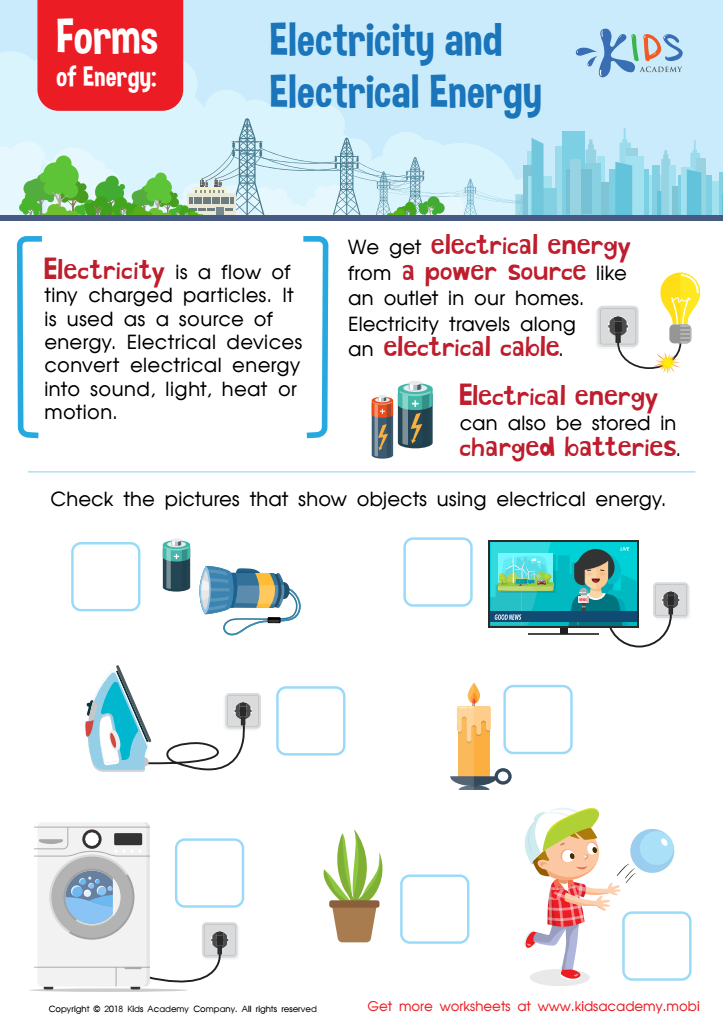
Forms of Energy Worksheet
 Assign to My Students
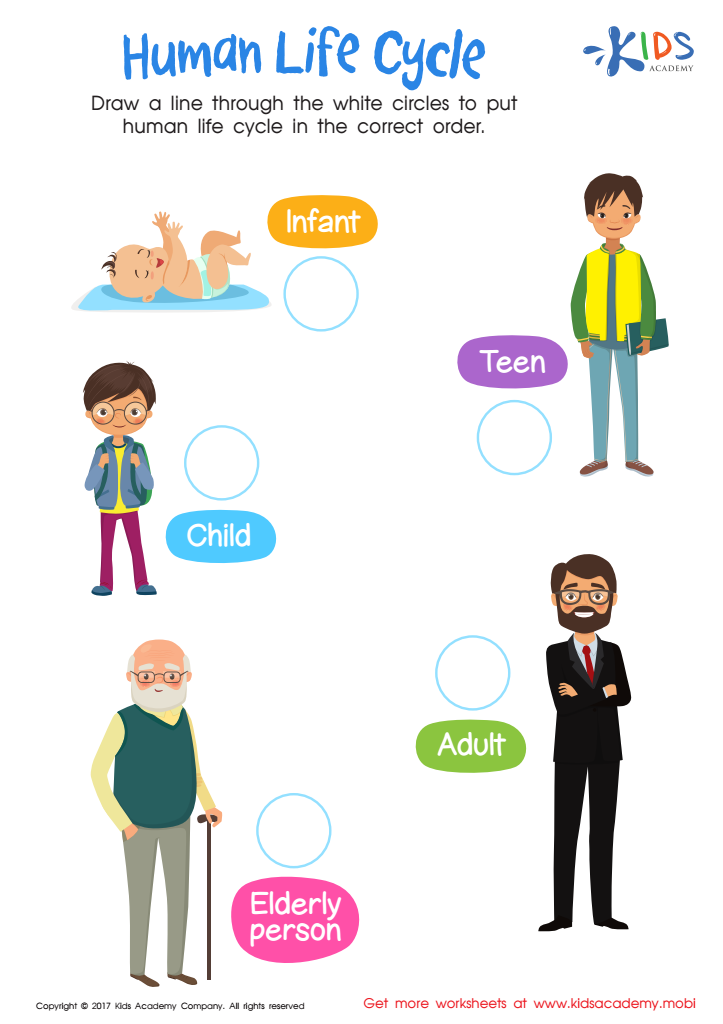
Human Life Cycle Worksheet
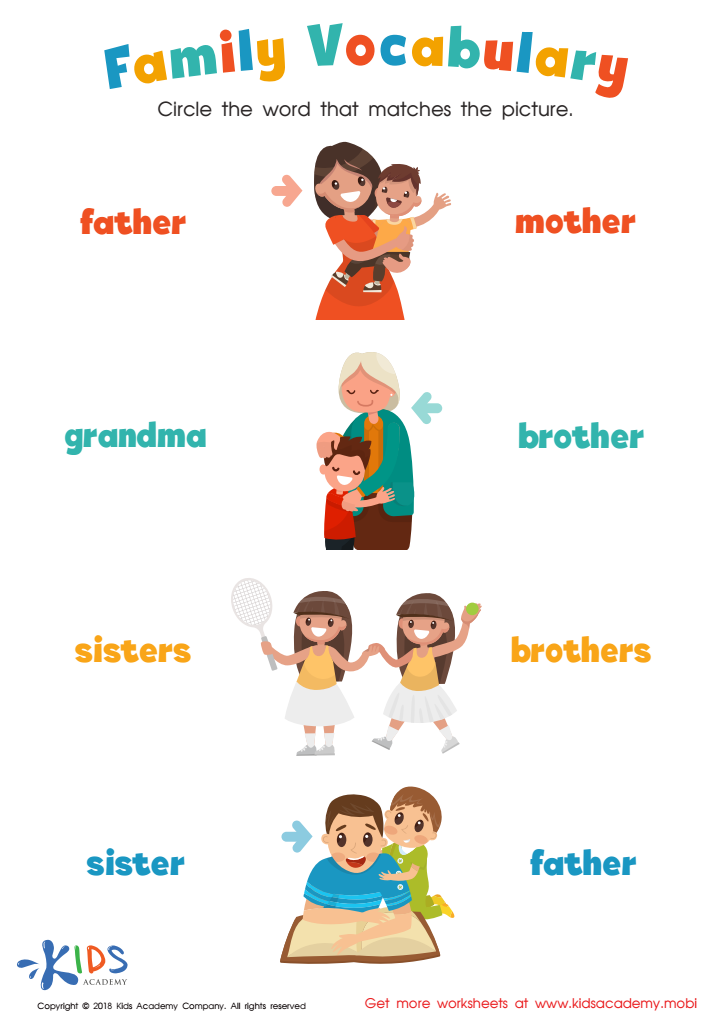
Family Vocabulary Worksheet


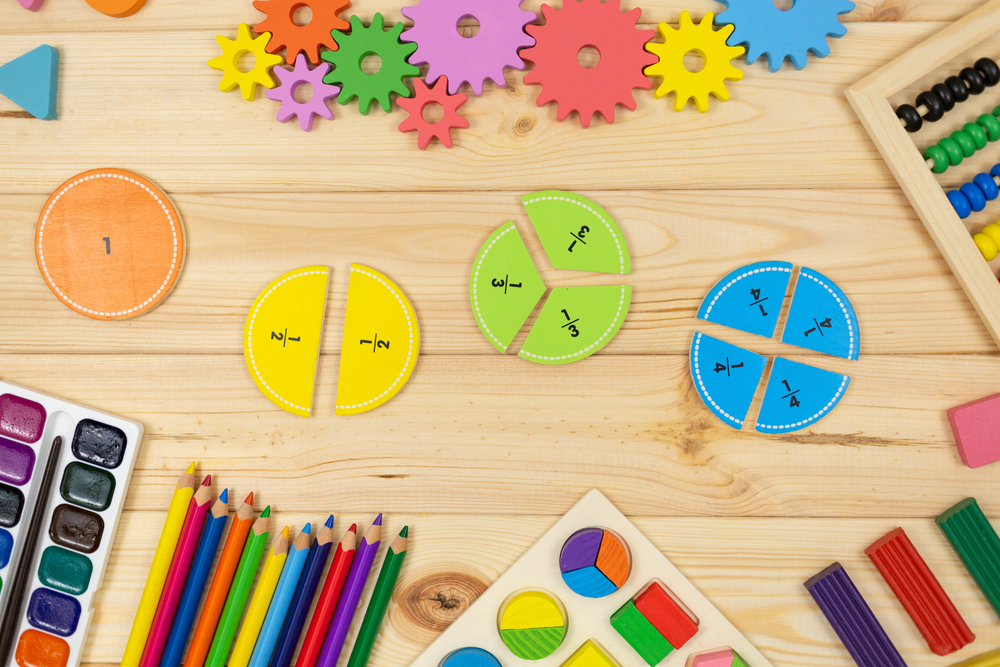





Visual learning stimulation is crucial for children aged 6-8 because it plays a significant role in their cognitive and emotional development. At this age, children are highly receptive to visual stimuli, which can enhance their understanding and retention of information. Visual aids like charts, pictures, and videos make abstract concepts more concrete, allowing kids to grasp complex ideas more easily.
Moreover, visual learning can cater to different learning styles. Not all children learn effectively through auditory means or rote memorization. Using visual methods taps into multiple senses, fostering a more inclusive learning environment that can reach a broader range of students.
Visual learning also helps in critical thinking and problem-solving. When children analyze images or interpret visual cues, they develop analytical skills and the ability to make connections between different pieces of information. It also enhances creativity and imagination, allowing kids to express themselves more freely through art, drawing, and visual storytelling.
Emotionally, visual learning can make learning more engaging and less intimidating. Bright colors, engaging graphics, and playful layouts can stimulate a child’s curiosity and enthusiasm for learning. This positive reinforcement can build confidence and a lifelong love for learning. Therefore, integrating visual learning strategies into education is indispensable for developing well-rounded, enthusiastic learners.








