Understanding quadrilaterals 2D Shapes Worksheets for Ages 6-8
4 filtered results
Difficulty Level
Grade
Age
-
From - To
Subject
Activity
Standards
Explore our engaging "Understanding Quadrilaterals 2D Shapes Worksheets" designed specifically for children ages 6-8! These interactive worksheets help young learners identify, classify, and comprehend various quadrilaterals, such as squares, rectangles, trapezoids, and parallelograms. Packed with colorful visuals and fun exercises, kids will enjoy developing their geometric knowledge through activities that improve observation and critical thinking skills. Perfect for classroom use or at-home learning, these worksheets ensure a comprehensive understanding of 2D shapes, laying a solid foundation for future math concepts. Join us in making learning shapes exciting and accessible for young mathematicians!
Favorites
With answer key
Interactive
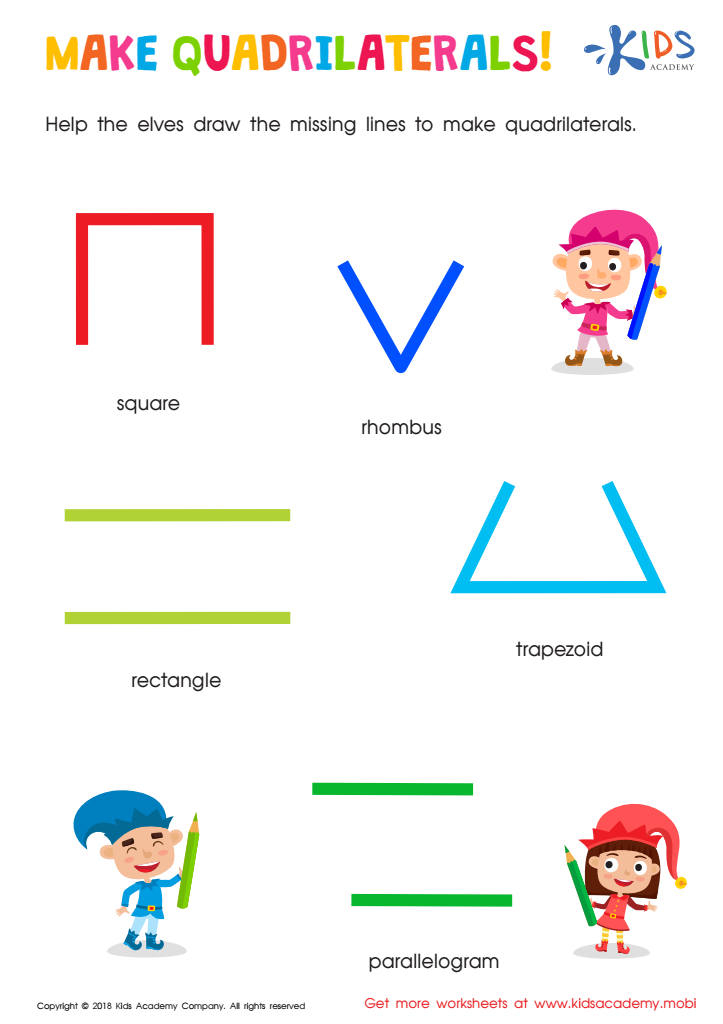
Make Quadrilaterals Worksheet
This fun and colorful worksheet will help your child understand and identify quadrilaterals. It's simple and encourages them to draw lines to create a square, rectangle, rhombus, trapezoid, and parallelogram. Stimulate their minds and watch them learn while they have fun!
 Assign to My Students
Make Quadrilaterals Worksheet
Worksheet

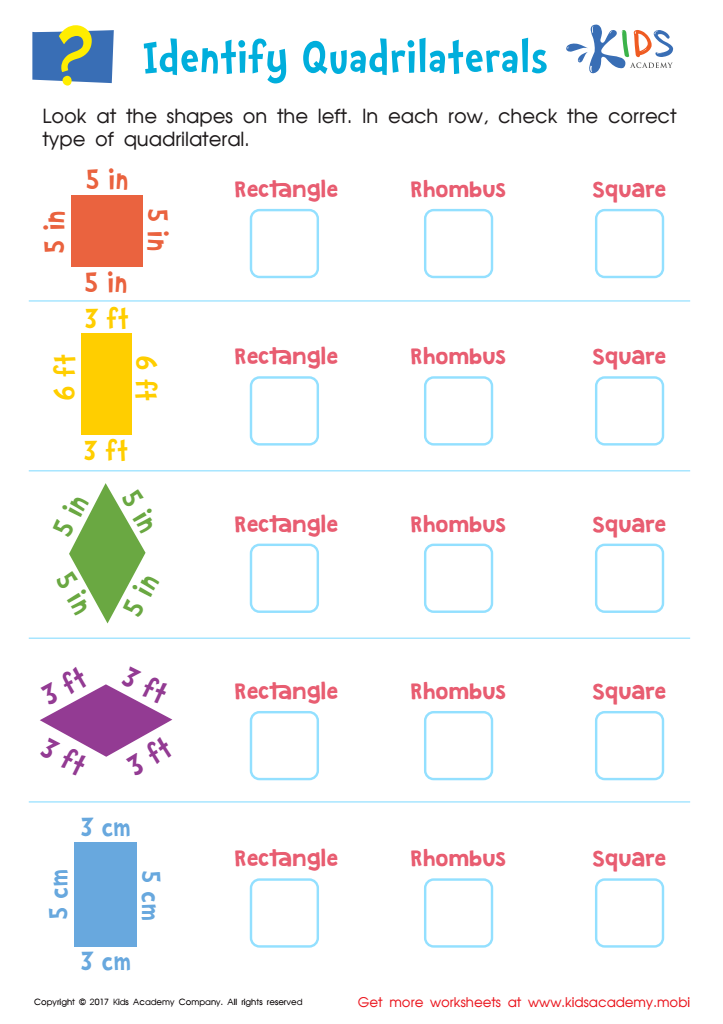
Identify Quadrilaterals Worksheet
This PDF worksheet helps kids identify different quadrilaterals using pictures and measurements. From rectangles to diamonds, children will use their knowledge of geometry to observe and classify shapes. A colorful and fun way to learn!
Identify Quadrilaterals Worksheet
Worksheet
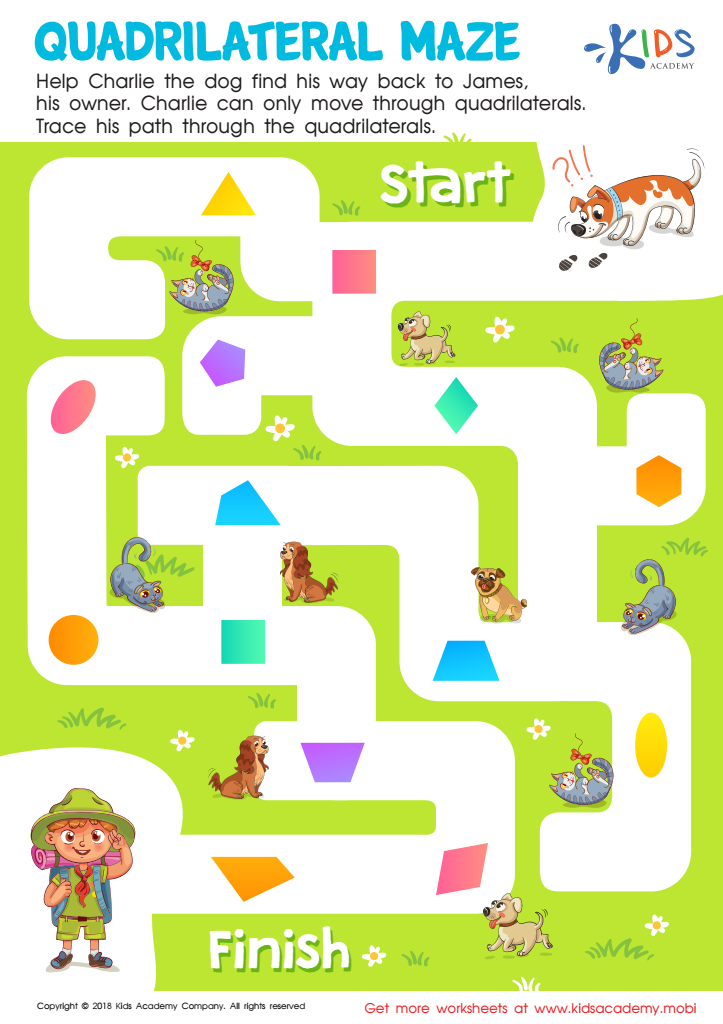
Quadrilateral Maze Worksheet
Does your kid love dogs? If so, this exercise is ideal for them! Help Charlie the pup find his way back to his owner, James, in the quadrilateral maze worksheet. Your child must trace Charlie's path only through squares and rhombuses in order to solve it. Careful planning is key!
Quadrilateral Maze Worksheet
Worksheet
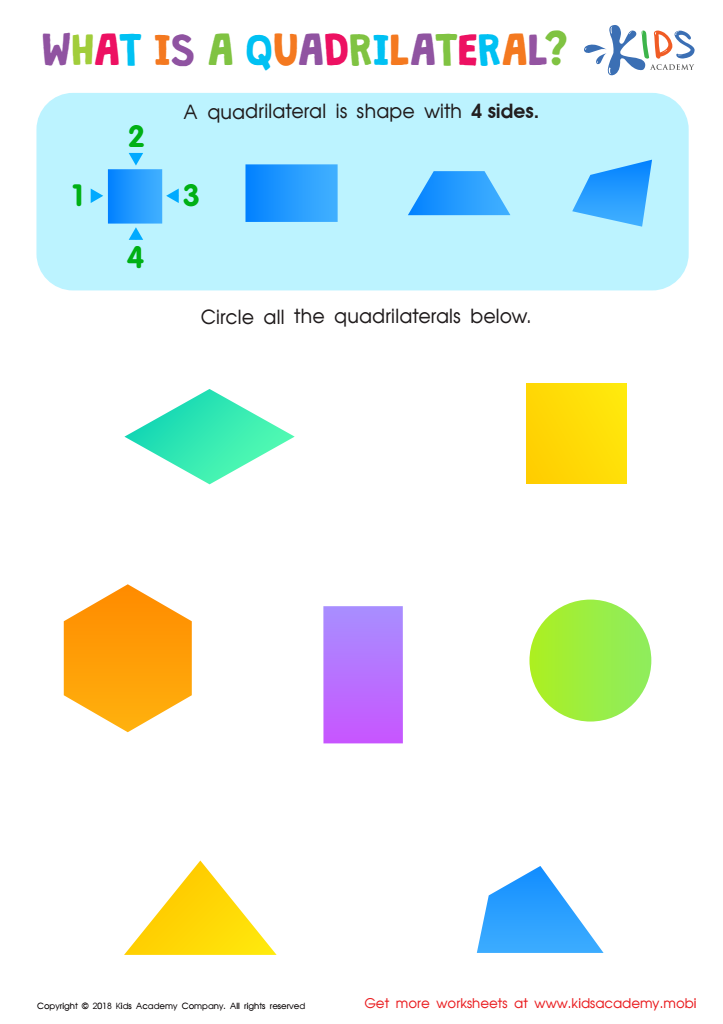
What Is a Quadrilateral? Worksheet
Does your kid know what a quadrilateral is? If not, this worksheet can help teach them. Explain that a quadrilateral is a shape with four sides and give examples, like a square or a rectangle. Then ask them to circle the quadrilaterals in the pictures. If they already know what a quadrilateral is, this task might be too easy.
What Is a Quadrilateral? Worksheet
Worksheet
Join Kids Academy for Free
Who is primarily going to use this learning content?








Understanding quadrilaterals and 2D shapes is crucial for children aged 6-8, as it lays the foundation for their mathematical journey. During these formative years, children are developing critical thinking and problem-solving skills, making geometry an essential component of their learning. Recognizing and categorizing quadrilaterals—such as squares, rectangles, trapezoids, and rhombuses—helps in enhancing spatial awareness and improving cognitive abilities.
When parents and teachers emphasize the importance of these shapes, children begin to understand relationships between the attributes of different shapes, such as angles and sides. This knowledge is not only fundamental in geometry but also applicable in daily life, from understanding design and architecture to promoting logical reasoning in other subjects like science.
Furthermore, geometry-related activities can nurture creativity and encourage hands-on learning. By engaging with tangible shapes through arts and crafts or everyday objects, children enhance their observational skills and become more confident in expressing their understanding.
Involving parents in this education also fosters a supportive learning environment, where curiosity about shapes can seamlessly translate into meaningful discussions and exploration. Ultimately, caring about shapes supports academic development and nurtures a lifelong interest in learning.