Fraction comparison Adding 2-digit Numbers Worksheets for Ages 6-8
3 filtered results
-
From - To
Enhance your child's math skills with our engaging "Fraction Comparison & Adding 2-Digit Numbers Worksheets" tailored for ages 6-8. These worksheets combine the concepts of fraction comparison with the addition of two-digit numbers, fostering a deeper understanding of basic math principles. Interactive and colorful, these printable activities motivate students to practice essential skills in a fun and effective way. Promote critical thinking as they compare fractions and solve addition problems, ensuring they are well-prepared for future math challenges. Perfect for home or classroom use, our worksheets are designed to make learning enjoyable and support your child's academic progress. Get started today!
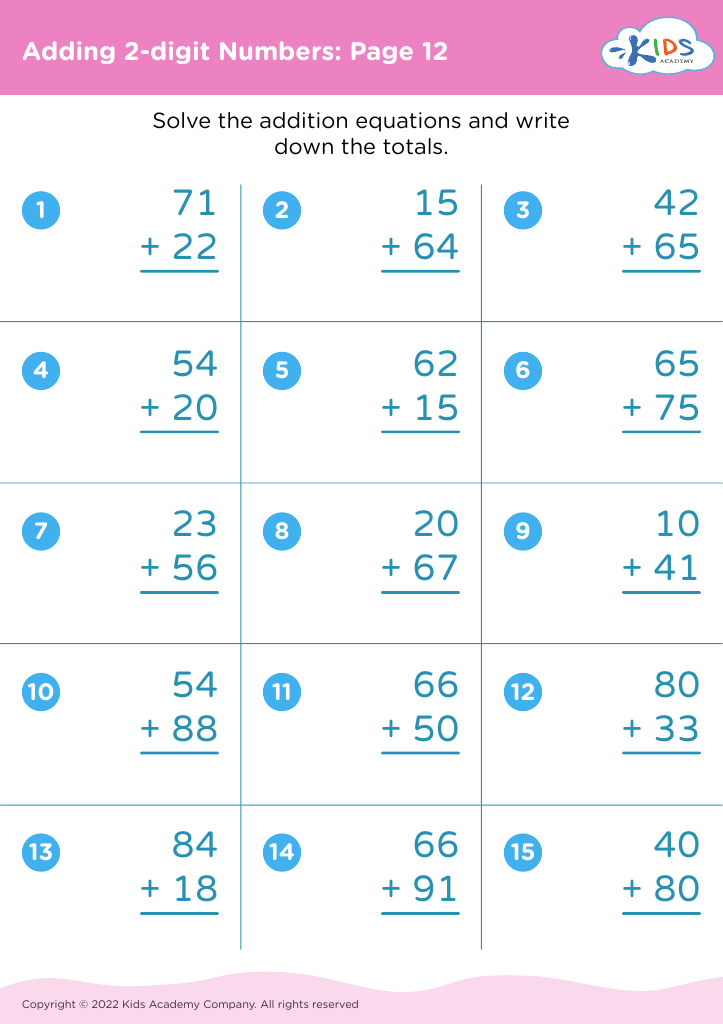
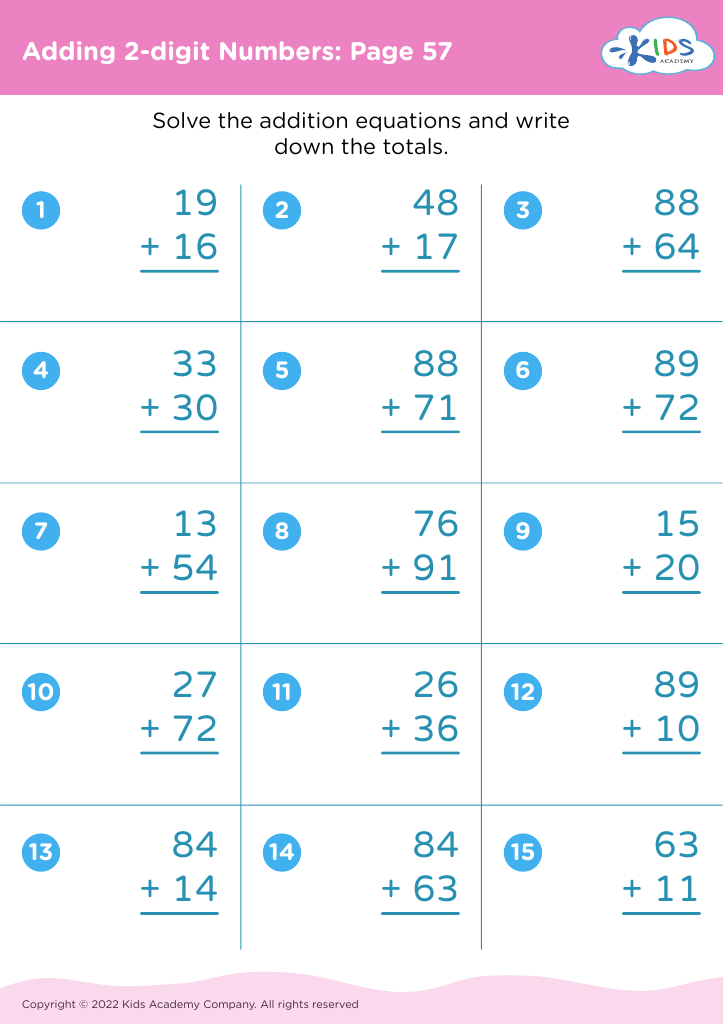
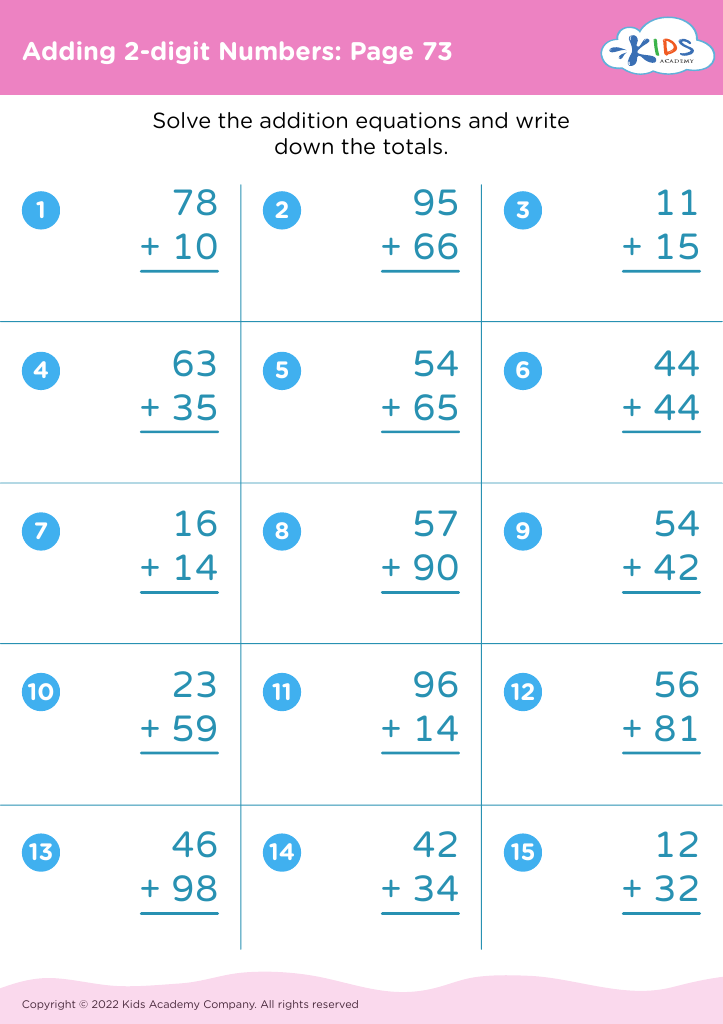








Parents and teachers should care about fraction comparison and adding 2-digit numbers for children ages 6-8 because these foundational skills are essential for future mathematics learning and everyday life. At this age, children are developing critical thinking and problem-solving abilities, and understanding fractions equips them with the tools to compare quantities, make decisions, and solve real-world problems.
Fraction comparison introduces children to the concept of building relationships between parts and wholes, which is crucial as they progress to more complex mathematical concepts such as ratios and percentages. It encourages logical reasoning and lays the groundwork for understanding proportions in subjects like science and economics.
Similarly, mastering the addition of 2-digit numbers enhances children's ability to perform calculations quickly and accurately, fostering confidence in their math abilities. It cultivates their mental math skills, setting the stage for more advanced operations such as subtraction, multiplication, and division.
Moreover, when children practice these skills together, they develop a deeper understanding of number sense and quantitative reasoning, promoting a positive attitude towards math. Encouraging proficiency in these areas builds general academic skills, instills persistence, and prepares them for future success in both math and other subjects.








