Reading comprehension Adding 2-digit Numbers Worksheets for Ages 6-8
4 filtered results
-
From - To
Explore our engaging "Reading Comprehension Adding 2-Digit Numbers Worksheets" designed specifically for ages 6-8. These worksheets combine vital math skills, focusing on addition with 2-digit numbers, while improving reading comprehension abilities. Each worksheet presents relatable word problems that encourage young learners to read carefully and apply their arithmetic skills to solve fun challenges. Our resources promote critical thinking, enhancing children's ability to analyze and interpret information. Perfect for classroom activities or home practice, these worksheets support a comprehensive learning experience, fostering both math proficiency and literacy. Help your child build a strong foundation in both subjects today!
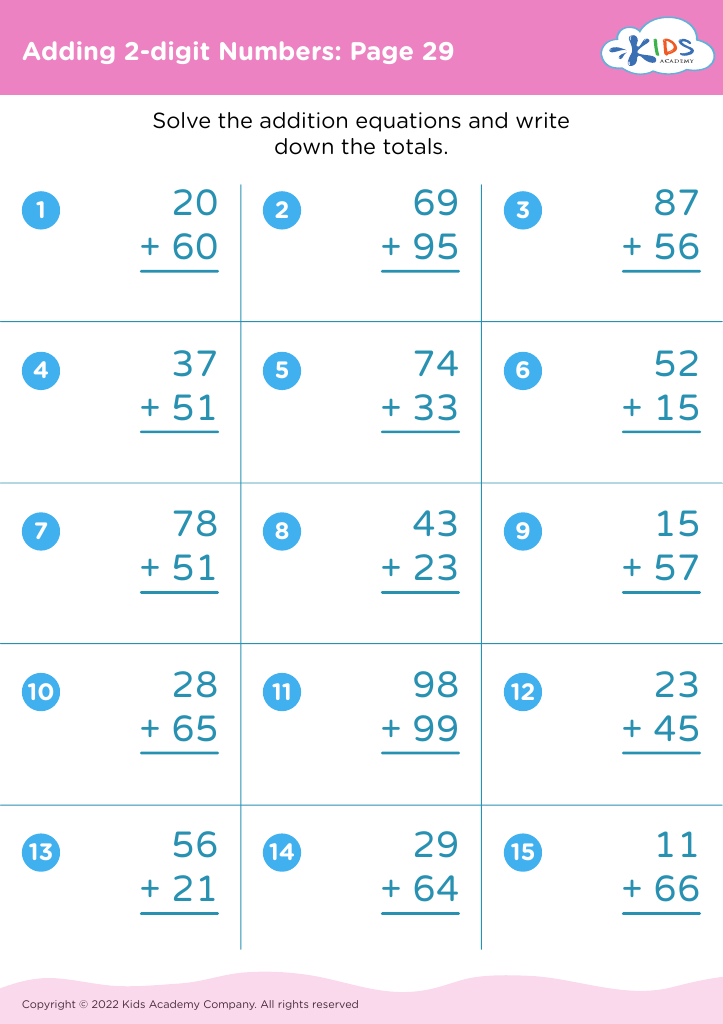
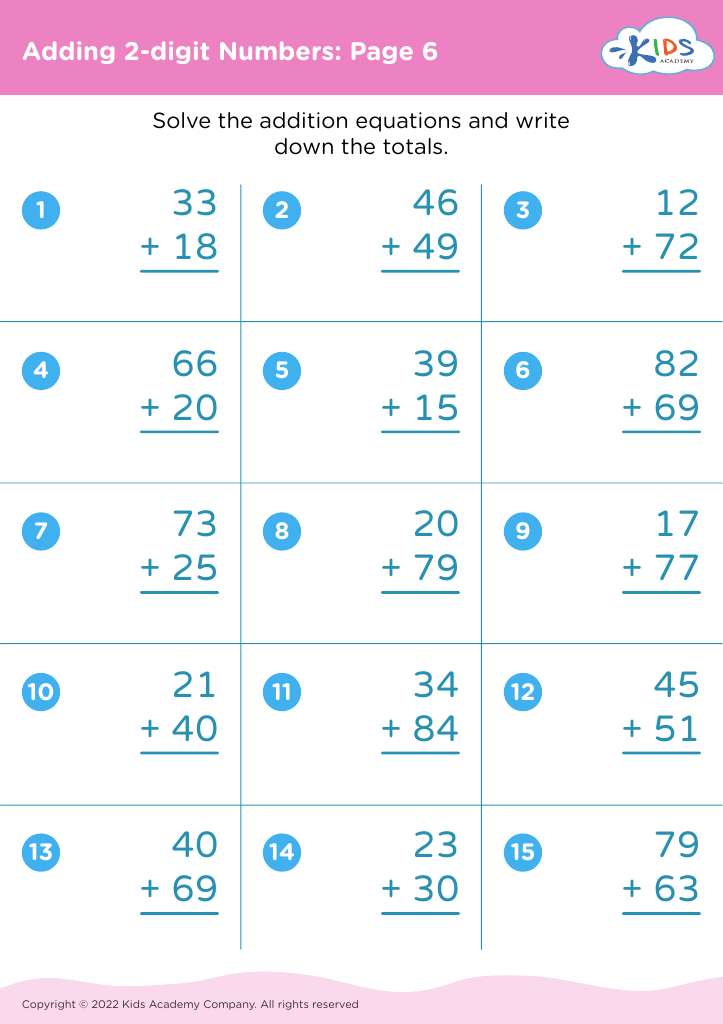
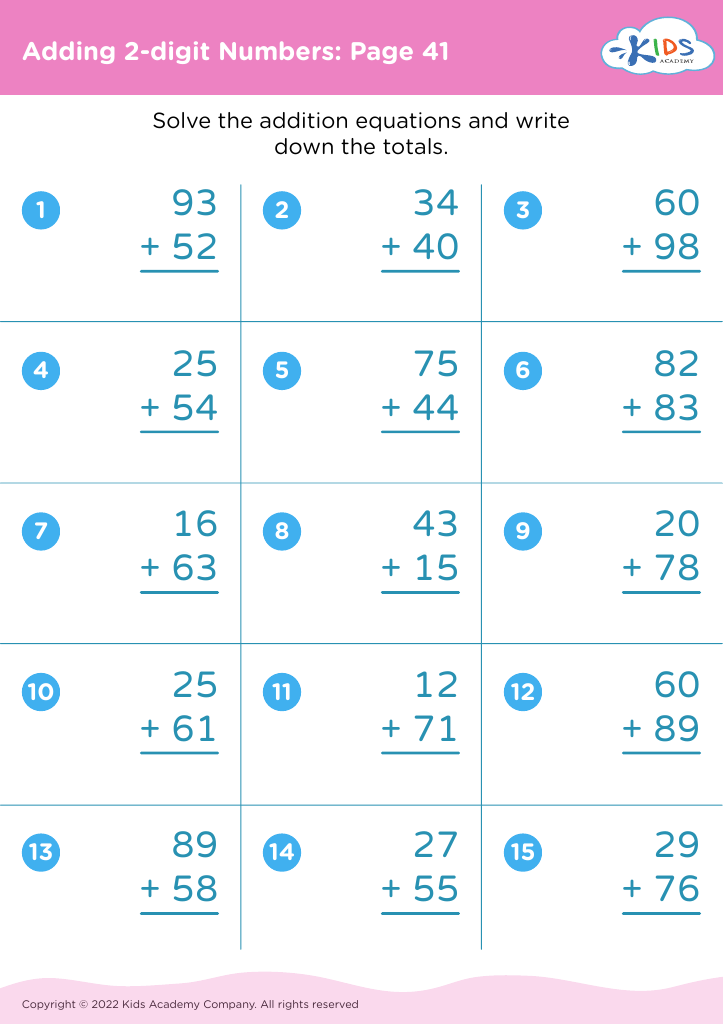
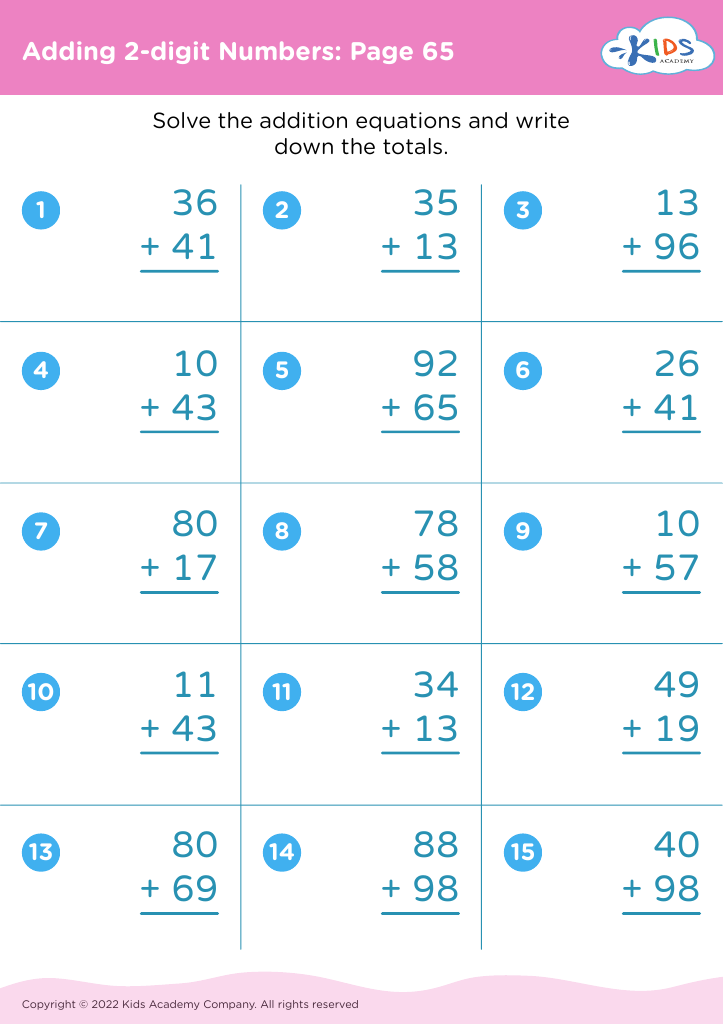








Reading comprehension and the ability to add 2-digit numbers are foundational skills that significantly impact a child's academic journey. For parents and teachers, fostering these skills in children aged 6 to 8 is crucial for several reasons.
Firstly, reading comprehension is essential for understanding instructions, stories, and homework, which are integral to all subjects. Children who excel in reading can better engage with content, ask pertinent questions, and develop critical thinking skills. By prioritizing reading comprehension, adults empower children to navigate information sources, make inferences, and connect ideas.
On the other hand, developing proficiency in adding 2-digit numbers sets the stage for more advanced mathematical concepts. Strong numeracy skills help children solve real-world problems, build confidence, and enhance their logical thinking. This foundational math ability is essential not just in mathematics but also in science, financial literacy, and everyday decision-making.
Moreover, these skills are interconnected; reading can support mathematical learning through word problems, while numeracy helps interpret data and graphs in reading materials. Thus, prioritizing reading comprehension alongside addition skills creates a well-rounded educational experience, paving the way for lifelong learning and success in both academic and personal pursuits.








