Improve number recognition Adding up to 100 Misc Worksheets for Ages 6-8
3 filtered results
-
From - To
Boost your child's math skills with our "Improve Number Recognition: Adding up to 100 Misc Worksheets for Ages 6-8." These engaging worksheets are designed to help young learners enhance their number recognition and addition abilities up to 100. Perfect for early-grade students, our resources combine fun and education, providing a variety of activities that cater to different learning styles. From colorful illustrations to hands-on exercises, each worksheet aims to build confidence and proficiency in math. Ideal for both classroom and home use, these worksheets are the perfect tool to foster a love for learning and improve essential math skills.
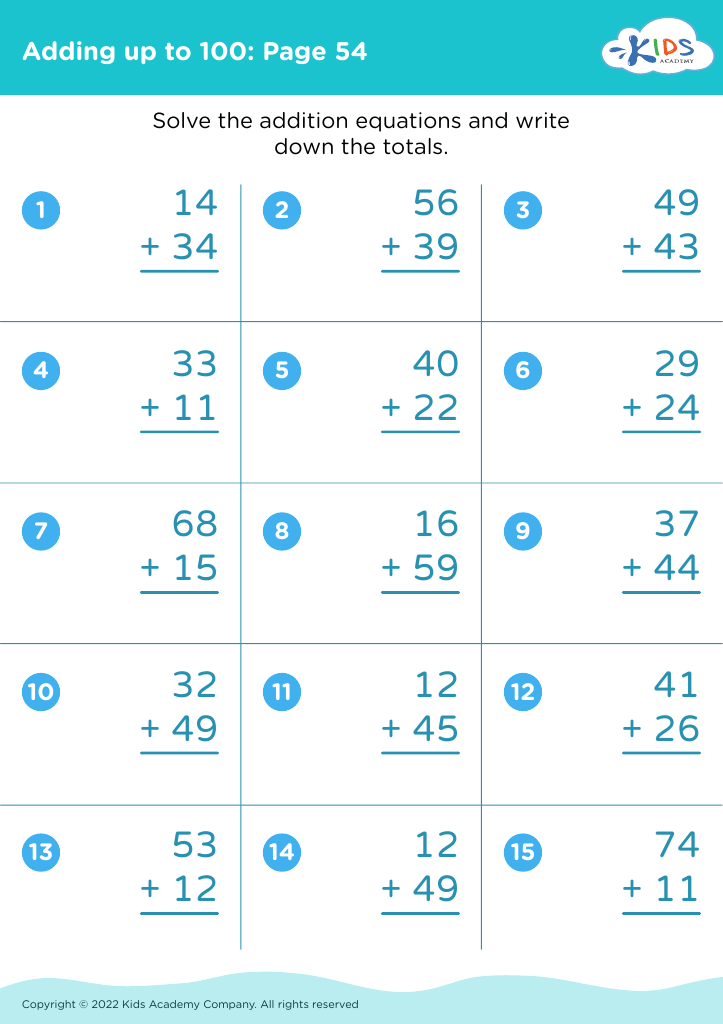
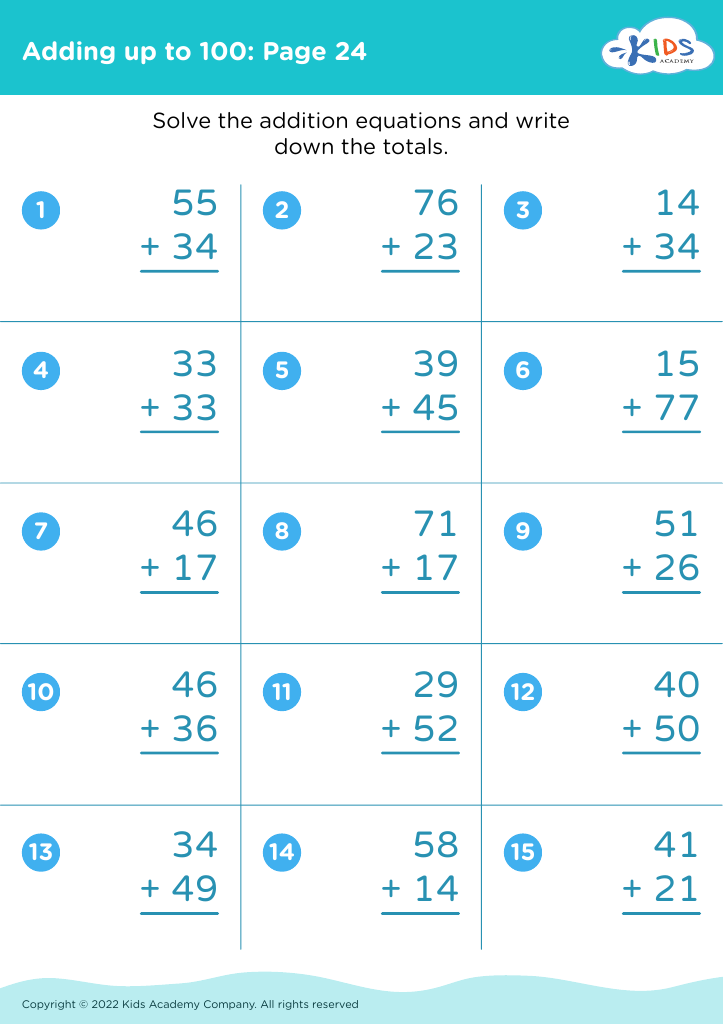
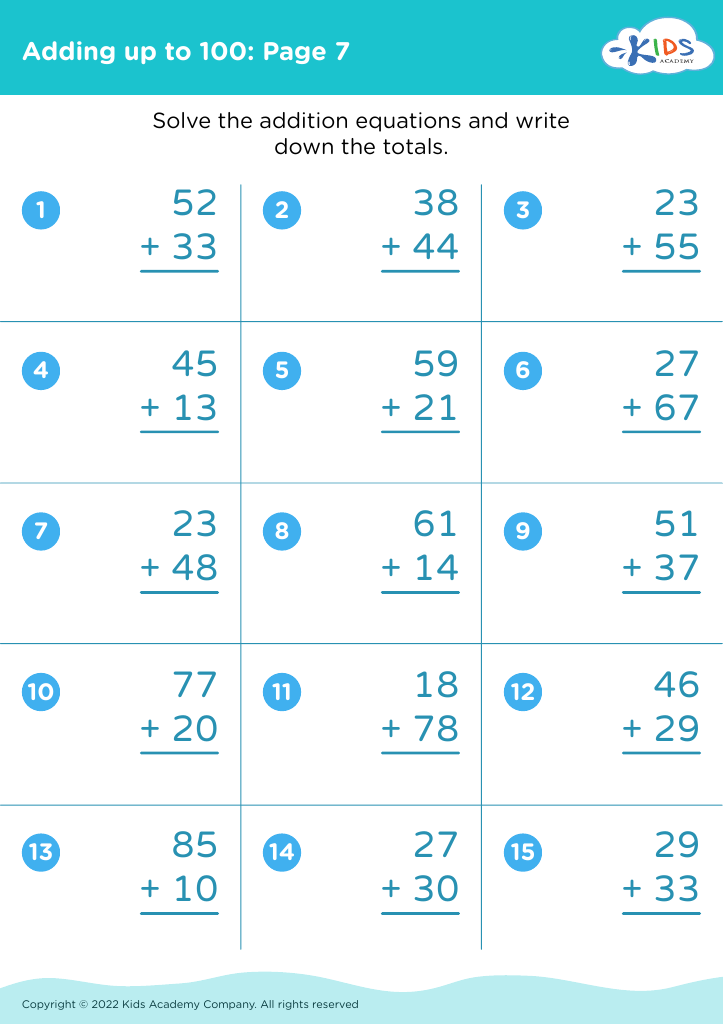


Parents and teachers should prioritize improving number recognition and adding up to 100 for children aged 6-8 because foundational math skills are critical for students' academic success and daily life functioning. At this stage, children are transitioning from simple counting to more complex arithmetic, which sets the groundwork for future math concepts such as multiplication and division.
Number recognition is vital because it helps children understand and identify numbers quickly, fostering numerical fluency. When children easily recognize and interpret numbers, they can solve problems more efficiently and with greater confidence. This fluency propels them academically, not just in mathematics, but across subjects like science and technology that require data handling and analysis.
Adding up to 100 introduces children to basic addition and place value, reinforcing their understanding of how numbers work together. This competency is essential for practical tasks, such as telling time, managing money, and measuring quantities in everyday activities like cooking or organizing.
Moreover, proficiency in these areas can boost children's self-esteem and encourage a positive attitude towards learning. Early success in math builds a solid foundation, reducing future anxiety or aversion to the subject. By investing attention in these skills during the early years, parents and teachers can help foster a generation of capable, confident learners ready to tackle more advanced mathematical challenges.