Basic Addition Skills Adding up to 100 with Regrouping Worksheets for Ages 6-8
3 filtered results
-
From - To
Enhance your child's basic addition skills with our meticulously designed worksheets for ages 6-8, focusing on adding up to 100 with regrouping. These engaging exercises aim to build foundational math competence, making addition easier and more intuitive. Each worksheet offers a variety of problems that challenge young learners while ensuring a fun learning experience. With visually appealing graphics and structured activities, kids will master addition with regrouping concepts effectively. Perfect for home practice or classroom assignments, these printable worksheets support both independent and guided learning, setting the stage for advanced arithmetic skills in future grades.
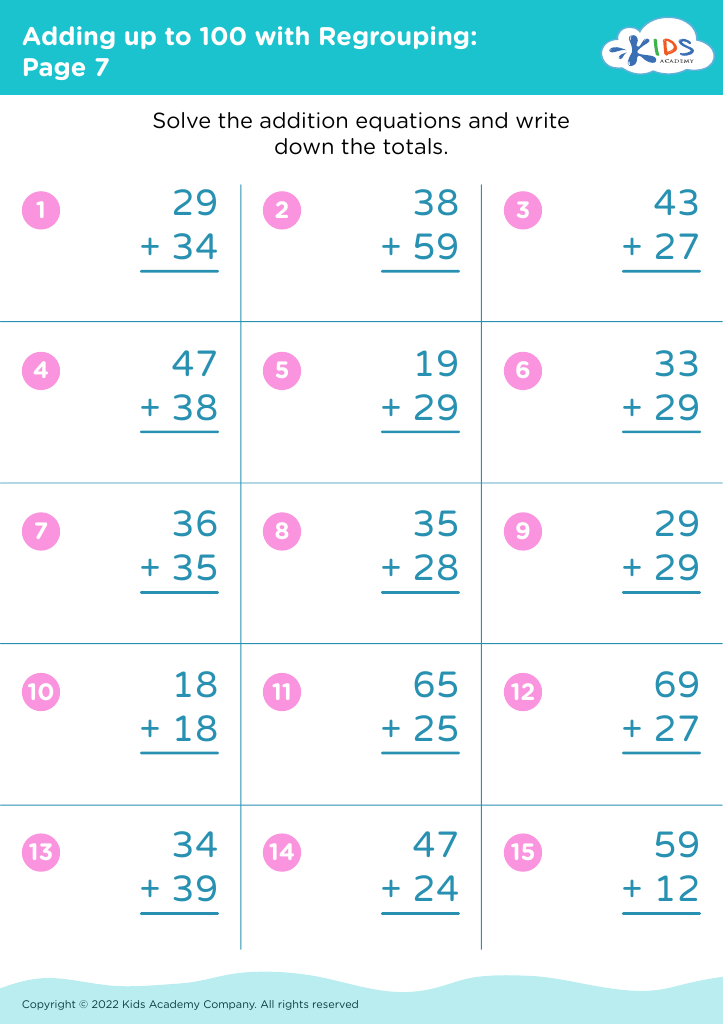
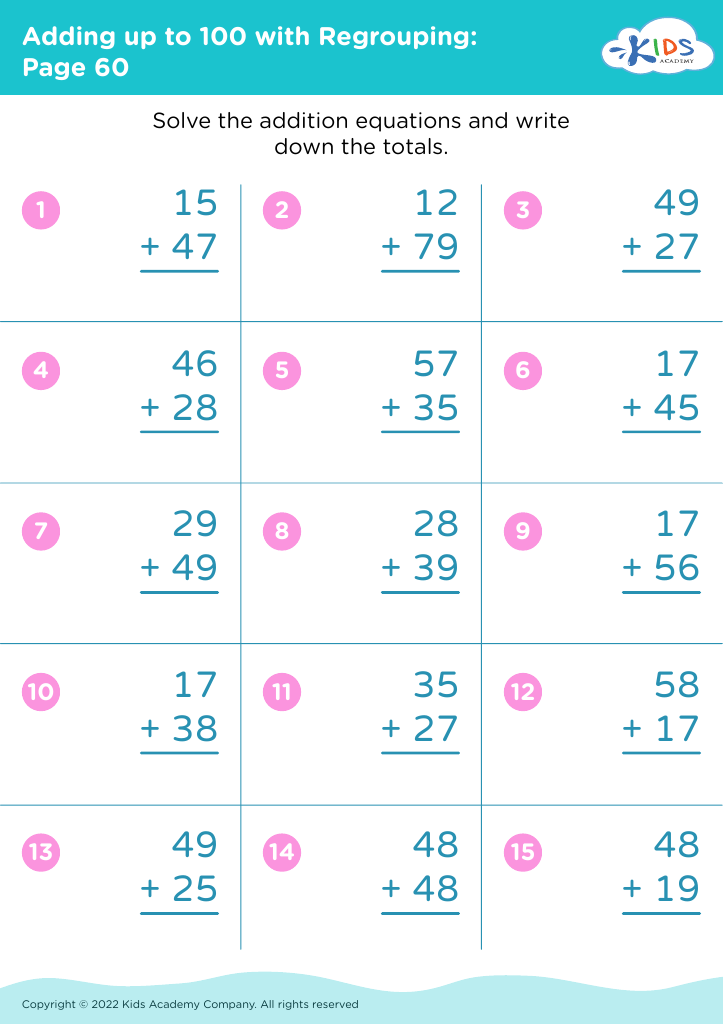
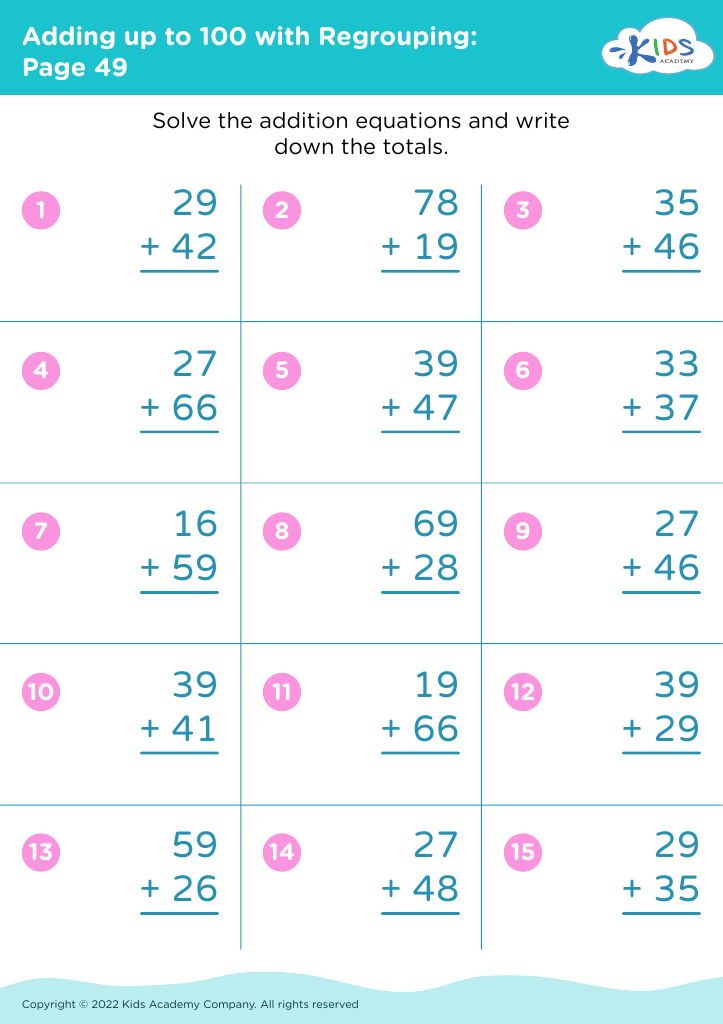




Parents and teachers should care deeply about teaching basic addition skills with regrouping for ages 6-8 because this foundational math concept is crucial for a child's long-term academic success and daily problem-solving abilities. At this age, children transition from simple counting to more complex arithmetic, and mastering addition with regrouping sets the stage for future mathematical operations such as subtraction, multiplication, and division.
Developing proficiency in addition up to 100 with regrouping enhances a child’s number sense and understanding of place value. This skill teaches children how to break down numbers and recognize patterns, fostering logical thinking and aiding memory retention. Such competence also translates to improved confidence and reduced anxiety when faced with more challenging math problems in the future.
Moreover, the ability to perform addition accurately and quickly is a vital life skill. Children use math daily, from counting change and managing time, to future tasks like budgeting and cooking. Educators and parents play a pivotal role by providing engaging and supportive learning environments. When children see the relevance and use math effectively in real-life scenarios, they are more likely to appreciate its value, making them more enthusiastic learners. Prioritizing these basic skills lays the groundwork for a solid educational journey and practical life readiness.