Basic Math Skills Adding up to 100 with Regrouping Worksheets for Ages 6-8
3 filtered results
-
From - To
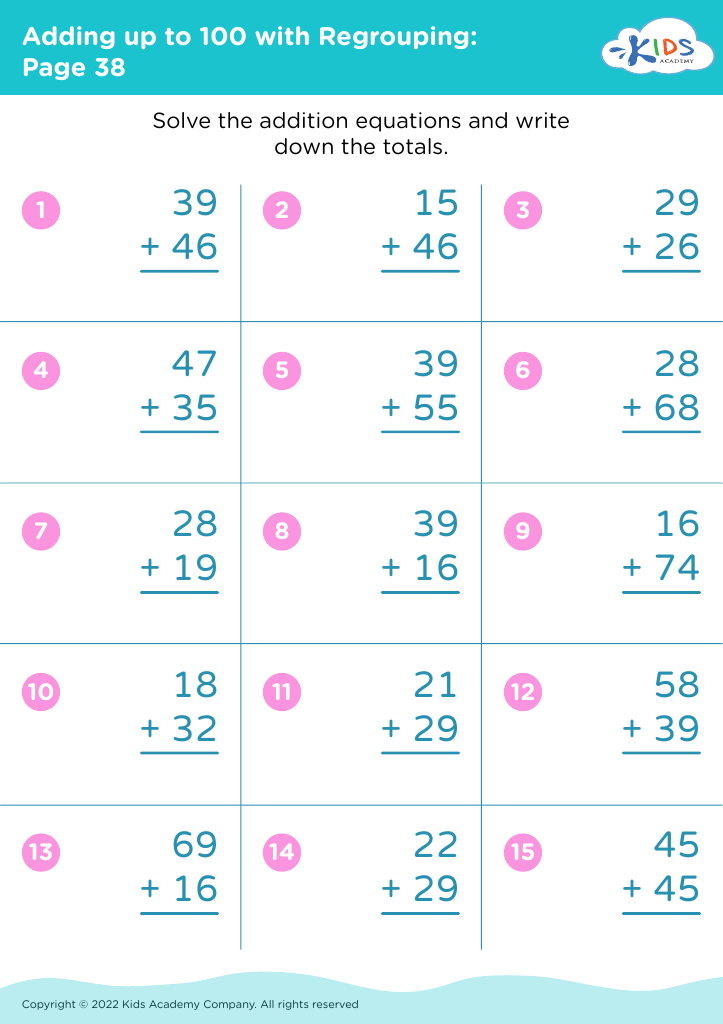
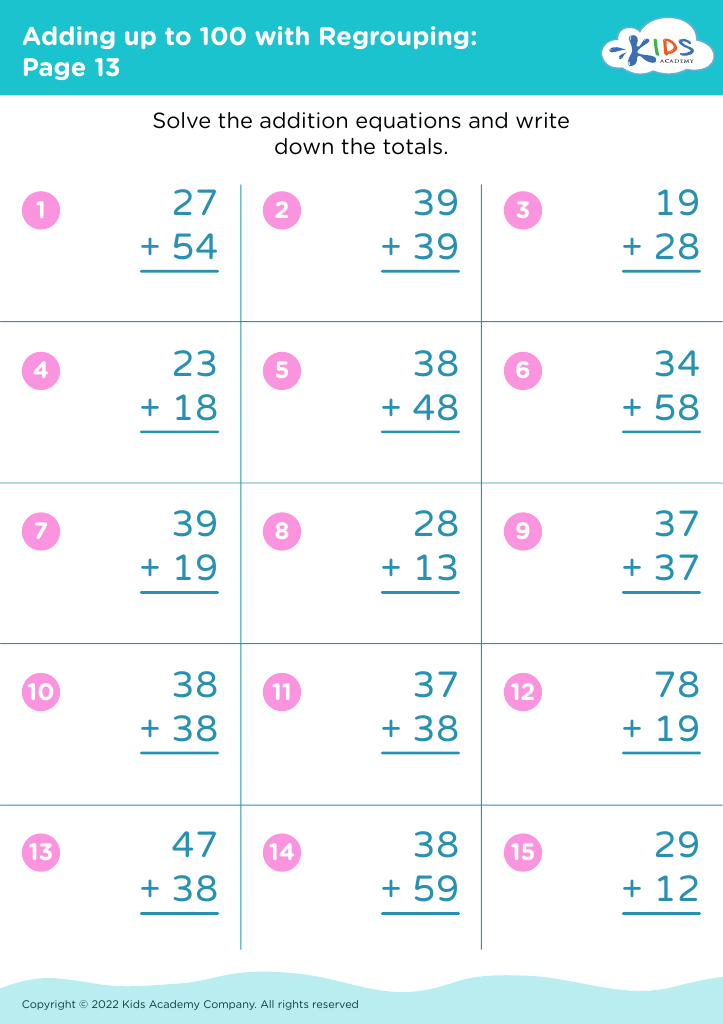
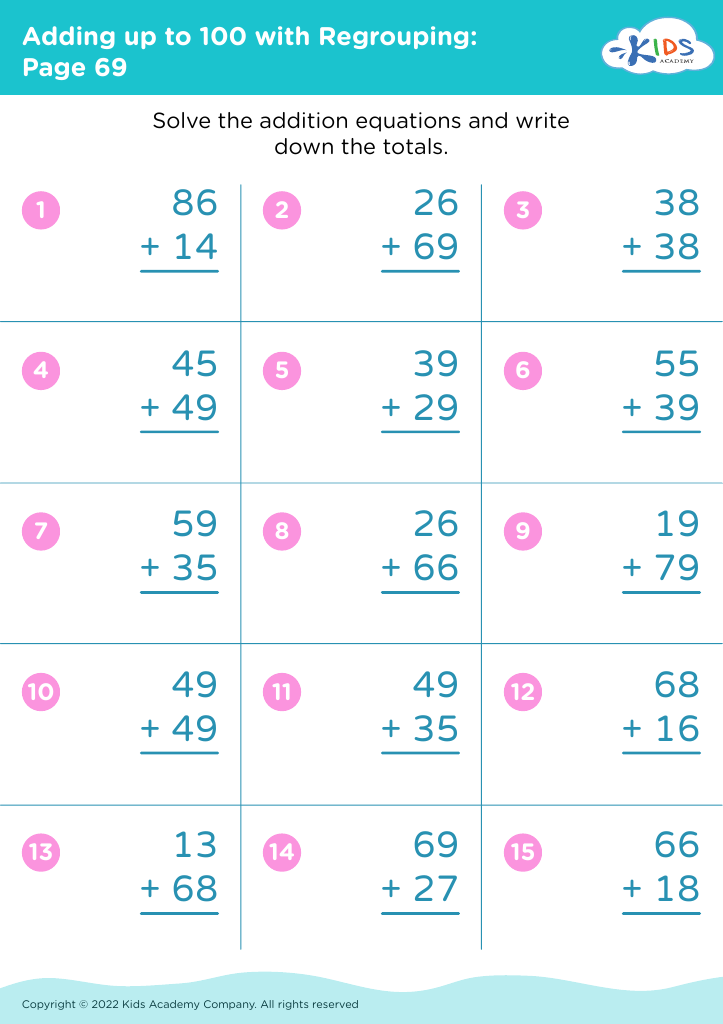
Discover engaging "Basic Math Skills Adding Up to 100 with Regrouping Worksheets" designed specifically for children ages 6-8. These interactive worksheets focus on building essential math skills through fun exercises that introduce the concept of regrouping in addition. Perfect for enhancing number sense, these activities encourage young learners to confidently tackle two-digit addition problems. With colorful illustrations and clear instructions, students will enjoy practicing these math concepts while gaining a solid foundation for future learning. Foster critical thinking and problem-solving skills in a supportive environment as your child explores the world of math and develops confidence with numbers. Start learning today!




Parents and teachers should prioritize basic math skills, specifically adding up to 100 with regrouping, for children aged 6-8 because these foundational skills are crucial for their cognitive development and future learning. At this age, children are developing their number sense and beginning to understand more complex concepts. Mastering addition with regrouping, also known as carrying, helps them grasp the concept of place value, which is essential for all arithmetic operations.
Furthermore, these skills promote problem-solving abilities and logical reasoning, equipping children with the tools they need to tackle real-world mathematical problems they will encounter later in life. For instance, when children understand how to regroup, they can confidently work with larger numbers and begin exploring subtraction, multiplication, and division.
Fostering these skills also builds confidence and reduces math anxiety, creating a positive attitude toward learning that extends beyond math. Moreover, collaborative support from both parents and teachers enhances a child's learning experience, making the process enjoyable and interactive. Investing time in developing basic math skills not only prepares children academically but also instills a love for learning, ensuring lifelong success.