Comparing Fractions Adding up to 100 with Regrouping Worksheets for Ages 6-8
9 filtered results
-
From - To
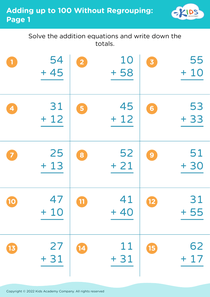
Introducing our "Comparing Fractions Adding Up to 100 with Regrouping Worksheets," specifically designed for children ages 6-8. These engaging and interactive worksheets help young learners master the concept of comparing fractions while incorporating the skills of addition with regrouping. Each worksheet features colorful illustrations and fun exercises that make math exciting and accessible. As students practice comparing fractions, they'll build essential problem-solving skills and confidence in their math abilities. Ideal for classroom or home use, our worksheets encourage independent learning while aligning with grade-level standards. Explore this collection today to make learning fractions a joyful adventure!
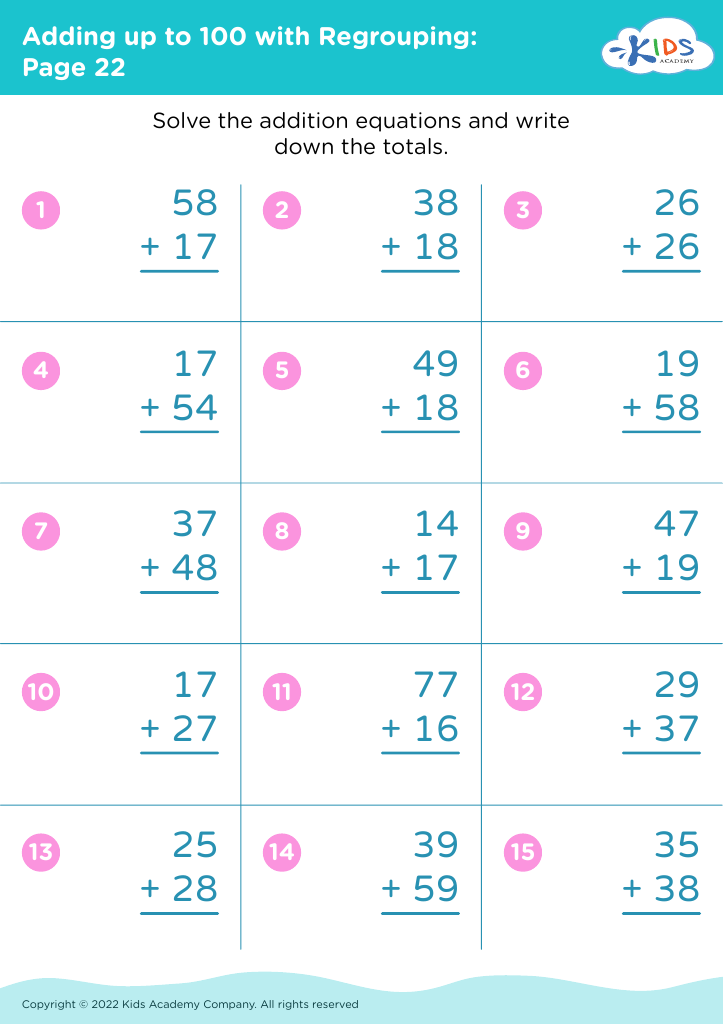
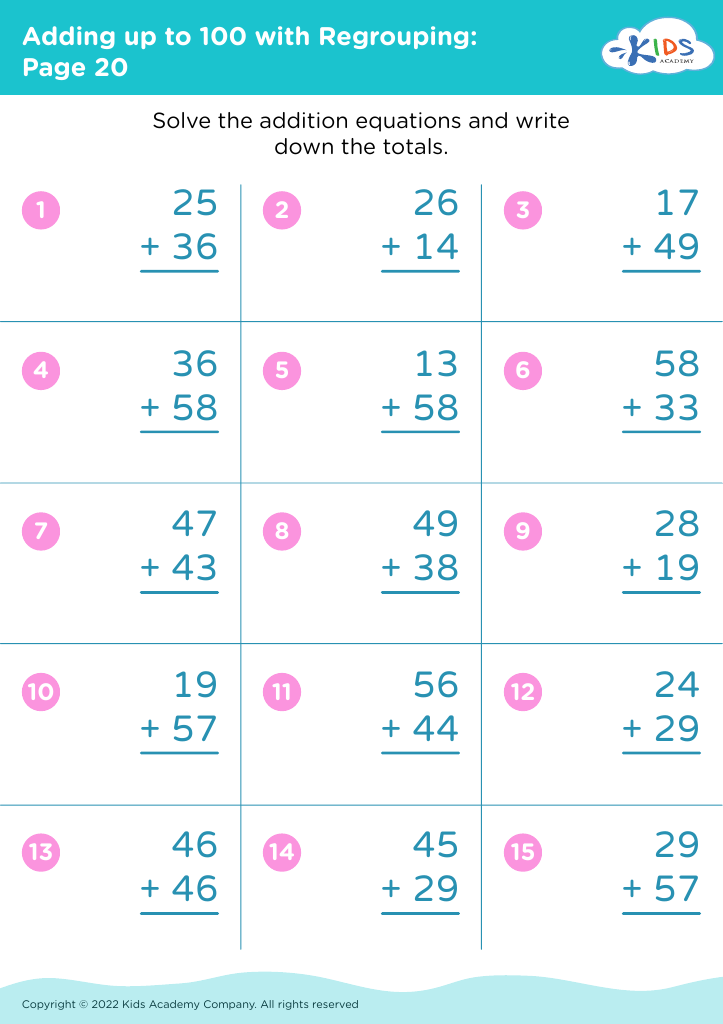
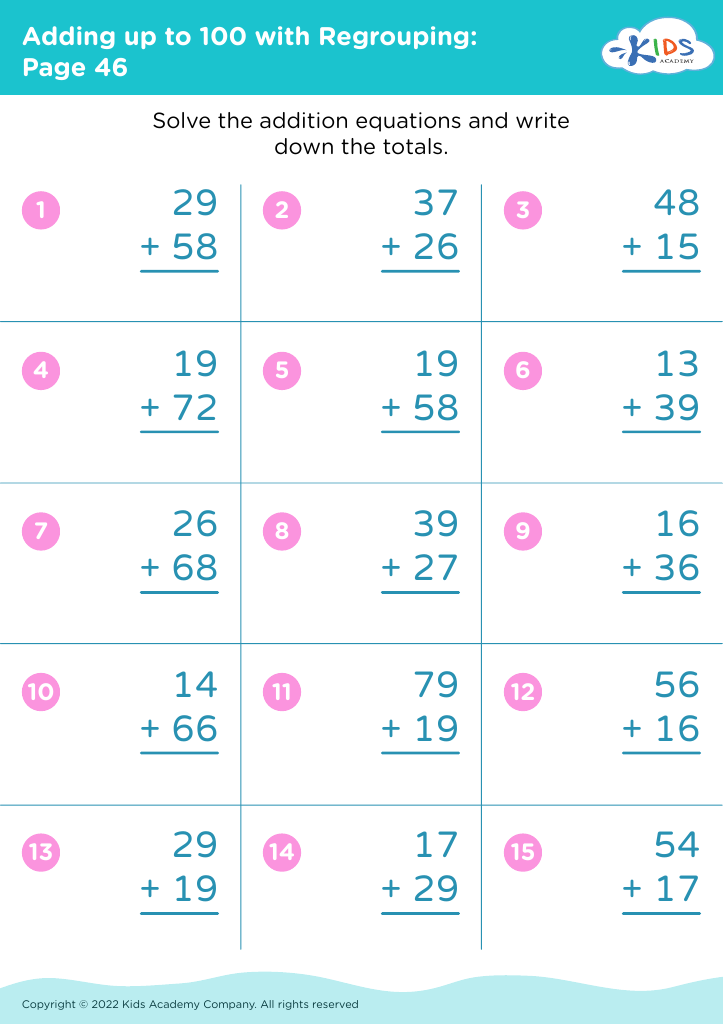
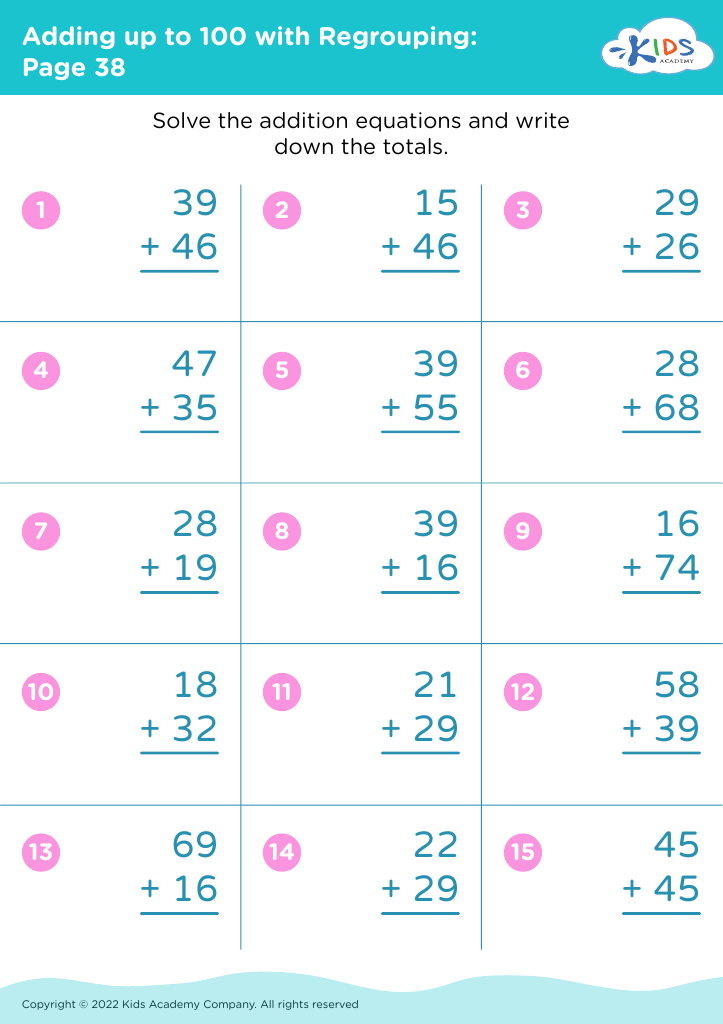
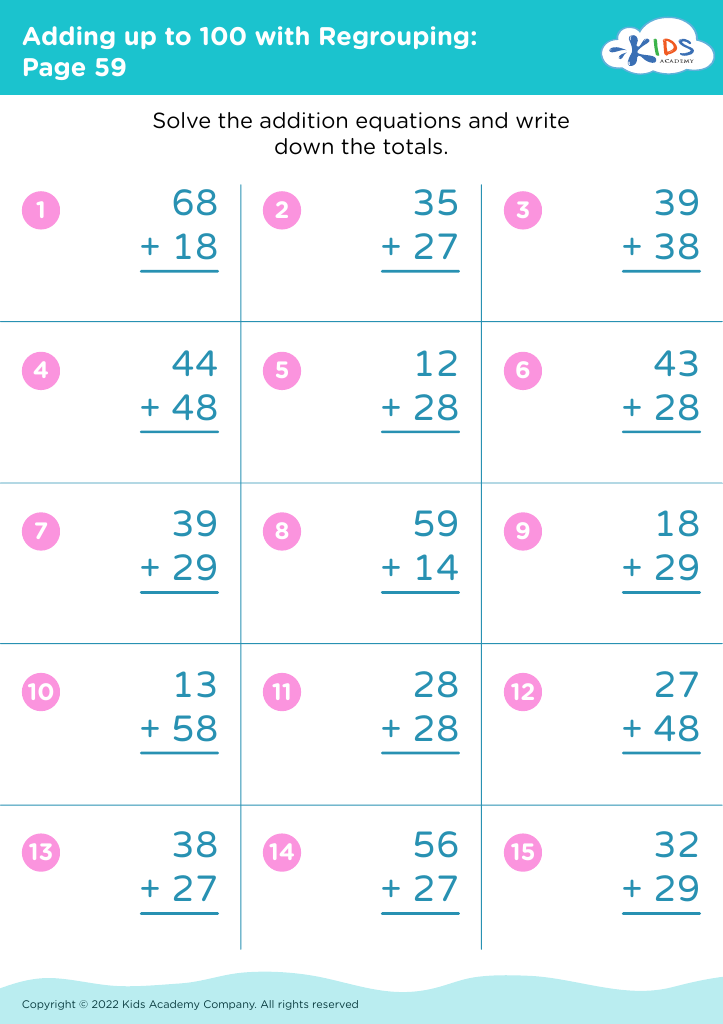
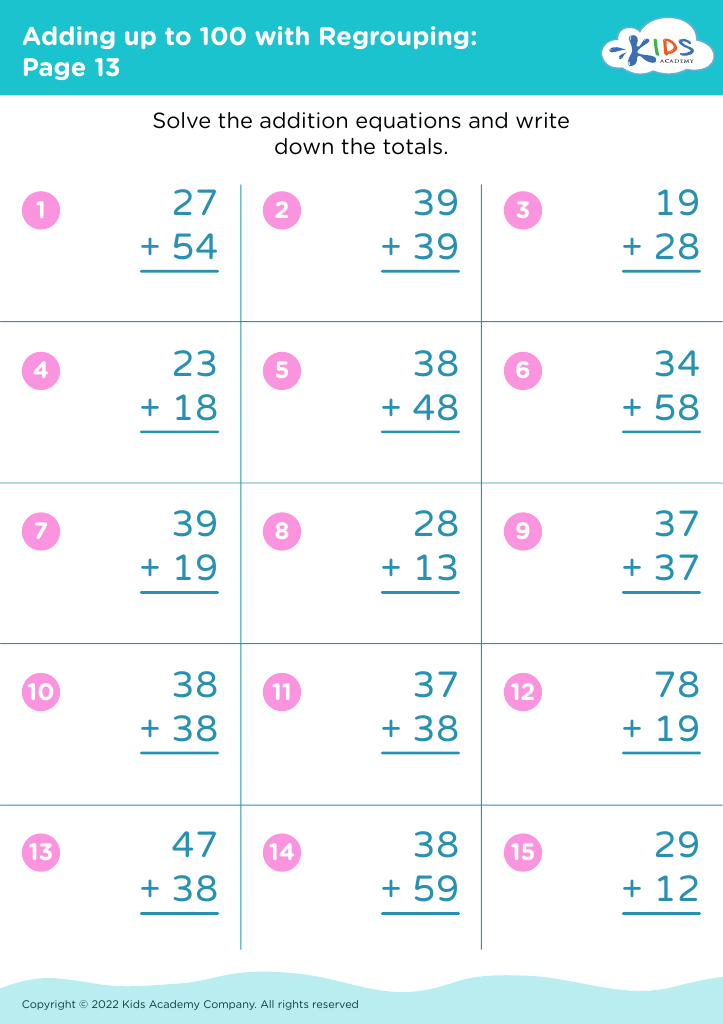
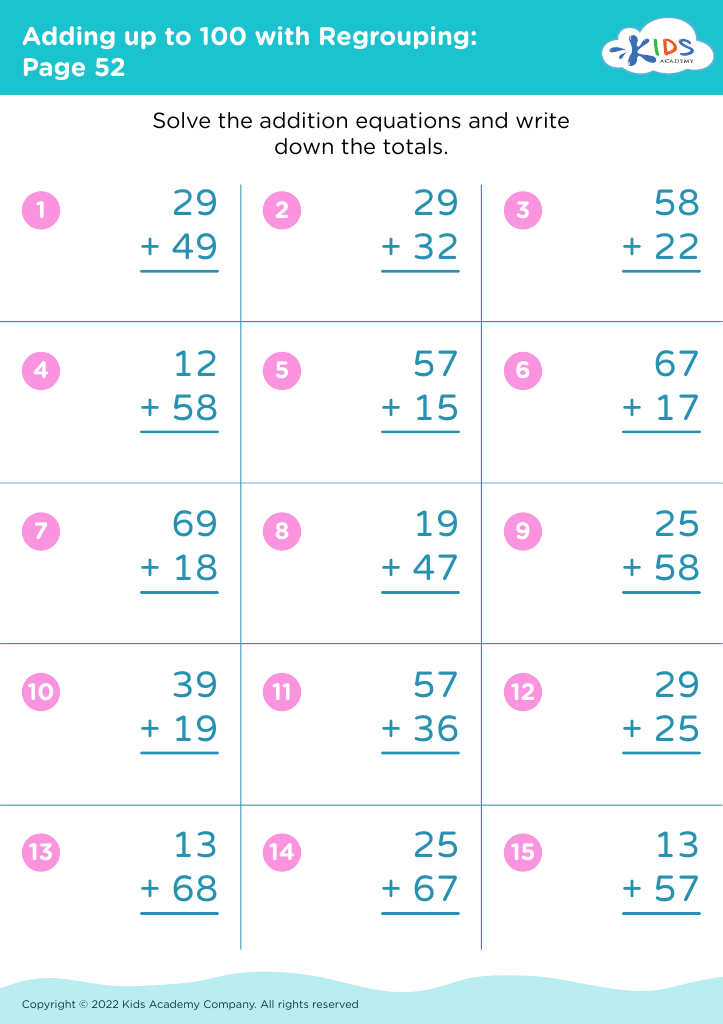
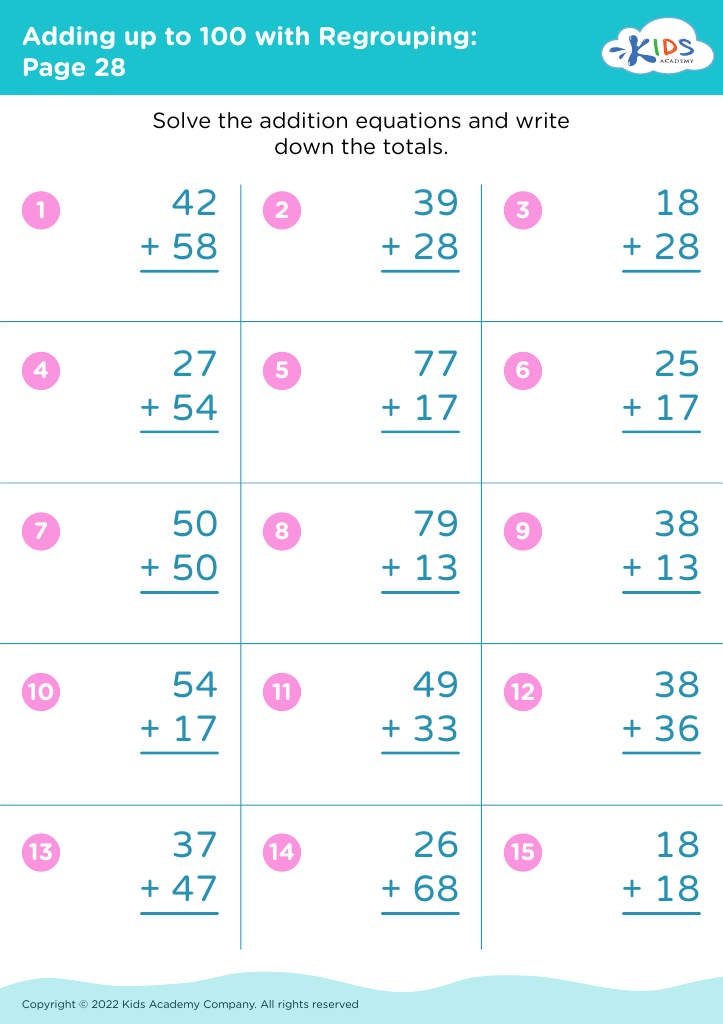
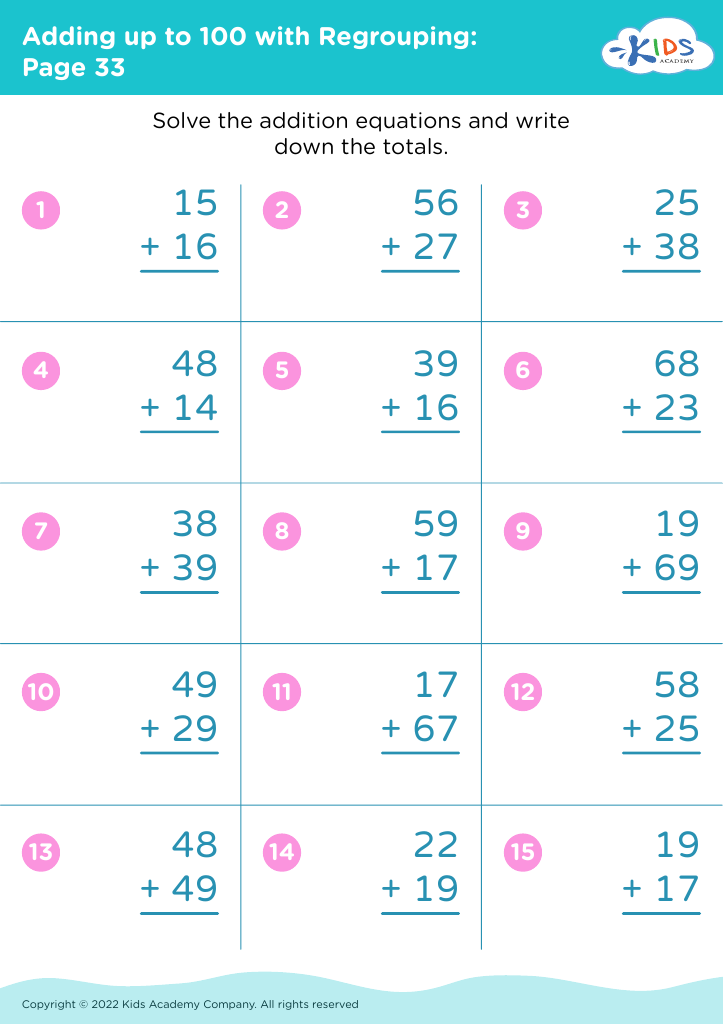




Understanding and comparing fractions is essential for young learners, especially those aged 6-8. When children grasp the concept of fractions adding up to 100, they develop critical foundational math skills that will serve them throughout their educational journey. This is particularly true for concepts involving regrouping, where students learn to partition or combine fractions effectively.
Parents and teachers should care about this topic because it enhances students' numerical literacy and boosts their confidence in tackling mathematical challenges. By engaging with fractions that sum to 100, children learn to visualize proportions, improve their problem-solving abilities, and develop contextual understanding of real-world situations like financial literacy or cooking measurements.
Additionally, mastering these concepts aids in enhancing students' analytical thinking. Fractions are often considered difficult, but breaking them down through practical activities can make learning enjoyable and effective. Teachers can use collaborative activities that encourage peer interaction, while parents can support this learning at home with real-life applications. Ultimately, focusing on comparing fractions and regrouping not only strengthens mathematical proficiency but also fosters persistence and curiosity—a combination that contributes to lifelong learning. Thus, engaging with fractions is crucial for nurturing both cognitive and socio-emotional skills in young learners.