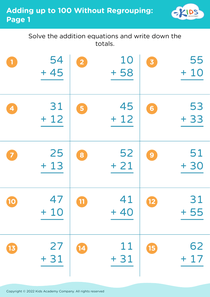
Enhance number recognition Adding up to 100 with Regrouping Worksheets for Ages 6-8
3 filtered results
-
From - To
Boost your child's number recognition skills with our engaging "Enhance Number Recognition: Adding up to 100 with Regrouping" worksheets, specially designed for ages 6-8. These printable resources provide interactive exercises that make learning fun and effective, allowing children to practice adding numbers that require regrouping. Through colorful visuals and relatable examples, your child will develop a strong foundation in math, building confidence as they navigate more complex addition problems. Our worksheets cater to various learning styles, ensuring that every child can succeed in mastering essential math concepts. Start your child’s journey to numerical fluency today!
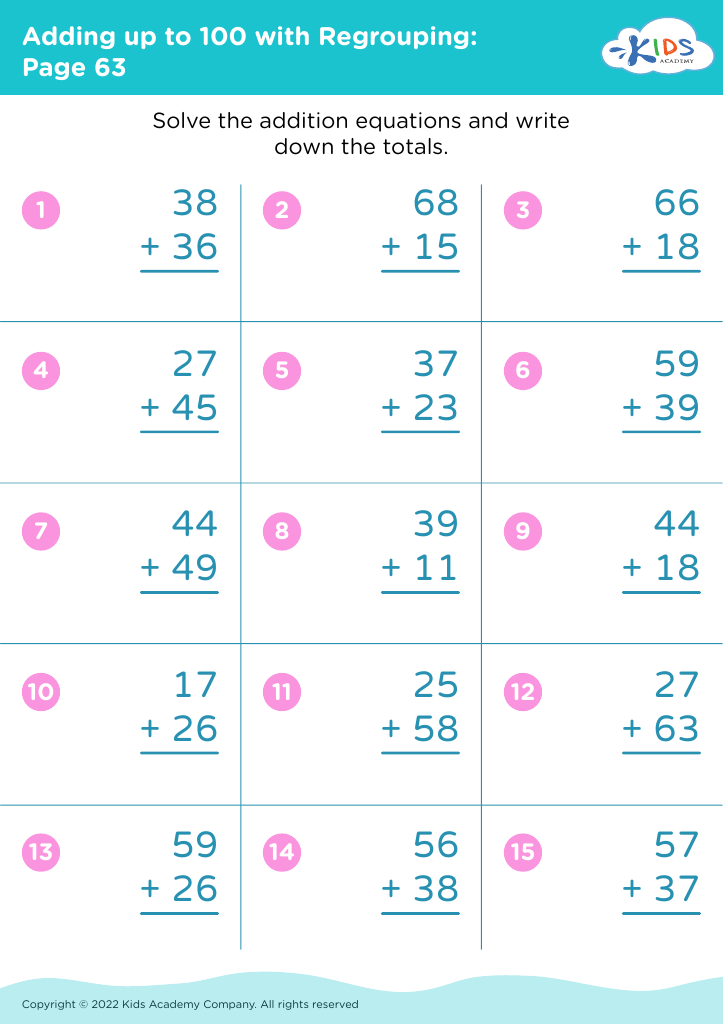
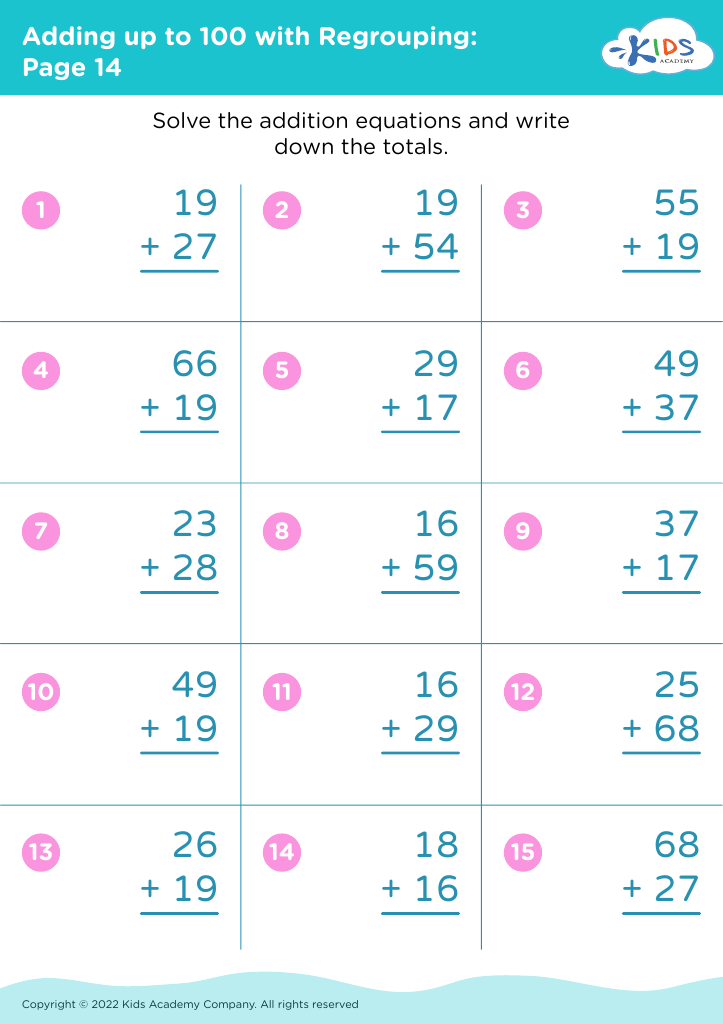
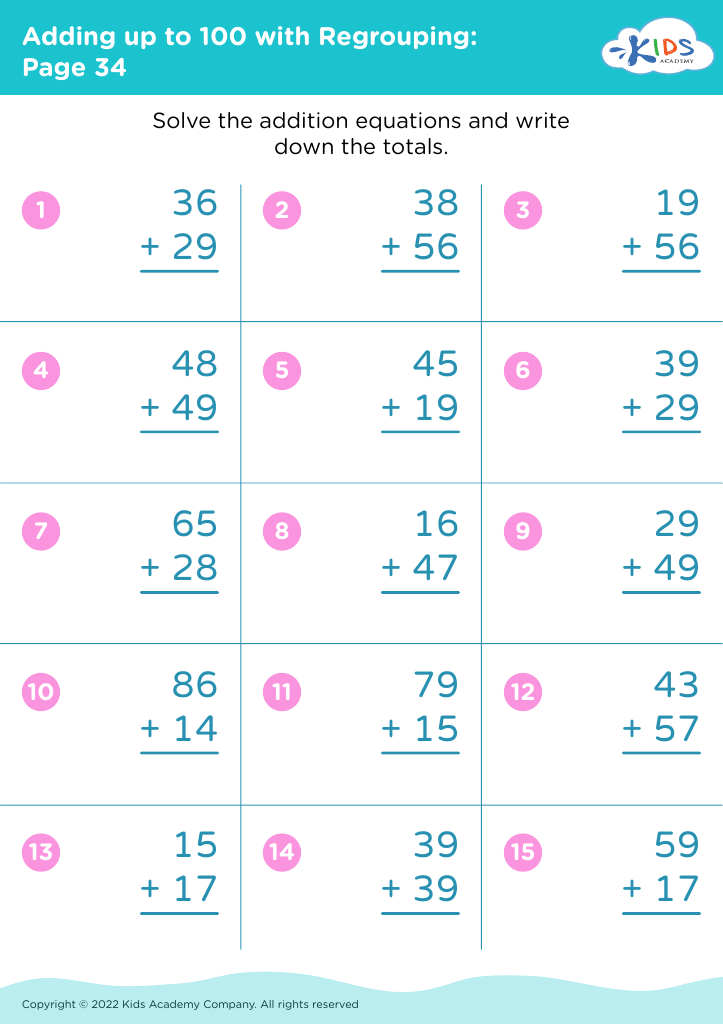




Enhancing number recognition, especially when adding up to 100 with regrouping, is crucial for children aged 6-8 as it lays the foundation for their mathematical understanding and confidence. At this developmental stage, children are transitioning from concrete to more abstract forms of thinking. Mastering number recognition aids in developing their ability to visualize and comprehend numbers, leading to improved problem-solving skills.
Regrouping is an essential strategy in addition that encourages children to understand place value, which is crucial for tackling larger numbers. This concept helps them to break down complex problems into manageable parts, fostering not only arithmetic skills but also logical reasoning. Moreover, improving number recognition and addition skills builds a child’s self-esteem, as they gain a sense of achievement when they successfully tackle mathematical challenges.
Parents and teachers play a vital role in nurturing these skills through guided practice, engaging activities, and positive reinforcement. By prioritizing enhanced number recognition and regrouping strategies, they help create enthusiastic learners who are well-prepared for future mathematical concepts, setting the stage for success in their educational journey. Ultimately, instilling these foundational skills can have a lasting impact on a child's confidence and interest in math.