Practice problem-solving Adding up to 100 with Regrouping Worksheets for Ages 6-8
3 filtered results
-
From - To
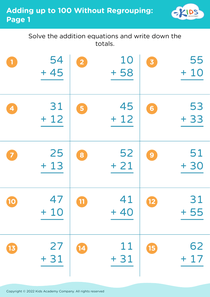
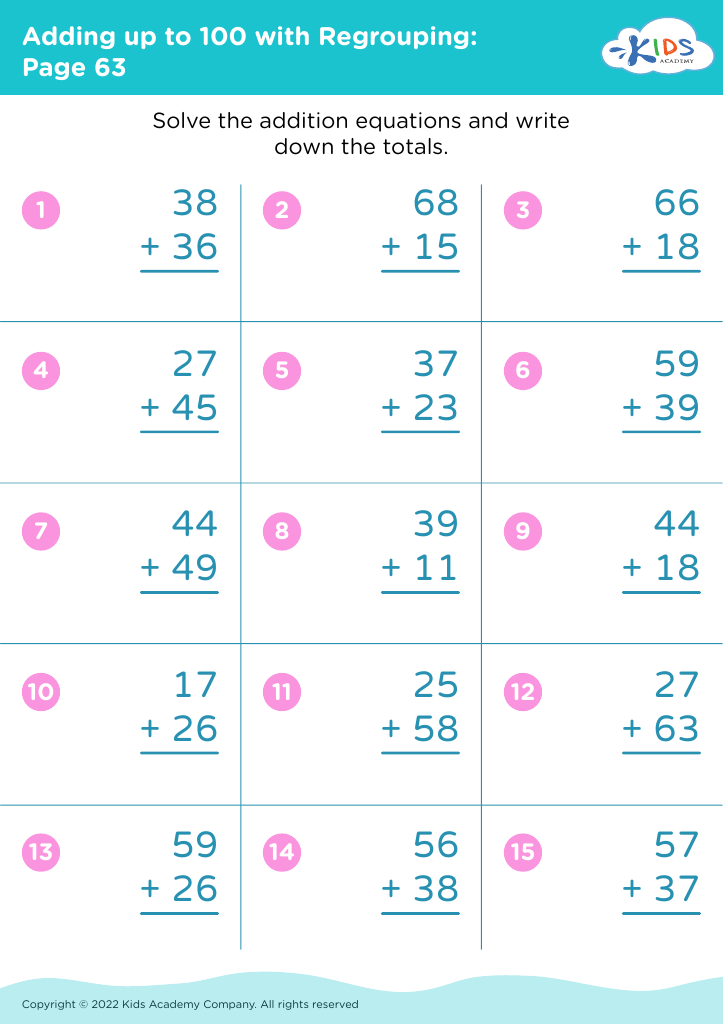
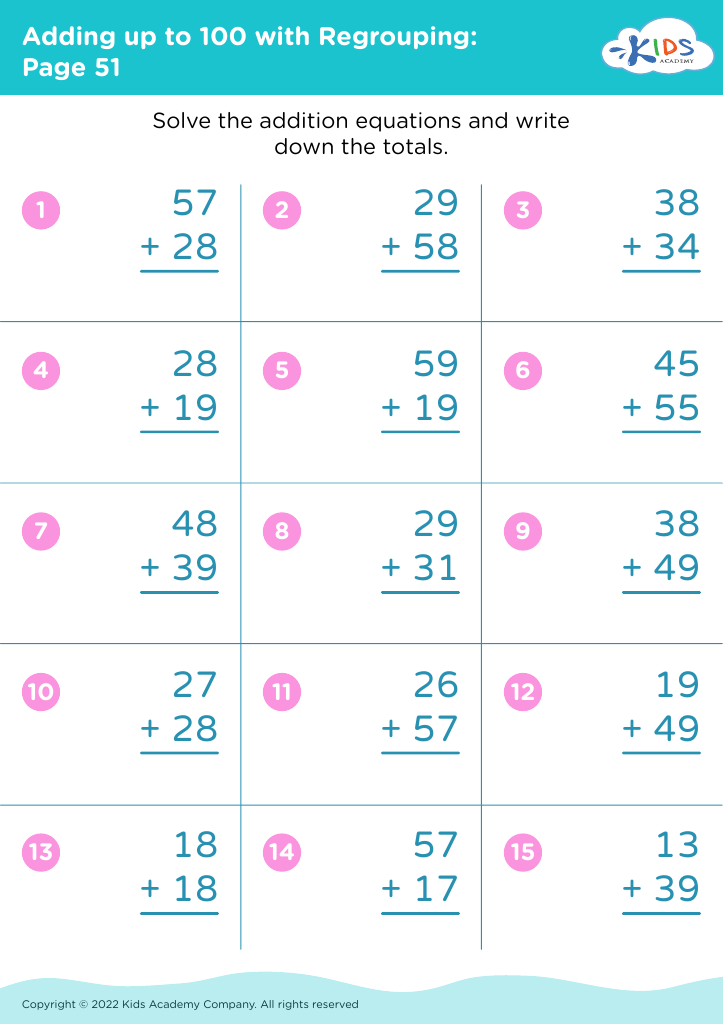
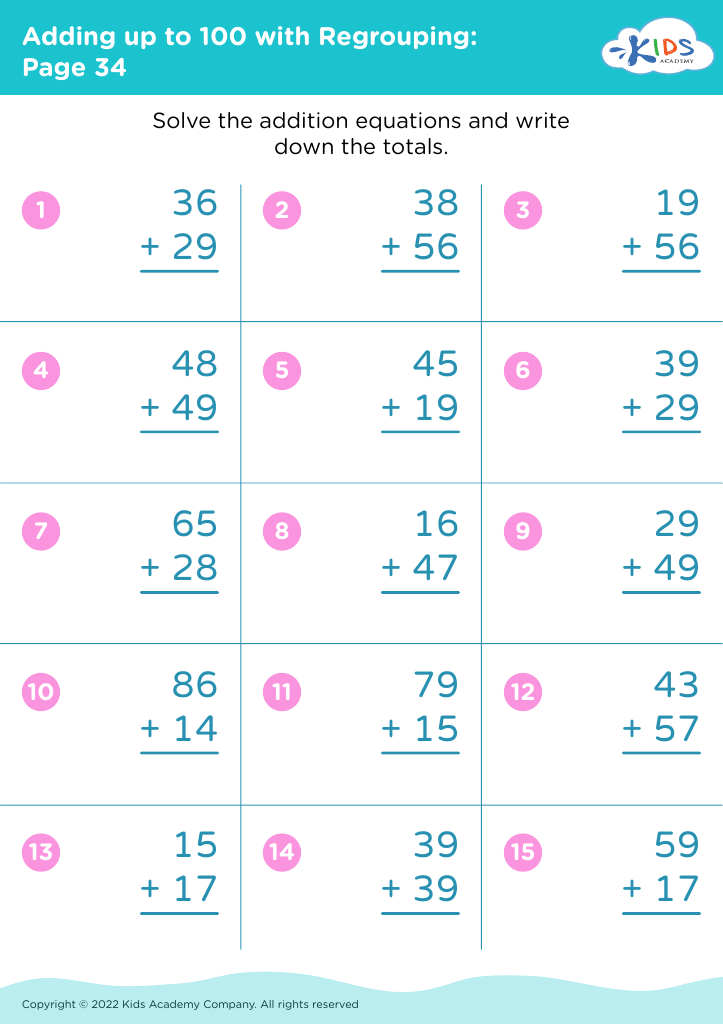
Explore our engaging "Practice Problem-Solving: Adding Up to 100 with Regrouping Worksheets" specially designed for children ages 6-8. These interactive worksheets provide young learners with the tools they need to master the art of addition through regrouping, a vital math skill. Each worksheet features a variety of exercises that encourage critical thinking and enhance problem-solving abilities while making learning fun. The structured format allows children to work at their own pace, reinforcing their understanding and confidence in addition. Perfect for both classroom and home use, these resources will inspire a love for math and help students excel in their studies.




Parents and teachers play a vital role in a child’s mathematical development, especially when it comes to problem-solving skills like adding up to 100 with regrouping. This skill is crucial for several reasons. Firstly, mastery of addition and regrouping lays a strong foundation for more advanced math concepts, such as subtraction, multiplication, and even algebra. Children who grasp these early skills are more likely to succeed in later mathematics.
Secondly, problem-solving fosters critical thinking, as it encourages kids to analyze a situation, strategize their approach, and come up with solutions. This cognitive engagement is essential not just in math, but across all subjects. The ability to break down complex problems into manageable parts builds resilience and a growth mindset.
Moreover, by focusing on practical problem-solving, children gain confidence in their math abilities. This can lead to a more positive attitude towards learning and greater participation in class. Finally, involving parents in this process enhances children's learning experiences, as it allows for bonding over educational activities and reinforces that learning can be fun and engaging. Thus, focusing on adding up to 100 with regrouping equips children with essential skills for both their academic journey and everyday life.