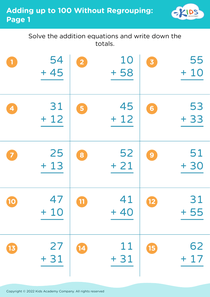
Problem-Solving Skills Adding up to 100 with Regrouping Worksheets for Ages 6-8
7 filtered results
-
From - To
Enhance your child's problem-solving skills with our "Adding up to 100 with Regrouping" worksheets designed specifically for ages 6-8. These engaging and interactive resources help young learners master essential math concepts while developing critical thinking abilities. By using our structured practice exercises, children can learn to approach complex problems systematically, improving their confidence in mathematics. With a focus on regrouping strategies, these worksheets provide ample opportunities for hands-on learning, enabling students to understand and apply addition concepts effectively. Perfect for classroom use or at-home practice, our worksheets cultivate a strong mathematical foundation, setting the stage for future success. Start your child’s journey to math mastery today!
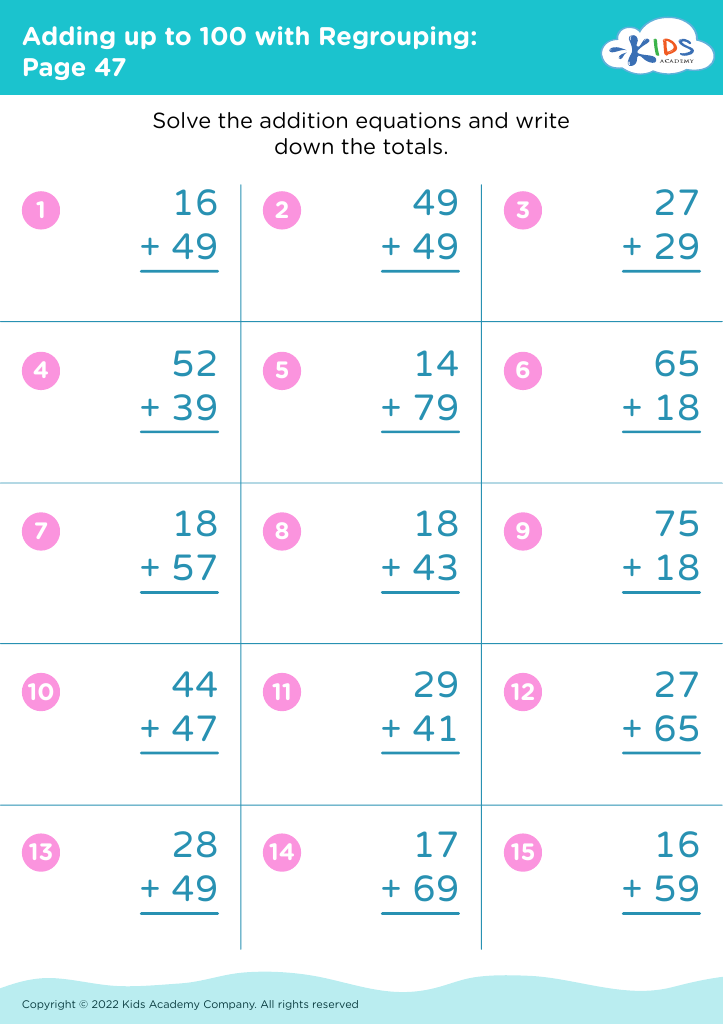
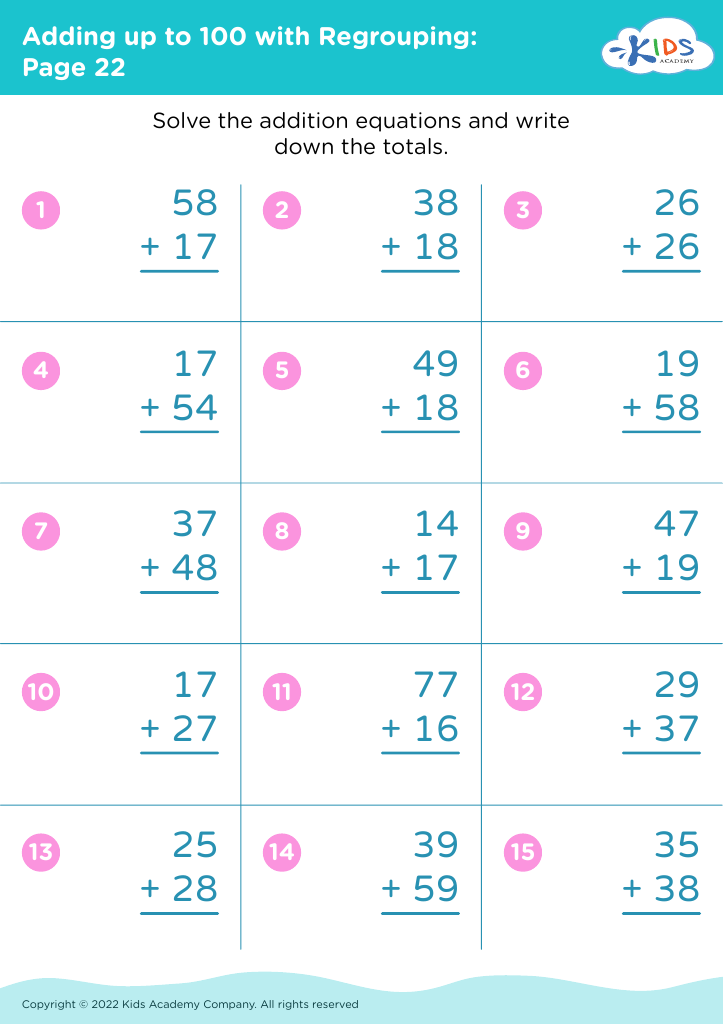
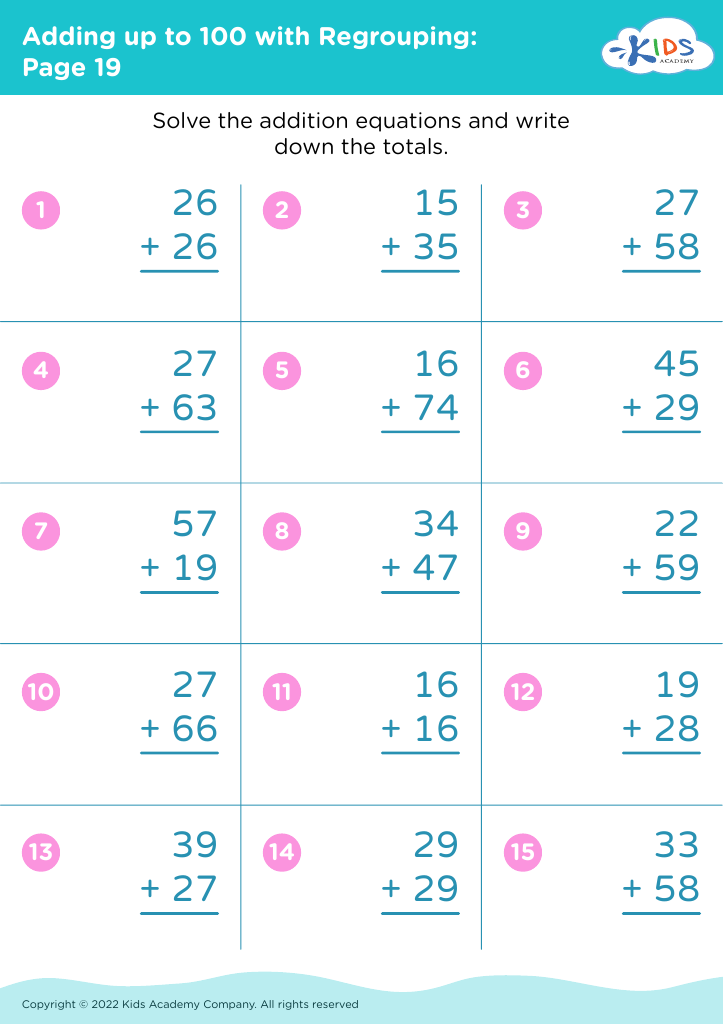
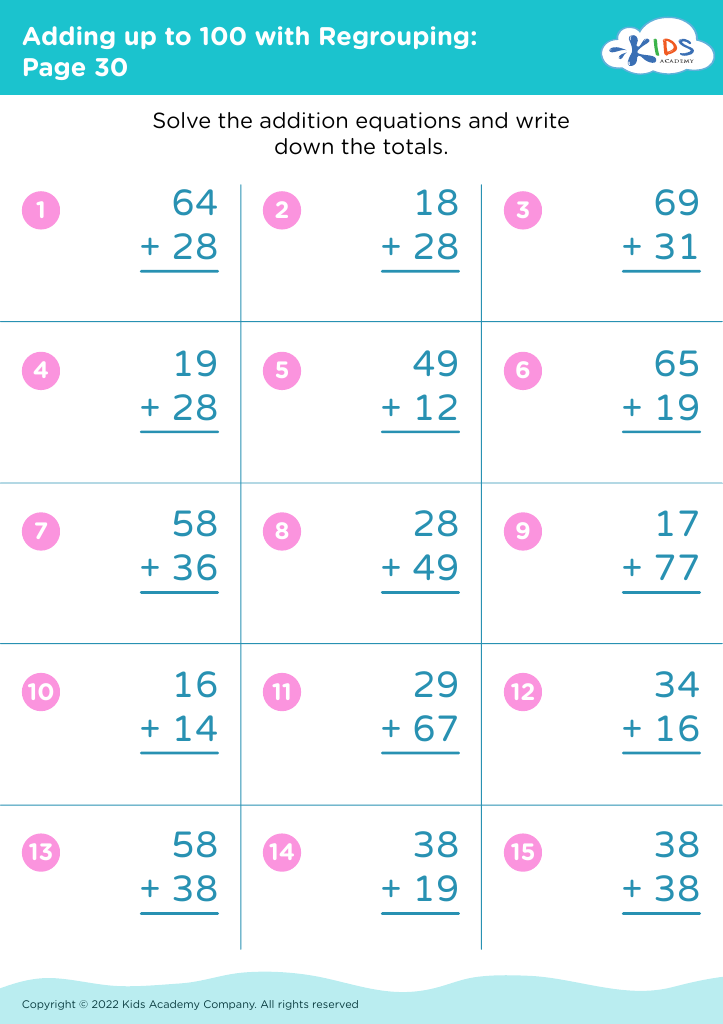
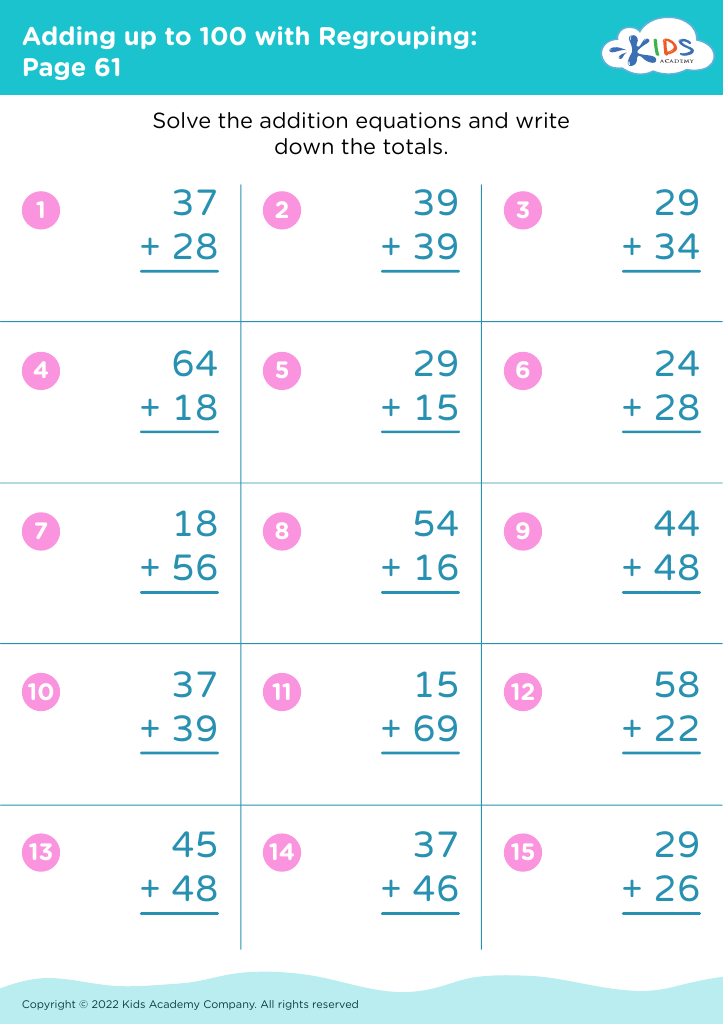
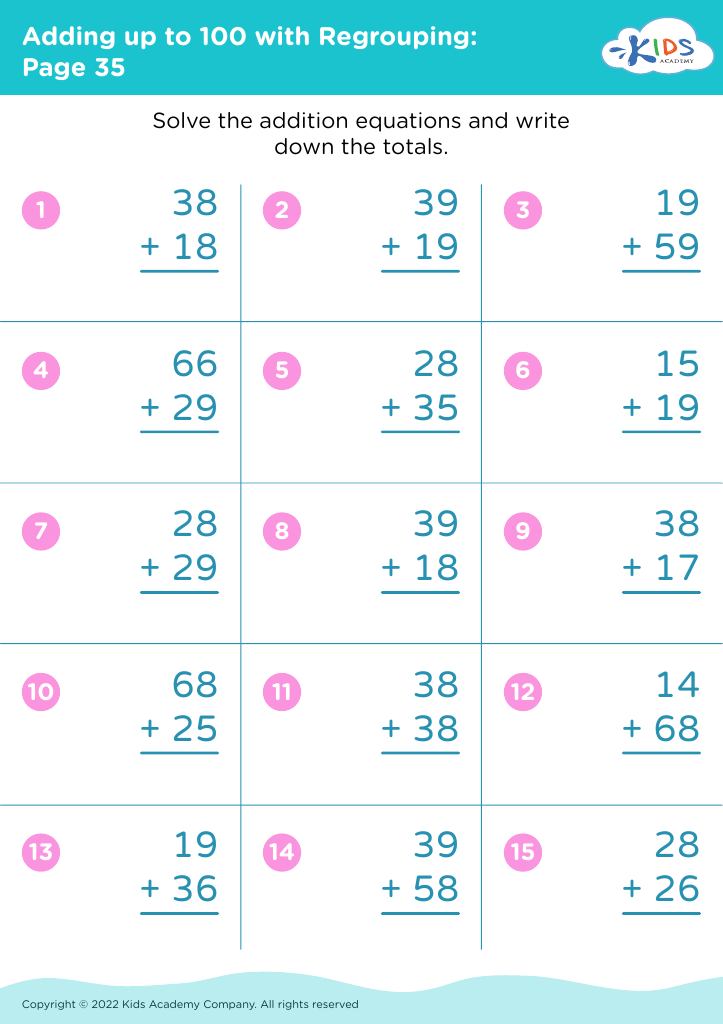
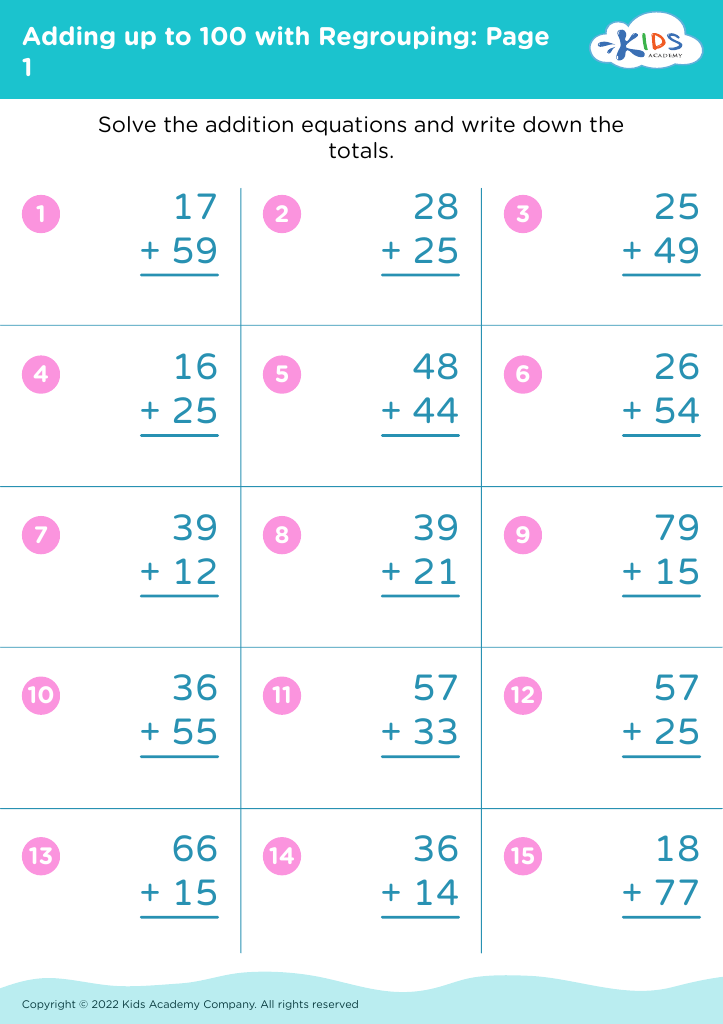




Parents and teachers should care about problem-solving skills such as adding up to 100 with regrouping because these foundational math abilities are critical for young learners in ages 6-8. At this developmental stage, children are gaining confidence in their mathematical thinking, and mastering the concept of regrouping can significantly enhance their overall arithmetic skills.
Regrouping, also known as carrying in addition, helps children understand place value, which lays the groundwork for more complex mathematical operations. When students learn to strategically manipulate numbers to solve problems, they develop critical thinking skills that transcend mathematics alone, fostering cognitive flexibility and resilience in facing challenges.
Additionally, proficiency in problem-solving encourages a positive attitude towards math, shaping their future academic interactions. Children who struggle with these skills may experience frustration, leading to a long-term dislike of mathematics, which can affect their self-esteem and willingness to engage with future math concepts.
Moreover, early mastery of such problem-solving exercises promotes competence in real-world situations, linking academic skills to daily life. Therefore, prioritizing these problem-solving skills sets students on a path to lifelong learning and a favorable outlook on education. By investing in these abilities now, parents and teachers equip children for success across multiple curricular areas.