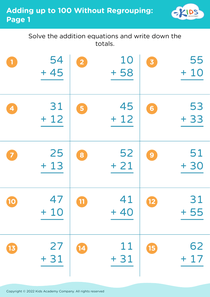
Shape Recognition Adding up to 100 with Regrouping Worksheets for Ages 6-8
5 filtered results
-
From - To
Unlock the exciting world of math with our Shape Recognition Adding up to 100 with Regrouping Worksheets, designed specifically for children aged 6-8! These engaging worksheets not only reinforce precious math skills like adding and regrouping but also introduce shape recognition, helping young learners identify and classify geometric figures. As students practice addition concepts and explore various shapes, they develop essential cognitive and problem-solving skills in a fun, interactive way. Perfect for classroom use or at-home learning, these worksheets foster creativity and critical thinking, all while making math both enjoyable and accessible. Start building foundational math skills today!
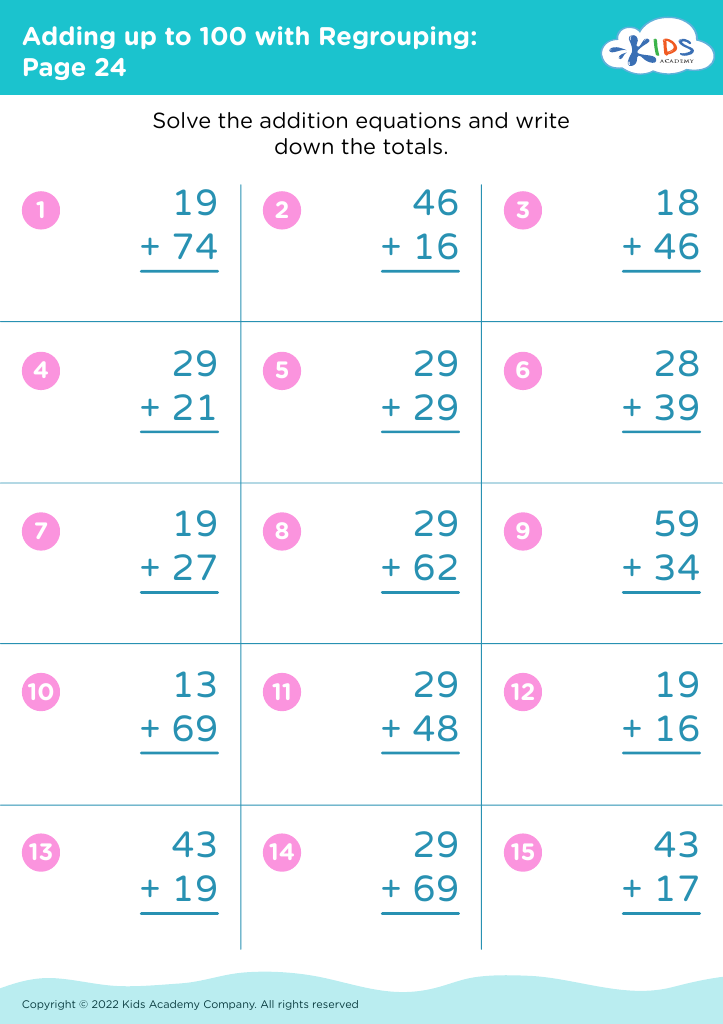
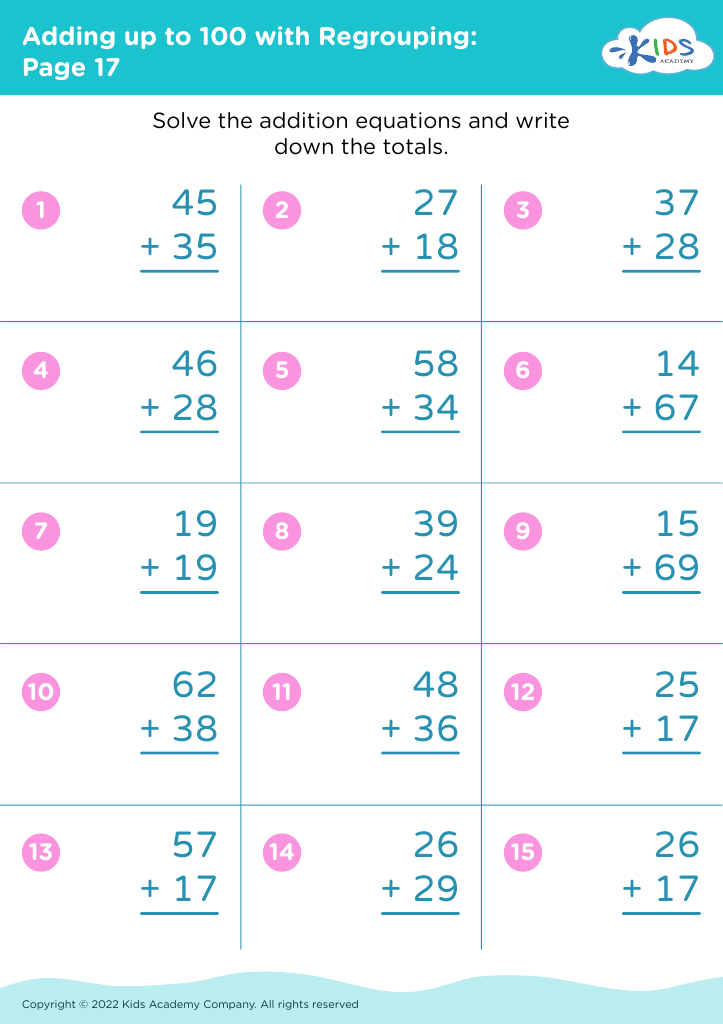
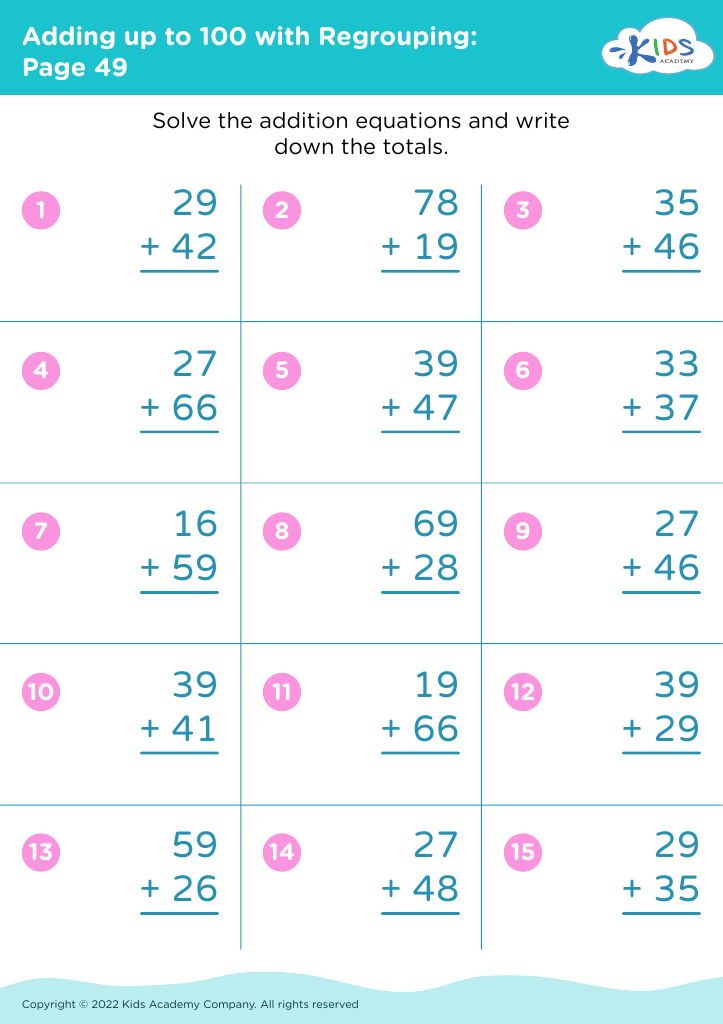
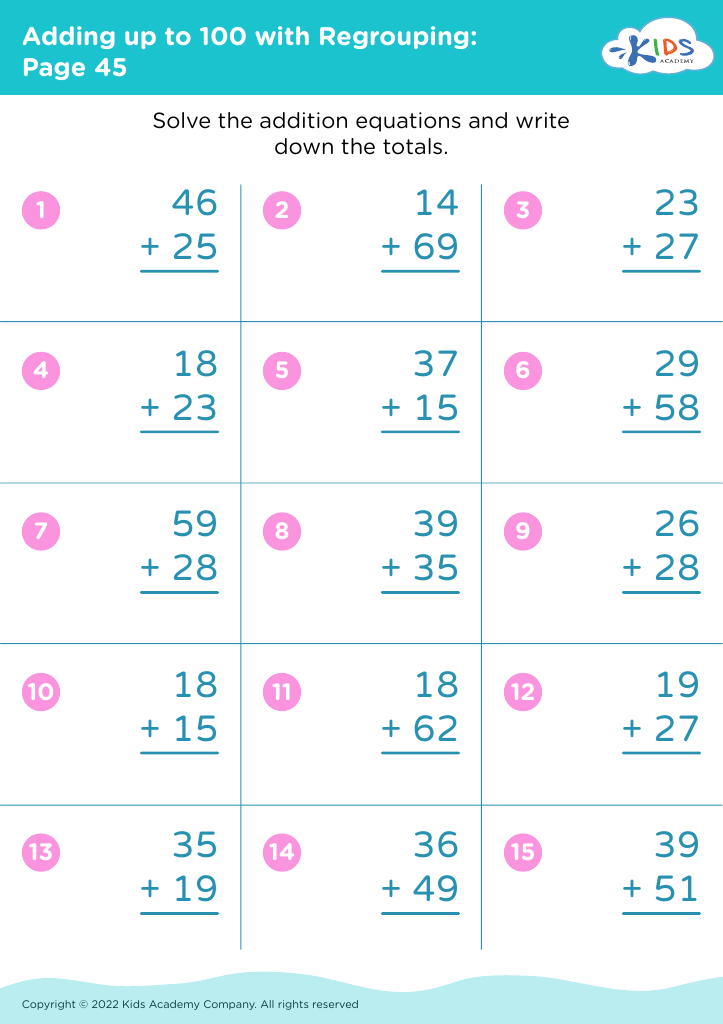
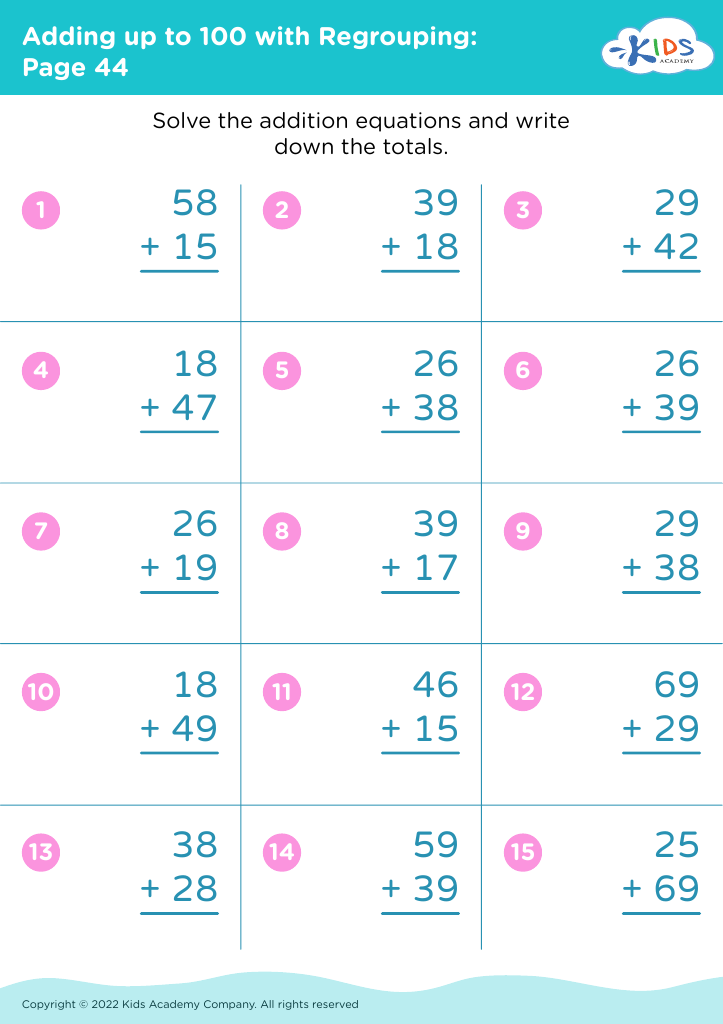




Shape recognition and mastering addition with regrouping are fundamental skills that significantly contribute to a child's overall development in mathematics. For children aged 6-8, these skills are interlinked and serve as a foundation for more complex concepts in geometry and arithmetic.
Firstly, shape recognition helps children recognize and categorize different shapes, which is essential in developing spatial awareness. This skill improves their ability to understand their environment, enhances problem-solving skills, and cultivates creativity through design and construction play.
Secondly, the ability to add numbers up to 100 with regrouping—including breaking down numbers and carrying over—encourages critical thinking and lays groundwork for future mathematical endeavors. As children learn to manipulate numbers, they develop flexibility in thinking, which is not only important in math but also fosters resilience and perseverance in overcoming challenges.
Moreover, these skills promote confidence in young learners. When children become proficient in recognizing shapes and managing addition with regrouping, they feel empowered and more willing to tackle complex problems in later grades. Engagement in both shape recognition and arithmetic at this crucial stage can inspire a lifelong appreciation for math, informing their educational trajectory beyond the early grades. Thus, parents and teachers should prioritize these learning goals to support holistic development.