Filters

16 filtered results

Clear all filters
Favorites
With answer key
Interactive

16 filtered results

Difficulty Level

Grade


Discover our "Understanding Fractions: Adding up to 100 with Regrouping Worksheets" designed for ages 6-8 at Kids Academy. These engaging and educational worksheets help young learners master the concept of fractions and addition with regrouping, building a strong mathematical foundation. Through fun, interactive exercises, children become confident in adding numbers up to 100 while understanding fractions. Perfect for enhancing classroom learning or at-home practice, these worksheets foster critical thinking and improve problem-solving skills. Give your child the tools they need to succeed in math with our expertly crafted resources. Make learning enjoyable and effective today!
Check out this FREE Trial Lesson on Adding up to 100 with Regrouping for age 6-8!

A

Favorites
With answer key
Interactive
  • 6-8
  • Understanding fractions
  • Adding up to 100 with Regrouping
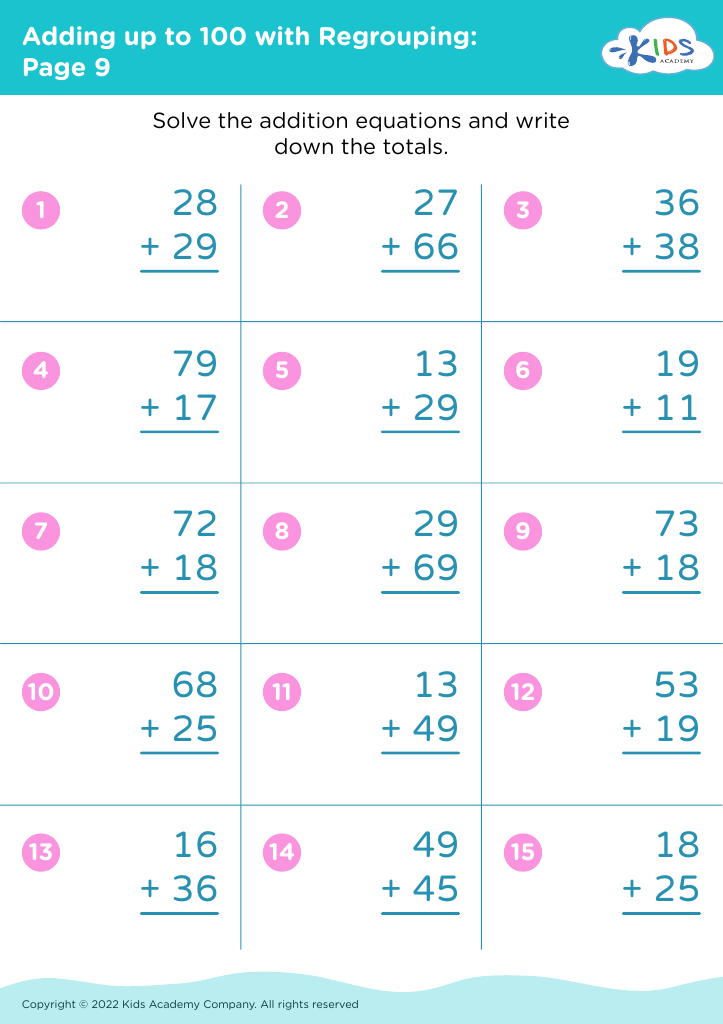
Adding up to 100 with Regrouping: Page 9
Worksheet
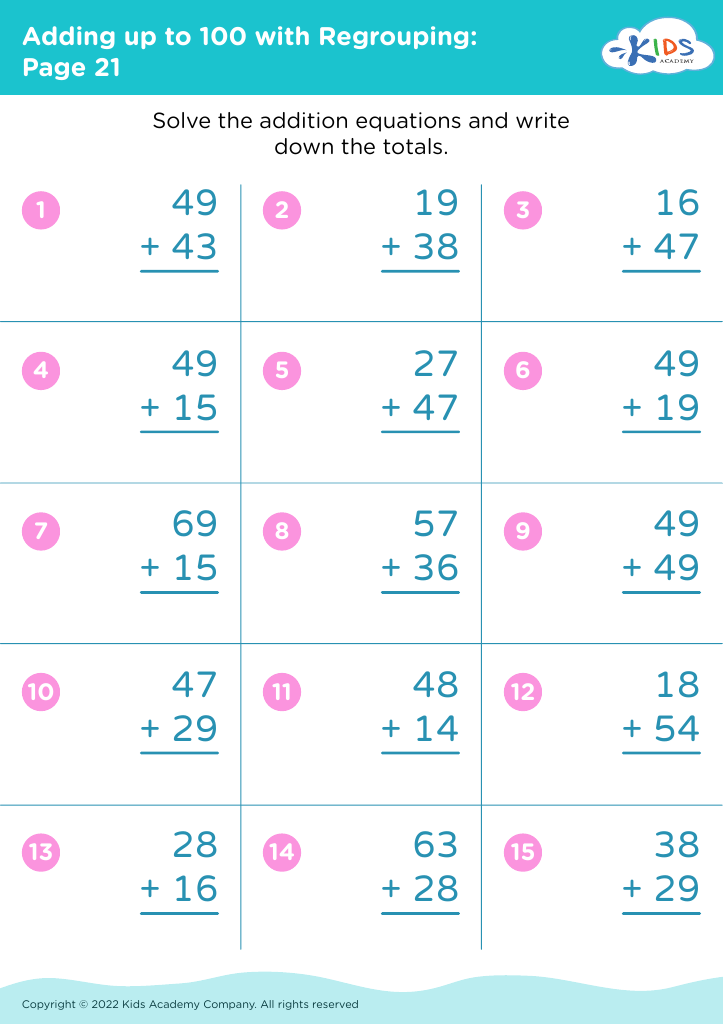
Adding up to 100 with Regrouping: Page 21
Worksheet
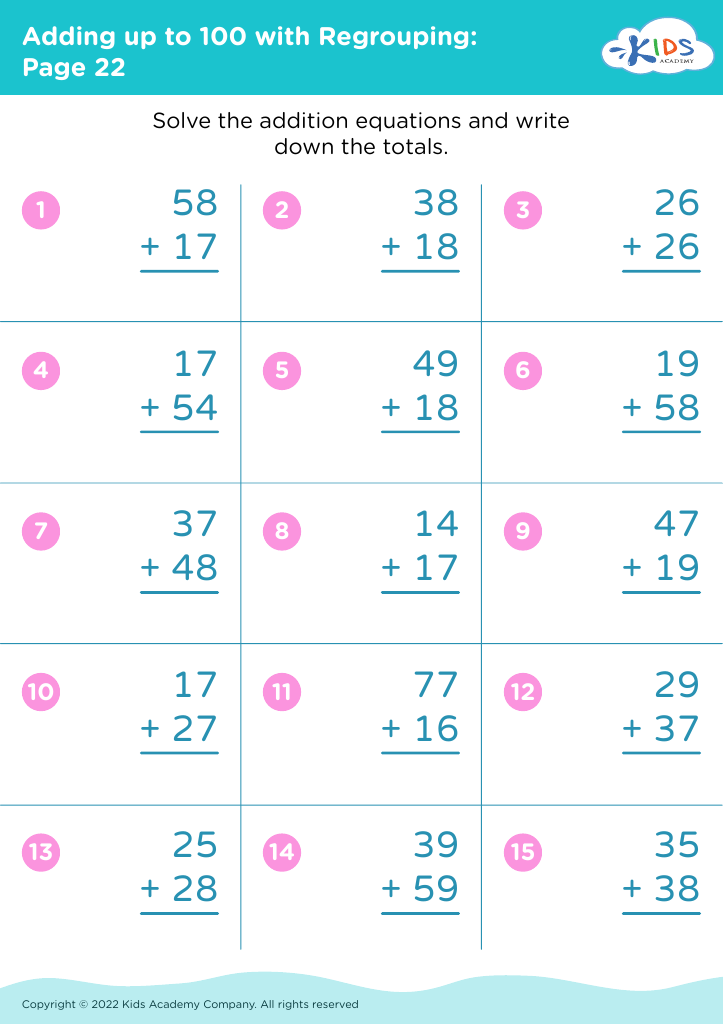
Adding up to 100 with Regrouping: Page 22
Worksheet
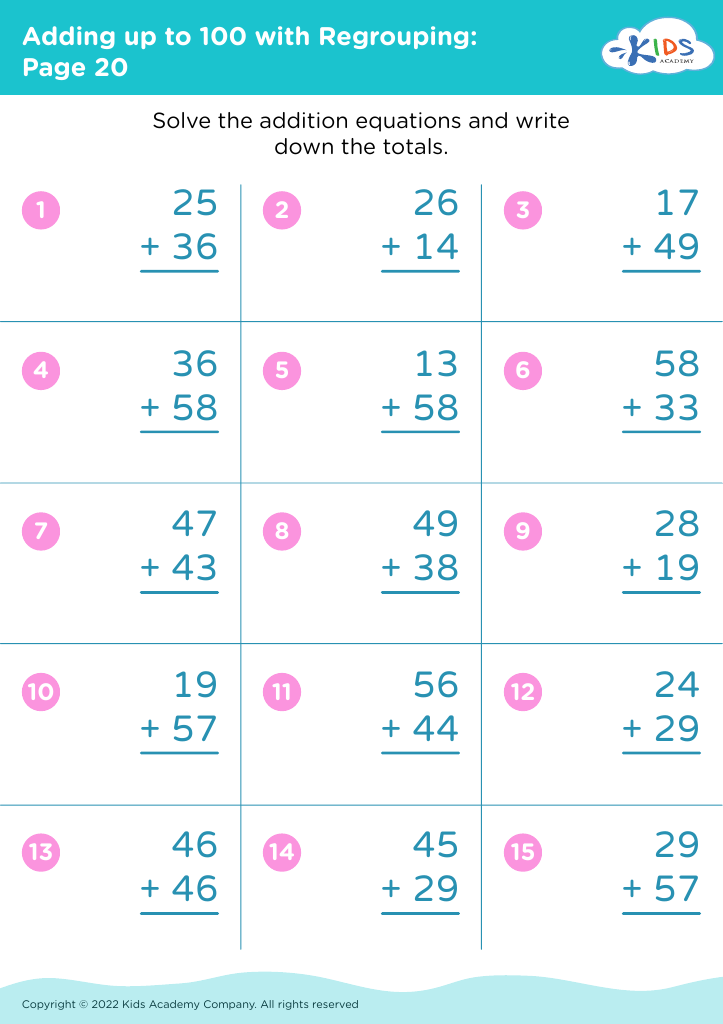
Adding up to 100 with Regrouping: Page 20
Worksheet
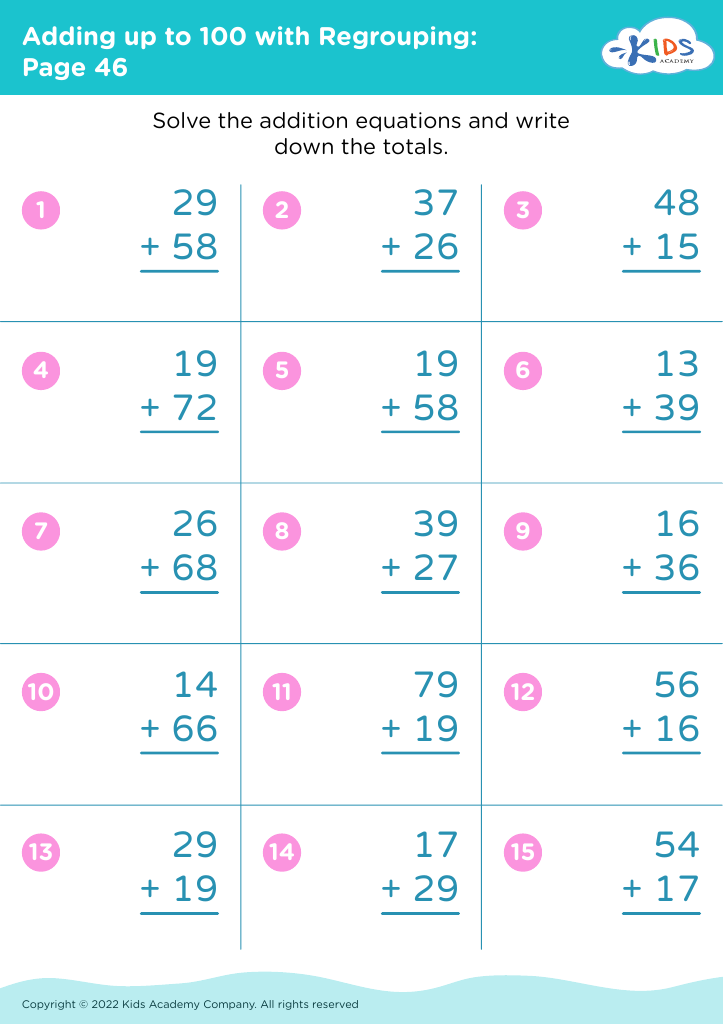
Adding up to 100 with Regrouping: Page 46
Worksheet
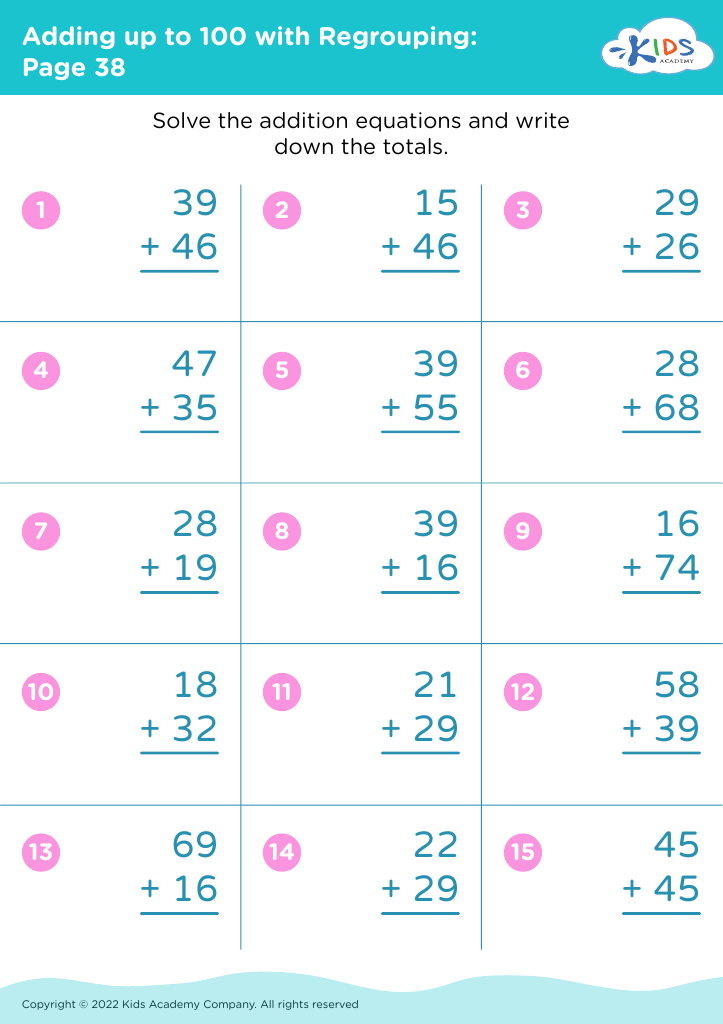
Adding up to 100 with Regrouping: Page 38
Worksheet
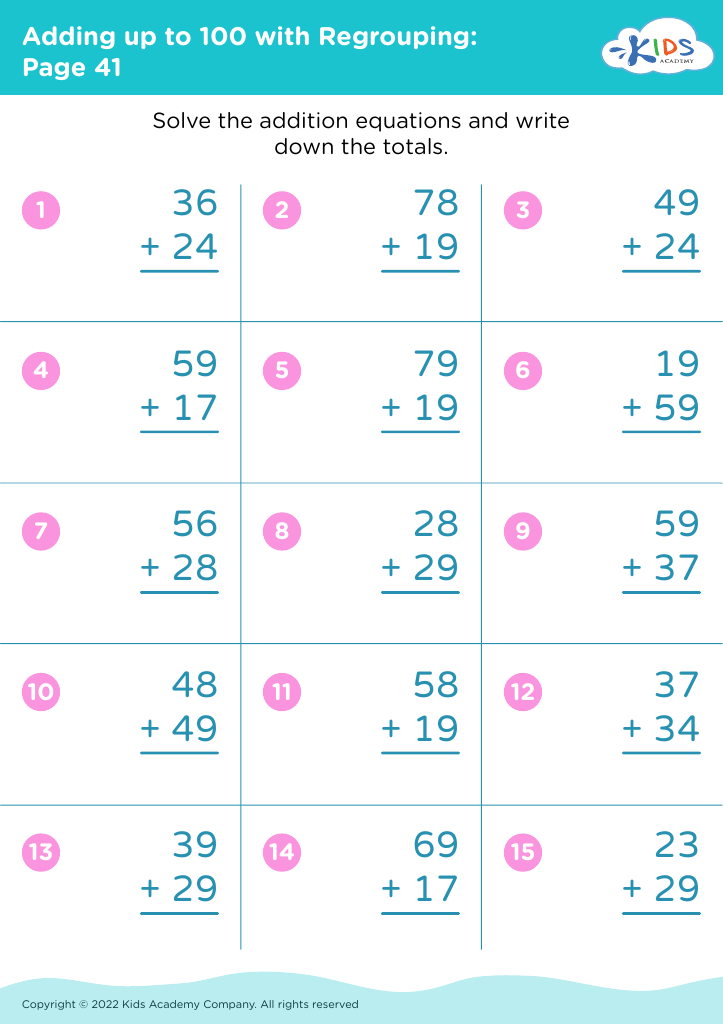
Adding up to 100 with Regrouping: Page 41
Worksheet
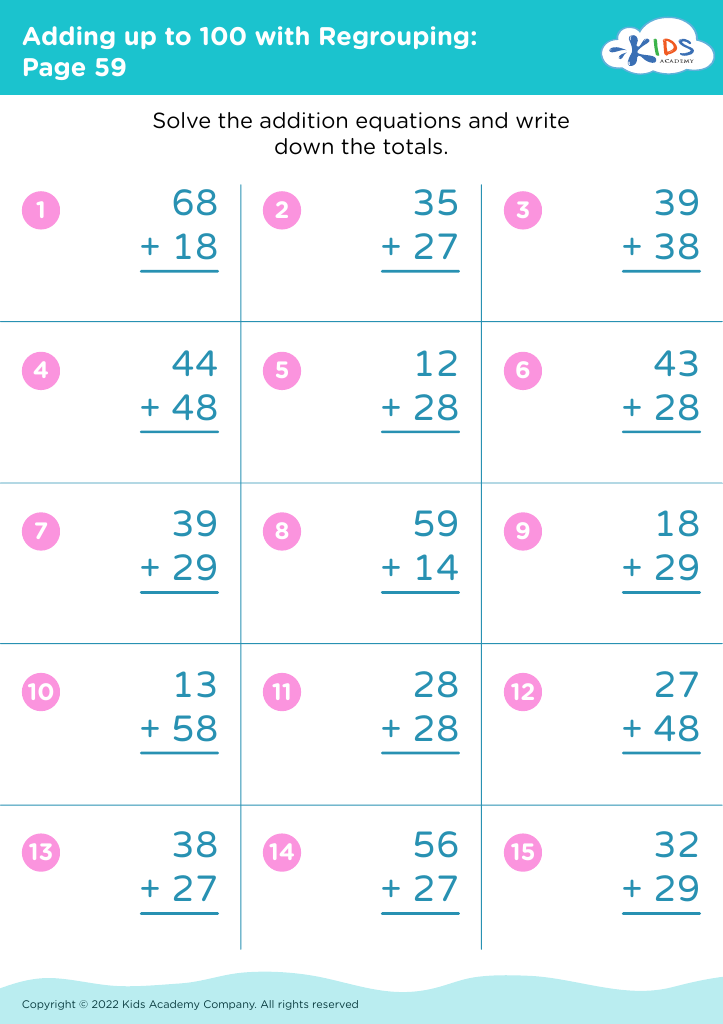
Adding up to 100 with Regrouping: Page 59
Worksheet
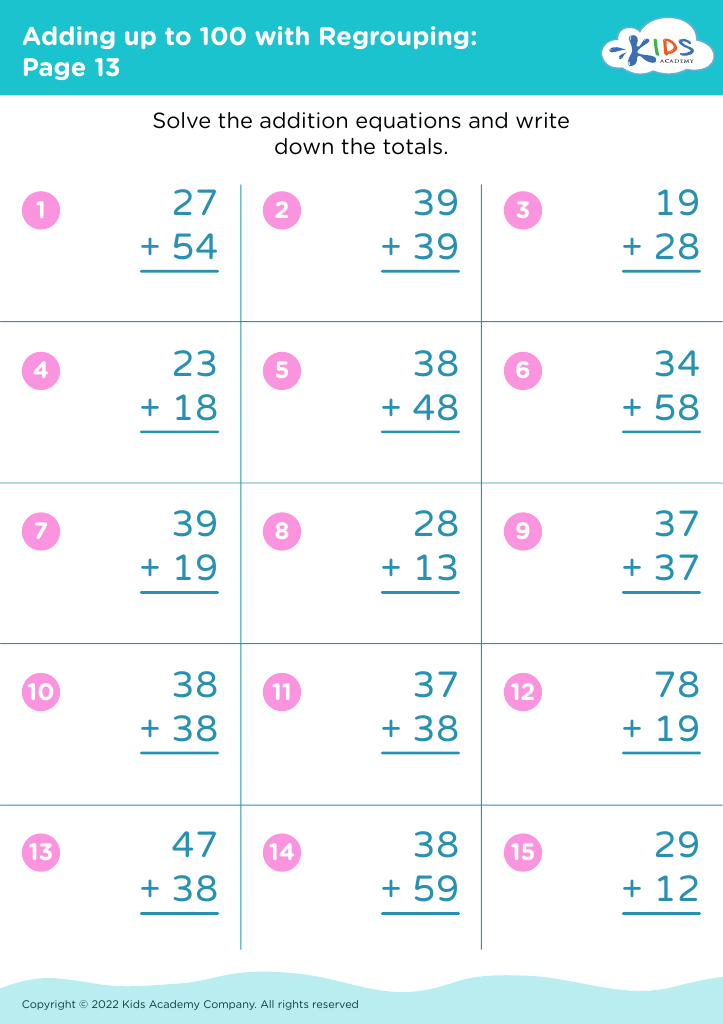
Adding up to 100 with Regrouping: Page 13
Worksheet
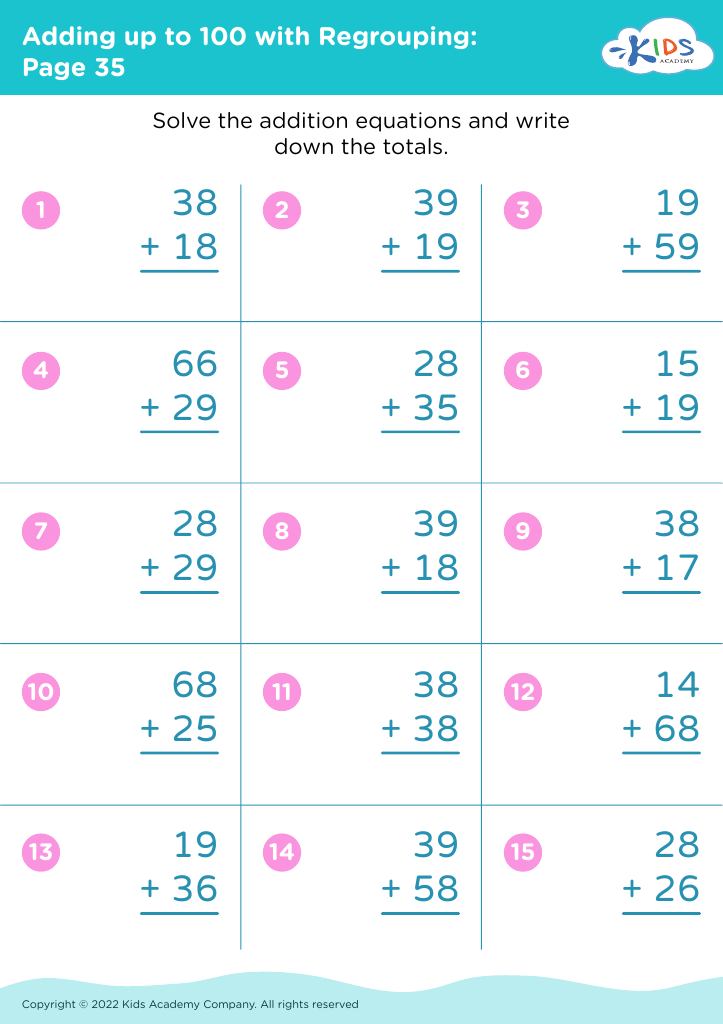
Adding up to 100 with Regrouping: Page 35
Worksheet
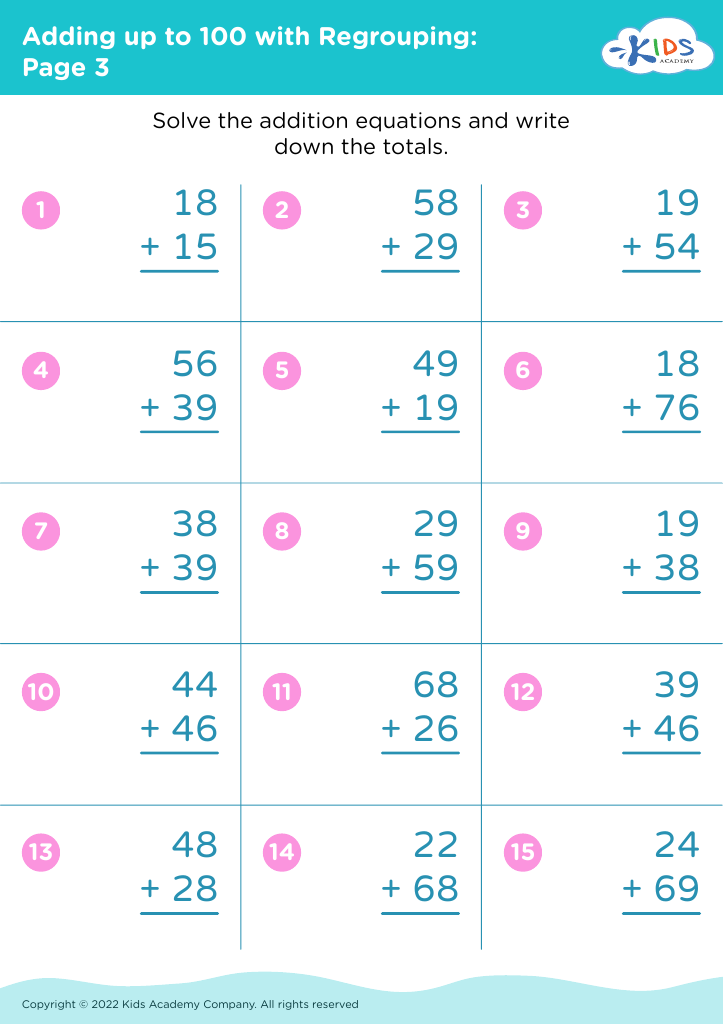
Adding up to 100 with Regrouping: Page 3
Worksheet
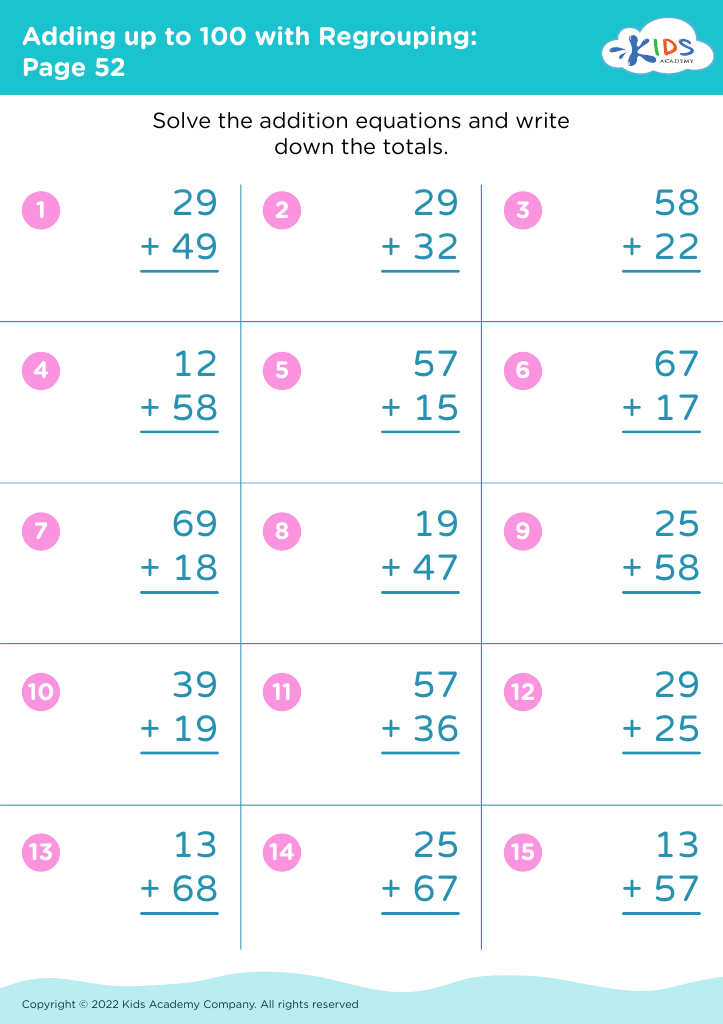
Adding up to 100 with Regrouping: Page 52
Worksheet
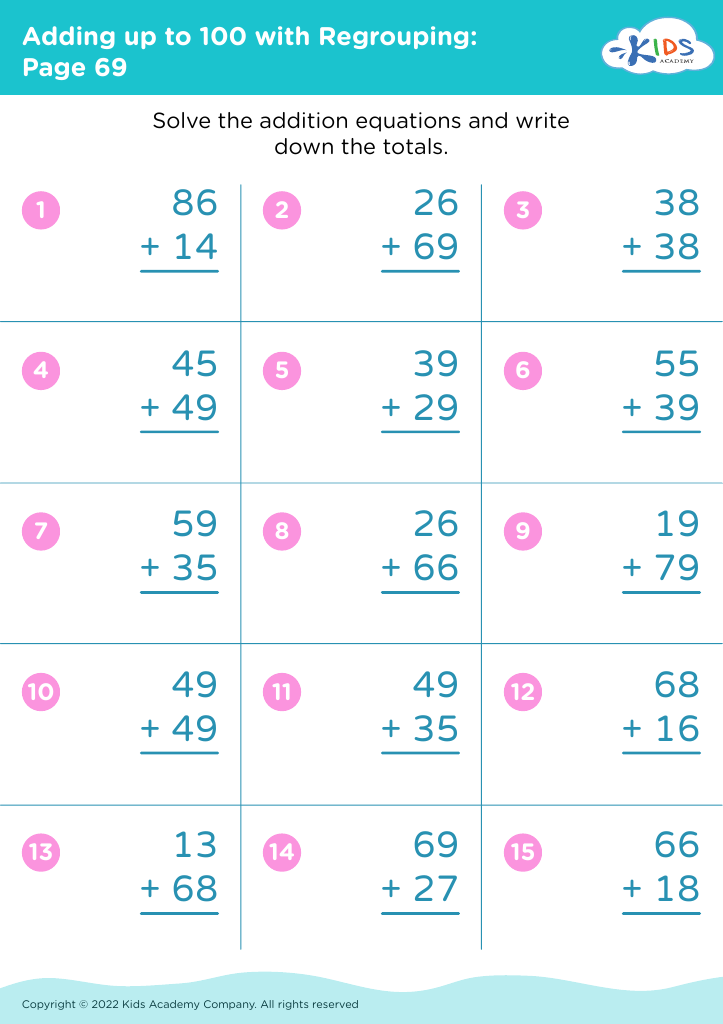
Adding up to 100 with Regrouping: Page 69
Worksheet
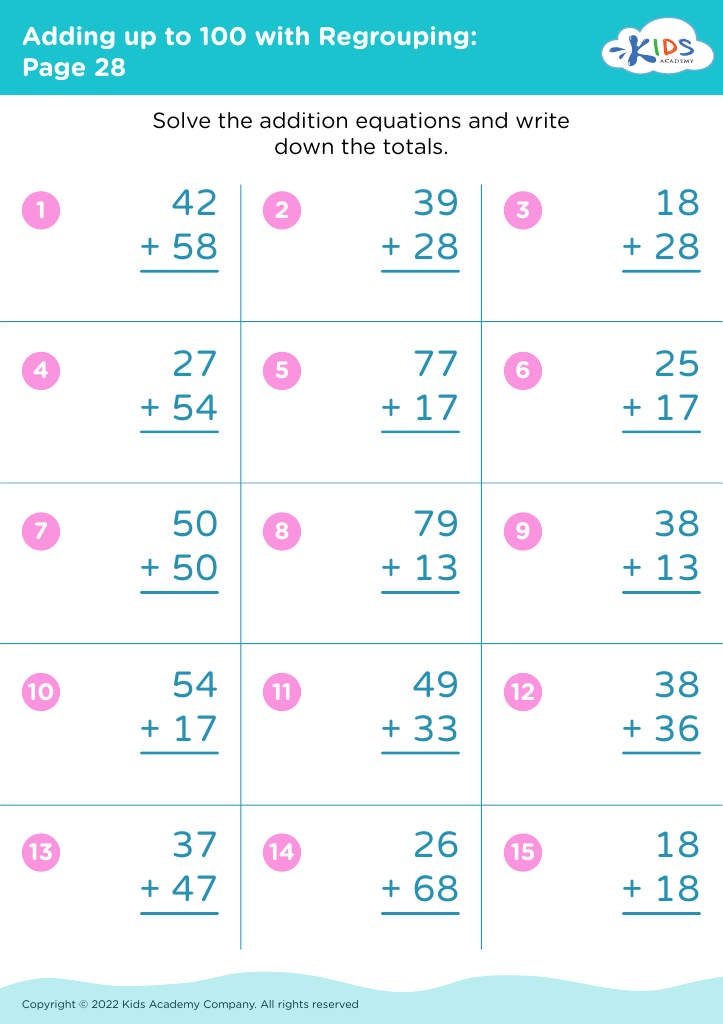
Adding up to 100 with Regrouping: Page 28
Worksheet
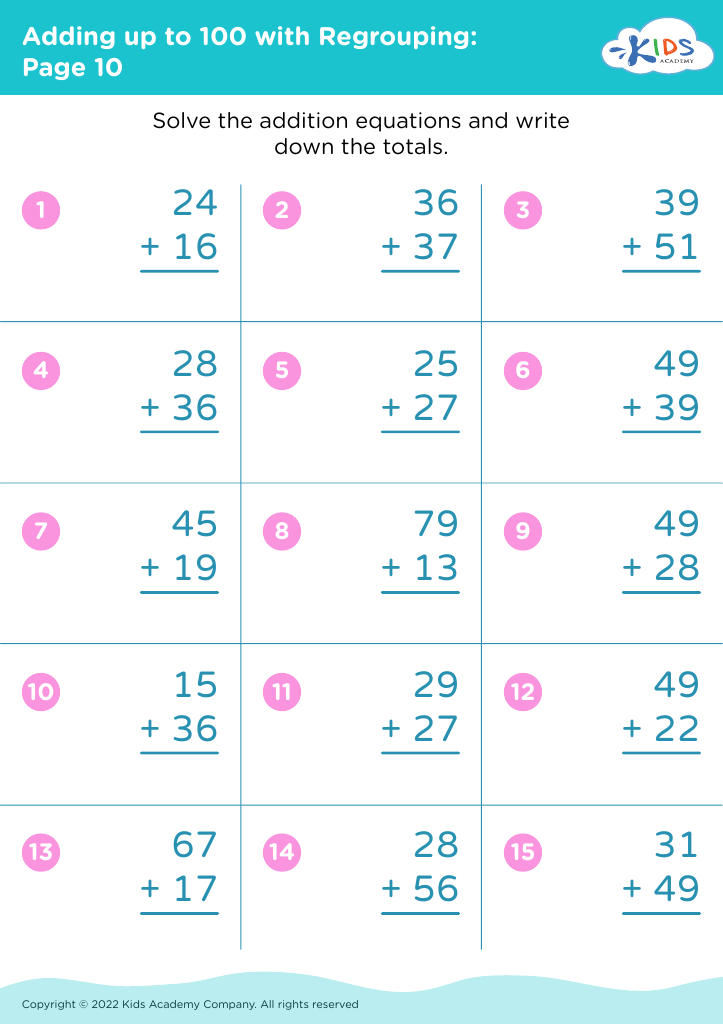
Adding up to 100 with Regrouping: Page 10
Worksheet
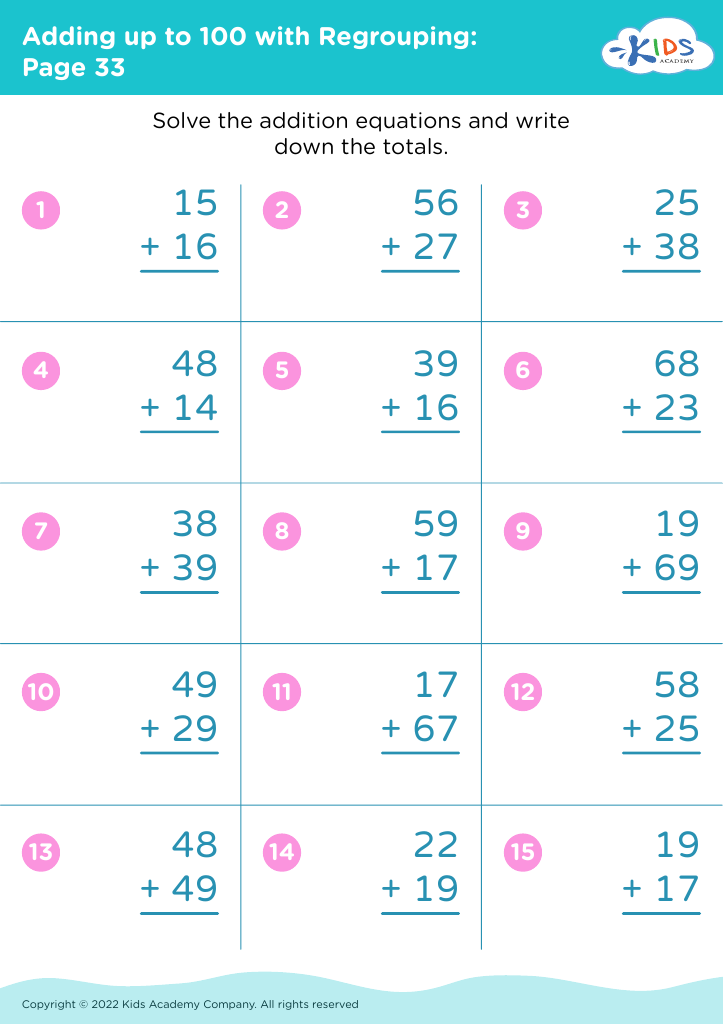
Adding up to 100 with Regrouping: Page 33
Worksheet


It's crucial for parents and teachers to ensure children aged 6-8 understand fractions and regrouping when adding up to 100. These skills form the backbone of more advanced mathematical concepts they will encounter later on. Grasping fractions at a young age helps children make sense of parts and wholes, laying the groundwork for successfully navigating more complex topics like ratios and percentages in the future.

Adding up to 100 and regrouping is equally vital. It develops computational fluency and number sense, enabling children to understand the overall concept of numbers and how they interact. Regrouping, often known as carrying over in addition, helps kids solve more complex arithmetic problems and lays the foundation for understanding borrowing in subtraction later on. Mastering this ensures that children can tackle problems more efficiently and accurately, boosting their confidence in math.

When children understand these concepts early on, they also improve their problem-solving skills, critical thinking, and attention to detail. Failure to master these basics can lead to struggles with math later, making every scholastic step forward a formidable challenge. Thus, mastering fractions and regrouping is not merely a curricular requirement but an essential life skill that pays tremendous dividends as children progress academically.