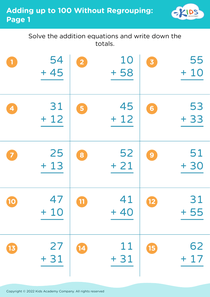
Understanding symmetry Adding up to 100 with Regrouping Worksheets for Ages 6-8
3 filtered results
-
From - To
Unlock the world of symmetry and addition with our engaging "Understanding Symmetry: Adding up to 100 with Regrouping Worksheets" tailored for ages 6-8. These worksheets not only introduce young learners to the concept of symmetry but also enhance their mathematical skills through fun activities focused on adding numbers up to 100 with regrouping. Perfect for developing critical thinking, these resources encourage children to explore patterns and balance while honing their addition abilities. Foster creativity and analytical skills through visually stimulating exercises that make learning enjoyable. Get started with our worksheets today and help your students master maths while appreciating the beauty of symmetry!
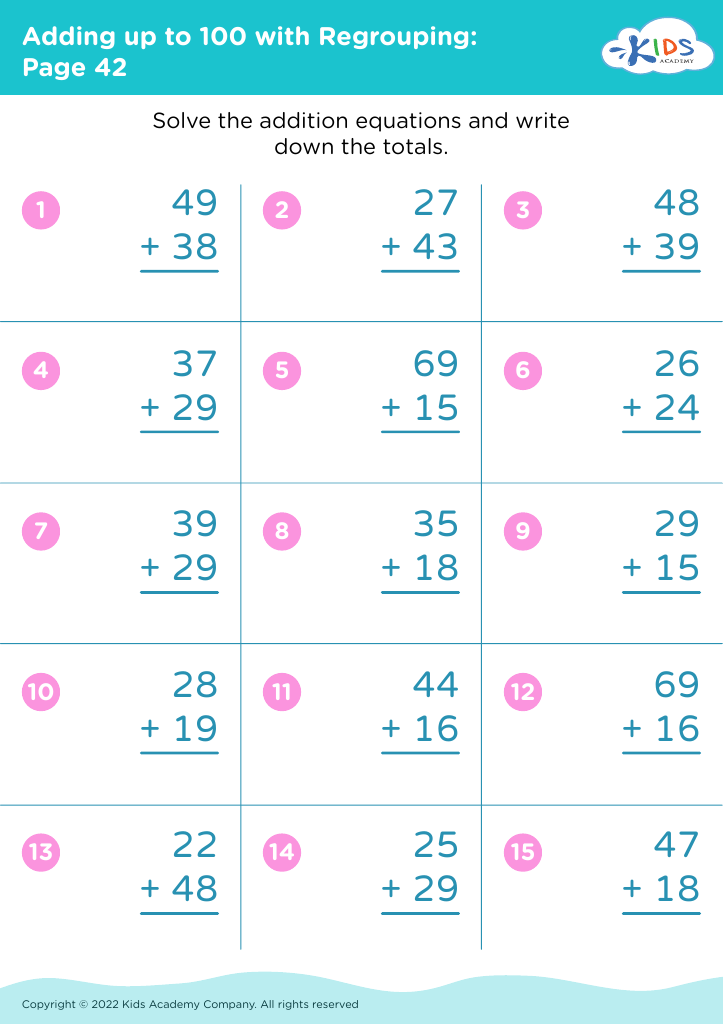
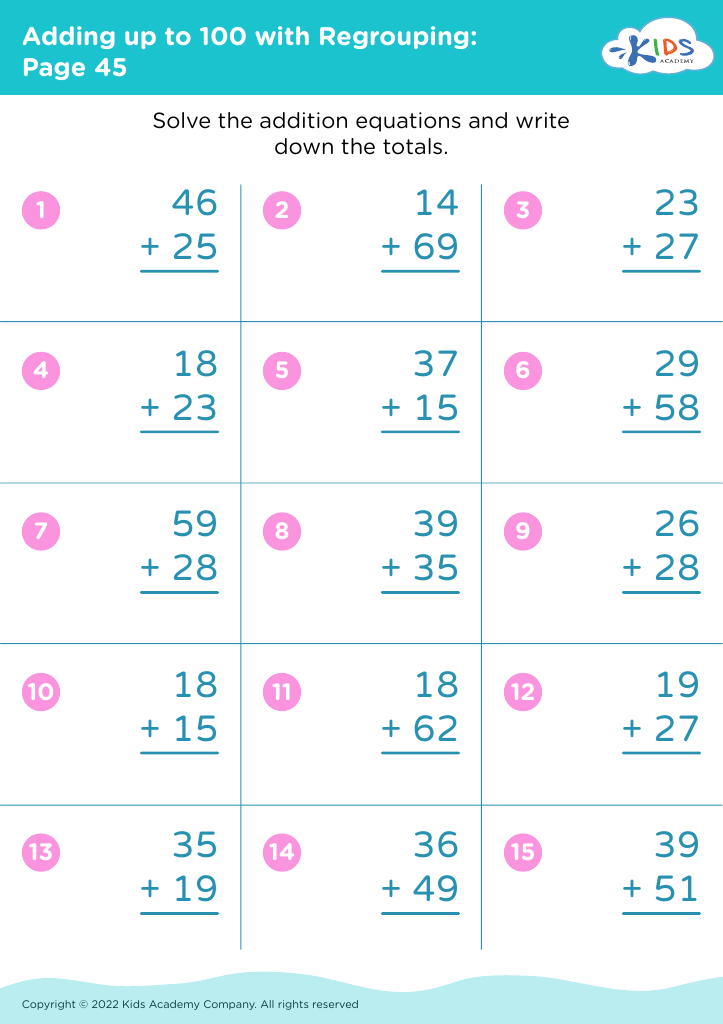
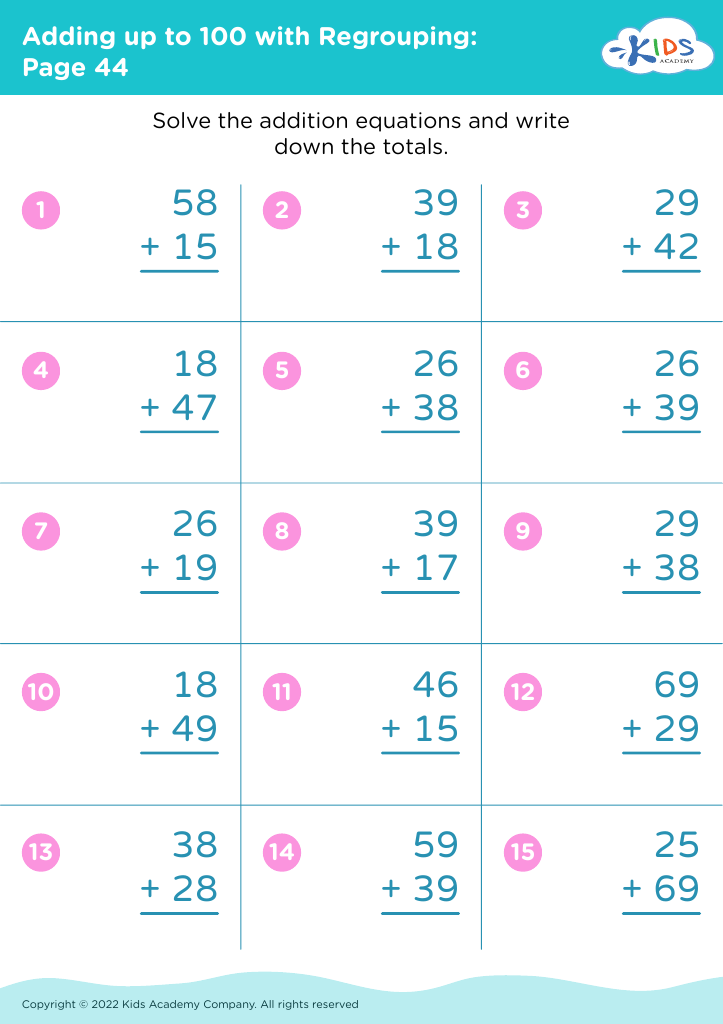




Understanding symmetry and the concept of regrouping to add up to 100 are essential for children aged 6-8 because they lay the groundwork for critical mathematical skills. Symmetry helps children recognize patterns and shapes, fostering their spatial awareness and visual perception. These skills are vital not only in math but also in art and science, promoting a holistic approach to learning.
Meanwhile, mastering regrouping when adding numbers facilitates a deeper understanding of place value and enhances arithmetic fluency. When students learn to break down numbers and regroup them, they grasp the concept of tens and units, making larger calculations manageable. This skill is particularly important for developing mental math strategies, which are crucial for problem-solving.
Moreover, both symmetry and regrouping support cognitive development, encouraging students to think logically and approach problems systematically. Teachers and parents should promote these concepts to nurture confidence and resilience in young learners. Building these foundational skills early on prepares children for more complex mathematics and helps them develop a love for learning. Ultimately, a keen grasp of symmetry and regrouping can significantly contribute to their overall academic success, setting the stage for lifelong skills in mathematics and beyond.