Comparing Fractions Adding up to 100 Without Regrouping Worksheets for Ages 6-8
11 filtered results
-
From - To
Explore our engaging "Comparing Fractions Adding Up to 100 Without Regrouping Worksheets" designed for children ages 6-8. Spark your child's interest in math with a plethora of interactive worksheets that focus on comparing simple fractions and practicing basic addition up to 100. These educational resources build essential arithmetic skills without the complexity of regrouping, making learning both fun and manageable. Perfect for in-class activities or at-home practice, our worksheets cater to varied learning styles, ensuring comprehensive understanding. Empower your young learner to master fractions and addition with confidence through our expertly crafted exercises!
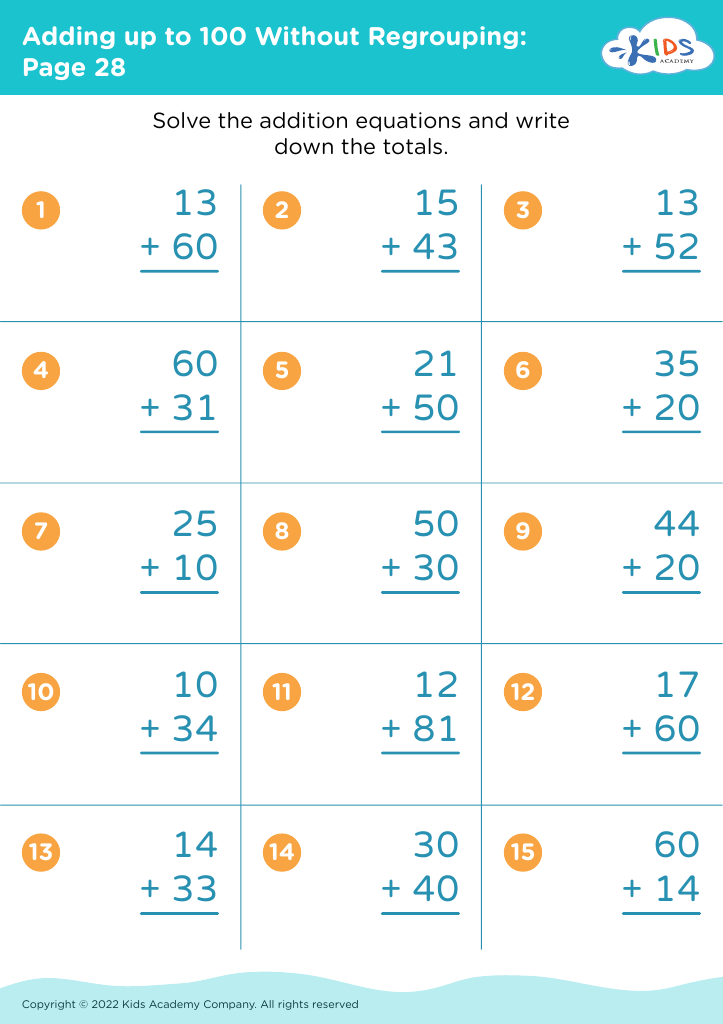
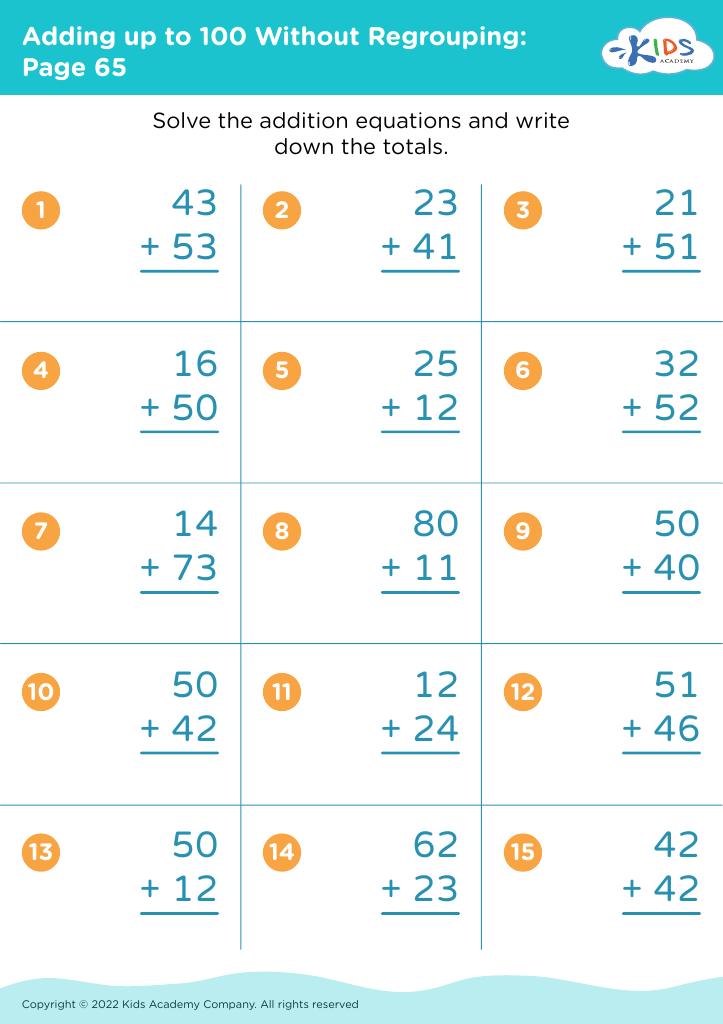
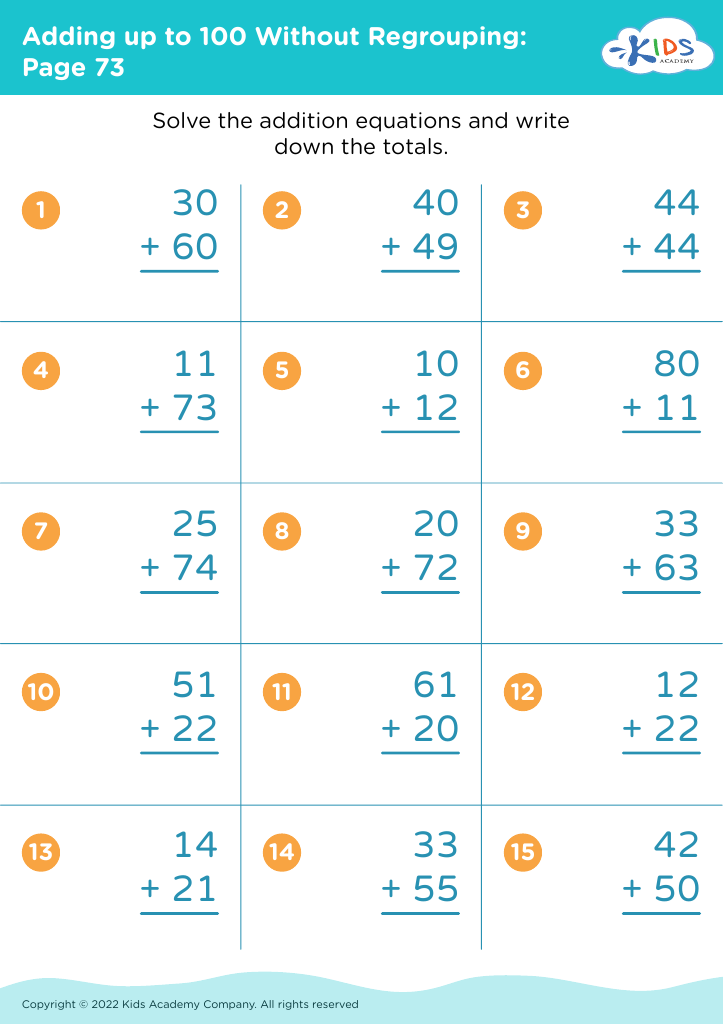
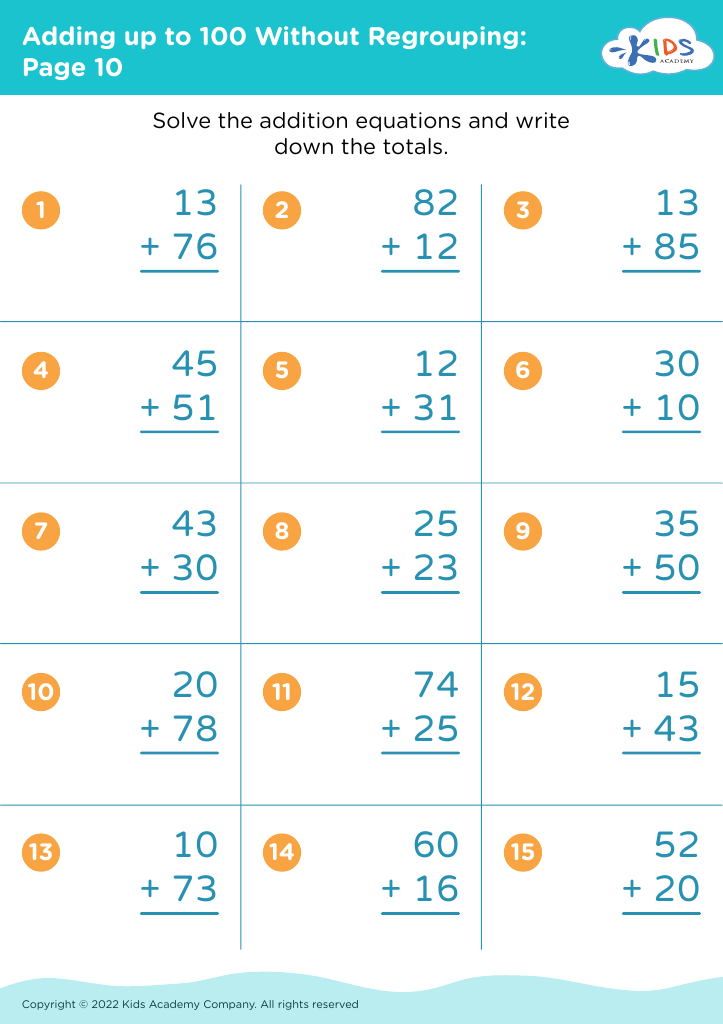
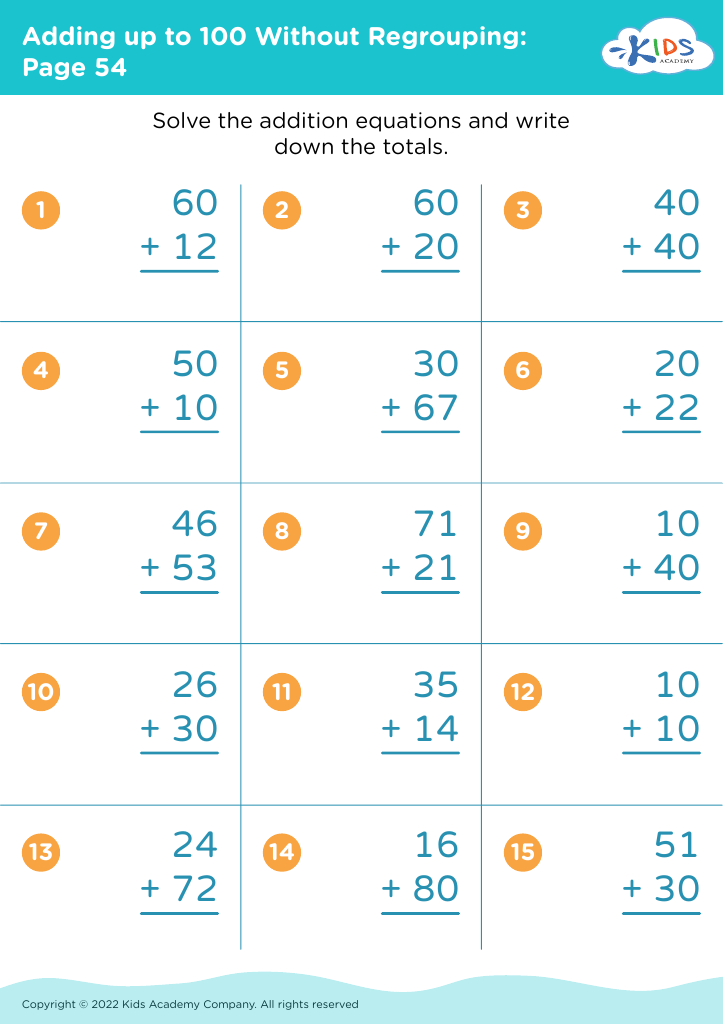
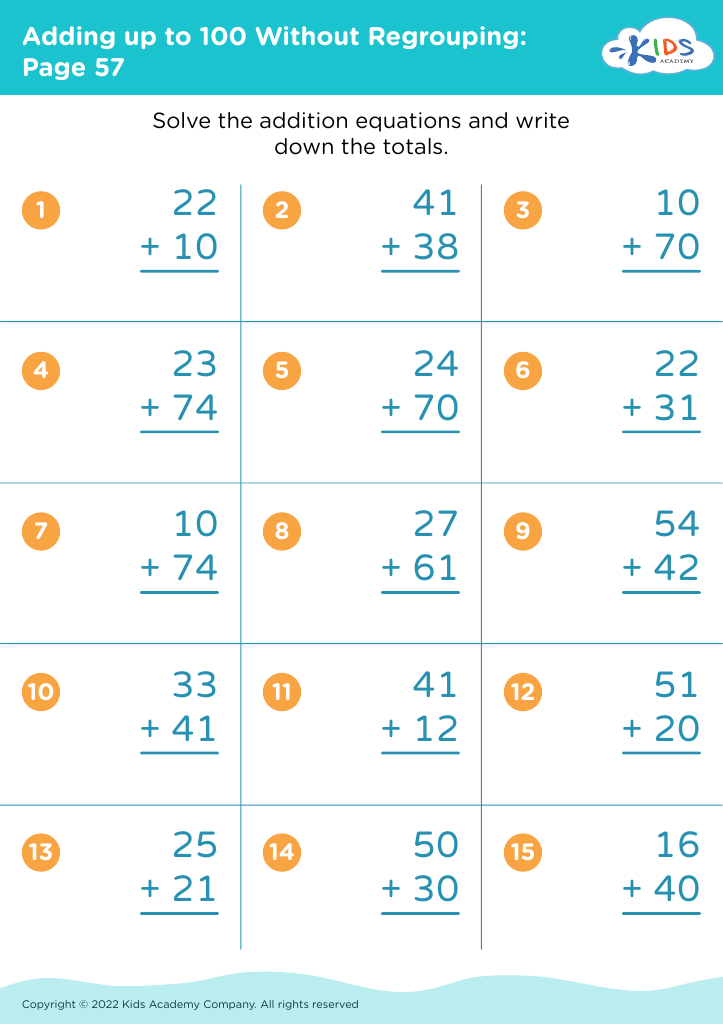
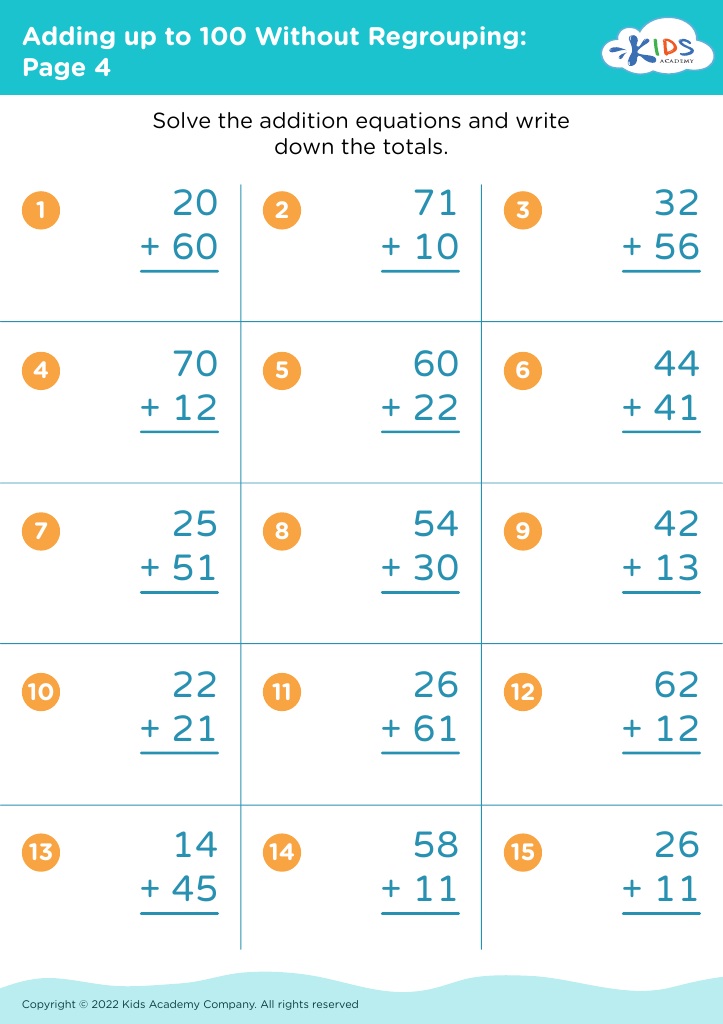
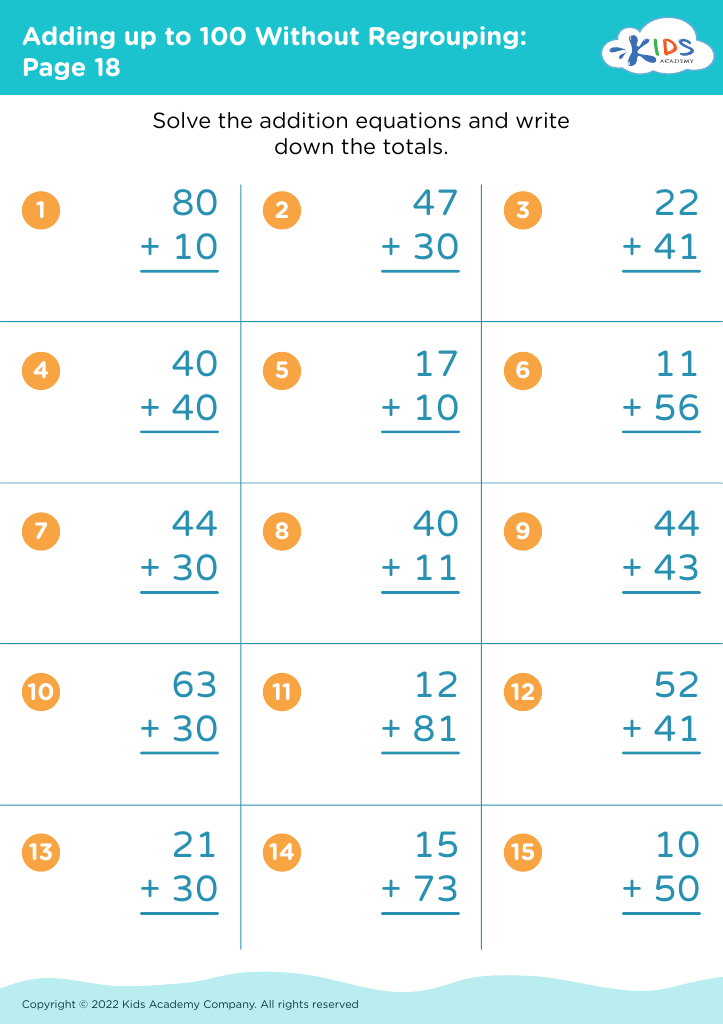
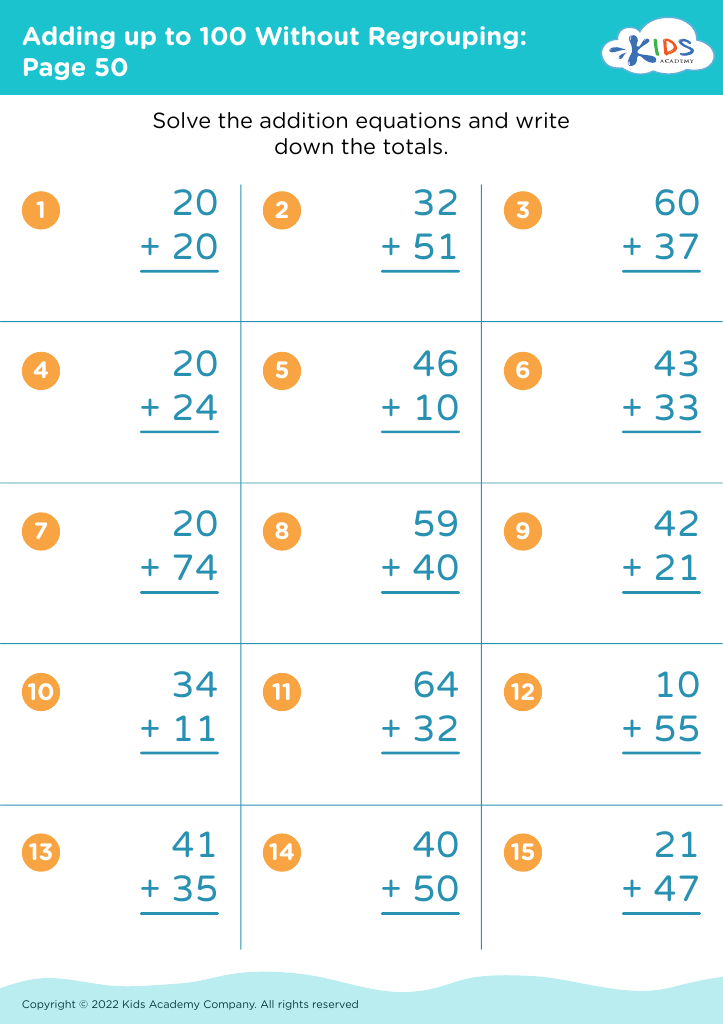
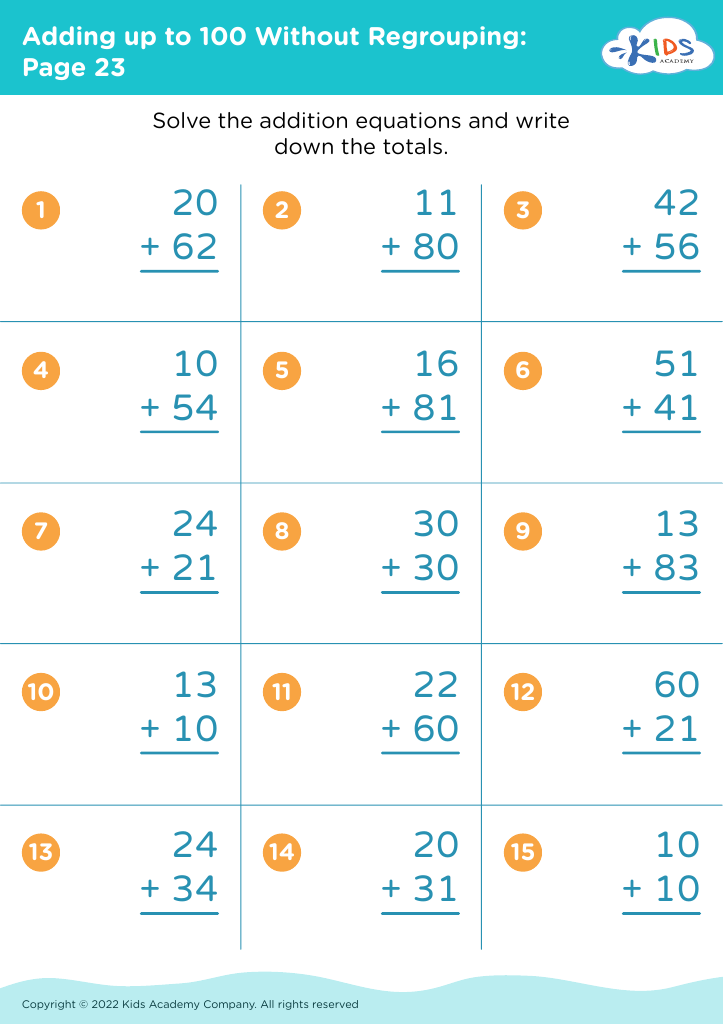
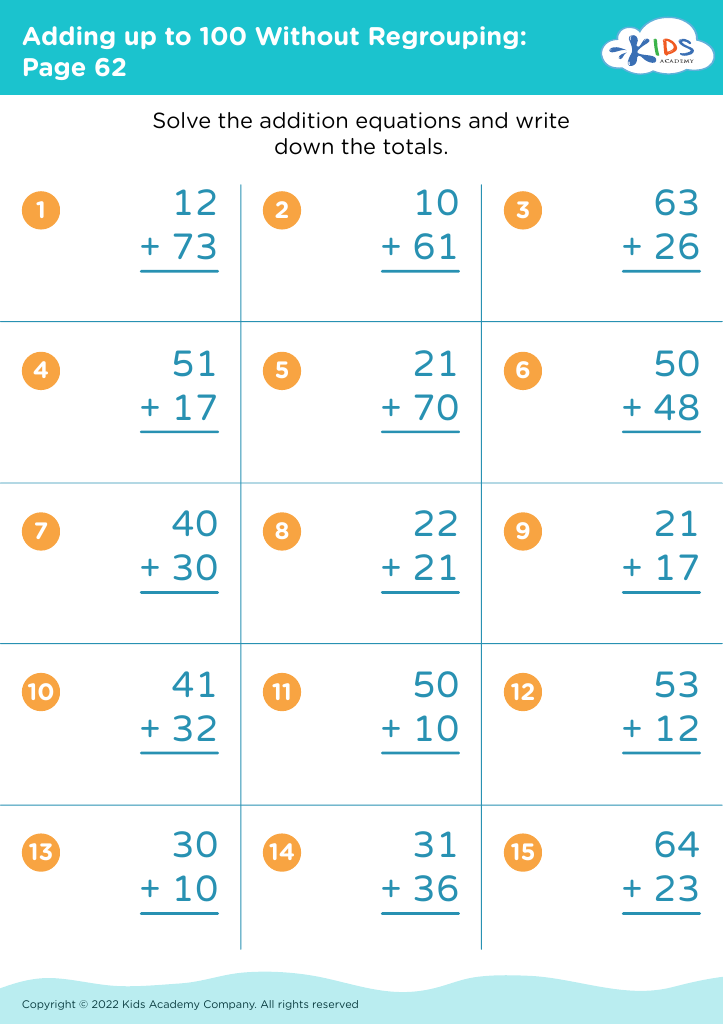




Teaching young children to compare fractions and add up to 100 without regrouping is crucial for several reasons. At ages 6 to 8, children are in a critical stage of cognitive development, where foundational math skills are formed. Understanding fractions instills an early sense of proportion, sharing, and division. Comparing fractions helps children grasp the concept of equivalence and the idea that different fractions can represent the same value, while some can be larger or smaller.
Adding up to 100 without regrouping fosters basic addition skills that are indispensable for everyday tasks and future complex math concepts. It helps students gain confidence in handling numbers within a manageable range. Learning these skills at an early age builds strong number sense and prepares children for more complex mathematical operations, which are essential as they advance in their education.
Parents and teachers should prioritize these concepts because they enable children to understand and manipulate numbers logically. Moreover, mastering these skills boosts children's problem-solving abilities and mental math, which are critical life skills. Engaging in these calculations also reinforces patience and concentration, nurturing a well-rounded development in both academic and personal growth. Early attention to such math activities ensures children’s success in later educational stages.