Critical Thinking Adding up to 100 Without Regrouping Worksheets for Ages 6-8
3 filtered results
-
From - To
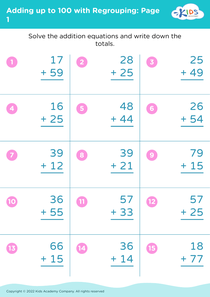
Explore our engaging "Critical Thinking: Adding up to 100 Without Regrouping Worksheets" designed specifically for children ages 6-8. These worksheets encourage young learners to enhance their addition skills while developing critical thinking abilities. By challenging students to solve problems efficiently and accurately, they will improve their number sense and boost confidence in mathematics. Each worksheet offers a variety of problems that require logical reasoning, all while keeping learners entertained and motivated. Perfect for classrooms or at-home learning, these resources provide foundational skills essential for math success. Empower your child’s learning journey with our fun and educational math worksheets today!
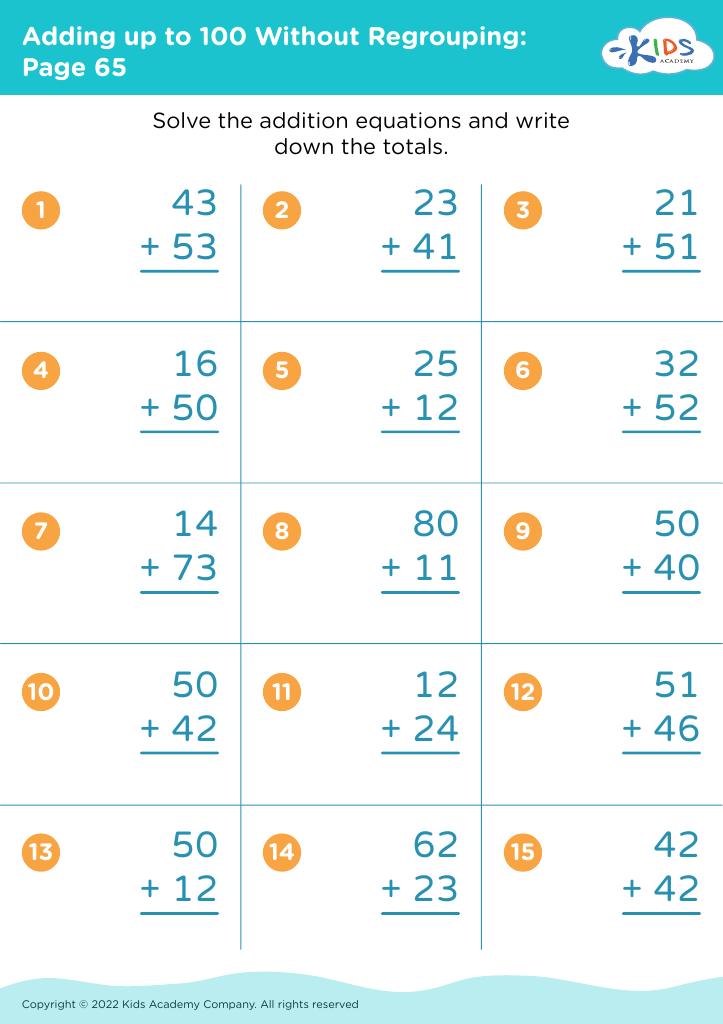
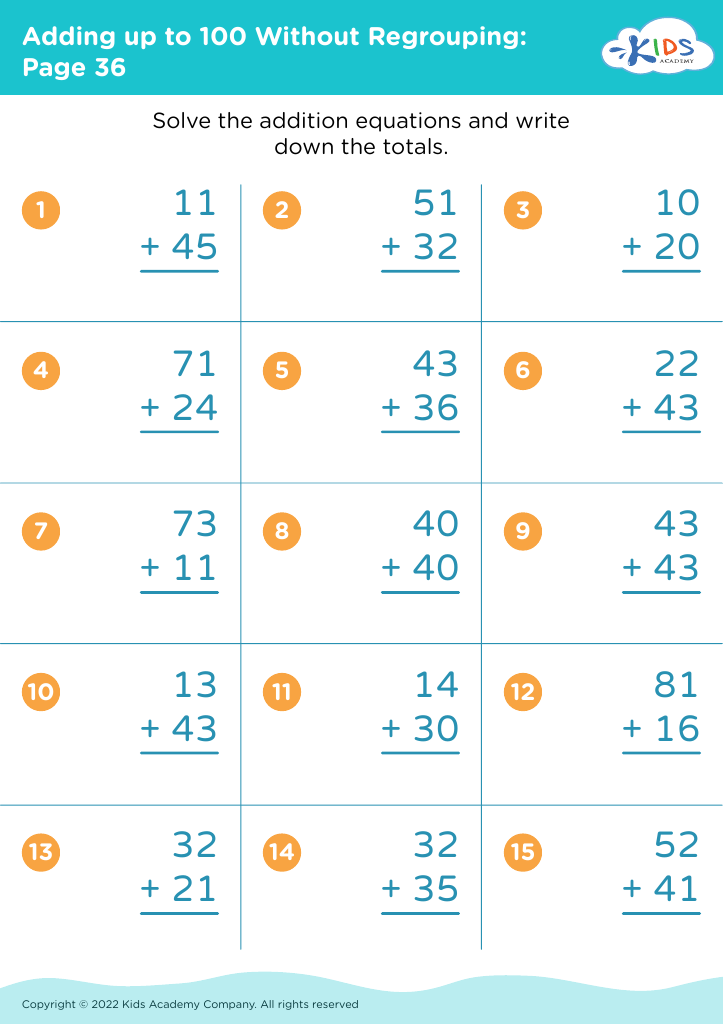
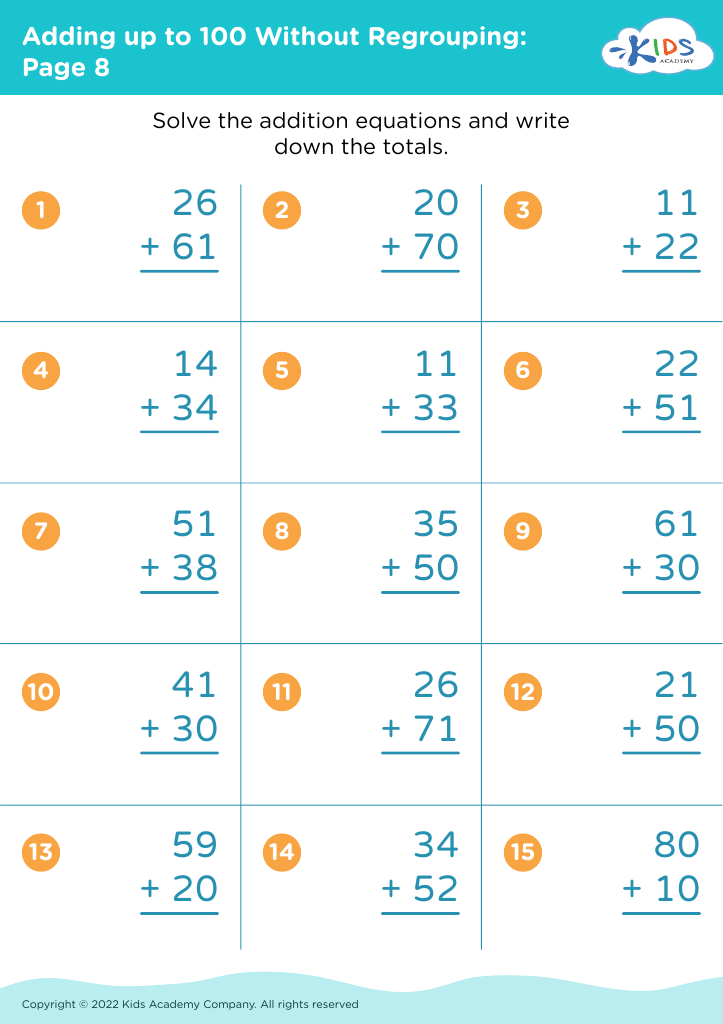




Critical thinking skills, especially in young children ages 6-8, are crucial for their overall cognitive development. Teaching them to add numbers up to 100 without regrouping enhances their ability to analyze, synthesize, and evaluate information. At this early stage, children learn foundational math concepts that cultivate logical reasoning and problem-solving abilities. When they grasp addition at this level, they not only build number sense but also boost their confidence in tackling more complex mathematical challenges in the future.
Moreover, by encouraging critical thinking about addition, parents and teachers facilitate a deeper understanding of how numbers work together. This involves recognizing patterns, understanding the relationship between numbers, and developing strategies—skills that are applicable in various aspects of learning and daily life. For instance, when kids learn to break down numbers and see them in different combinations, they enhance their analytical skills.
By integrating critical thinking into math lessons, adults nurture a generation of learners who are better prepared for academic challenges. This approach fosters resilience, helping children become more independent thinkers. Ultimately, teaching children to add up to 100 without regrouping prepares them for more complex problem-solving tasks and promotes a love for learning that can last a lifetime.