Develop critical thinking Adding up to 100 Without Regrouping Worksheets for Ages 6-8
3 filtered results
-
From - To
Enhance your child's critical thinking skills with our "Adding Up to 100 Without Regrouping" worksheets, tailored for ages 6-8. These engaging activities focus on building number sense and basic addition strategies without the complexity of regrouping. By challenging young learners to think strategically and solve problems efficiently, these worksheets foster a deeper understanding of math concepts. Perfect for independent practice or classroom use, they promote confidence in young mathematicians. Take the first step in developing crucial cognitive skills that will benefit your child across all subjects. Download our worksheets today and watch their critical thinking flourish!
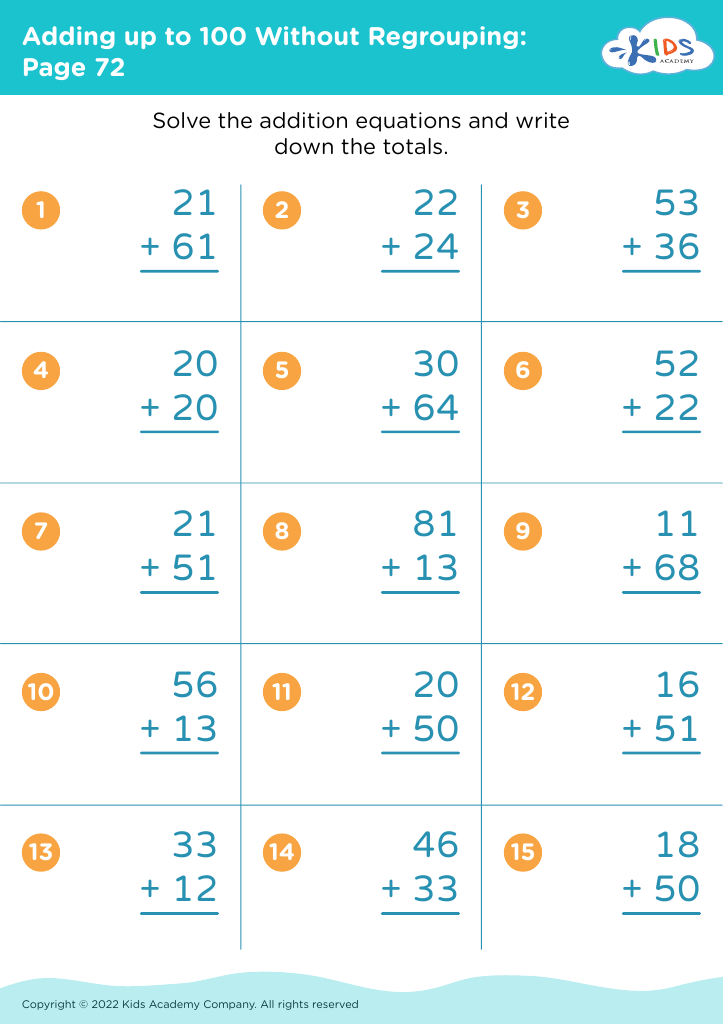
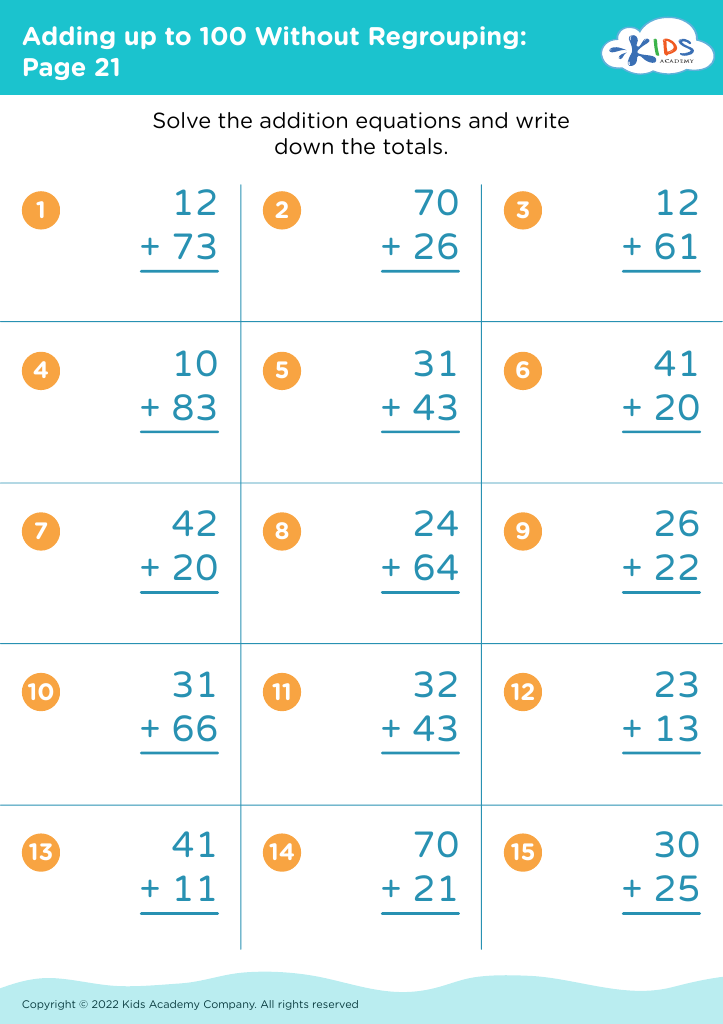
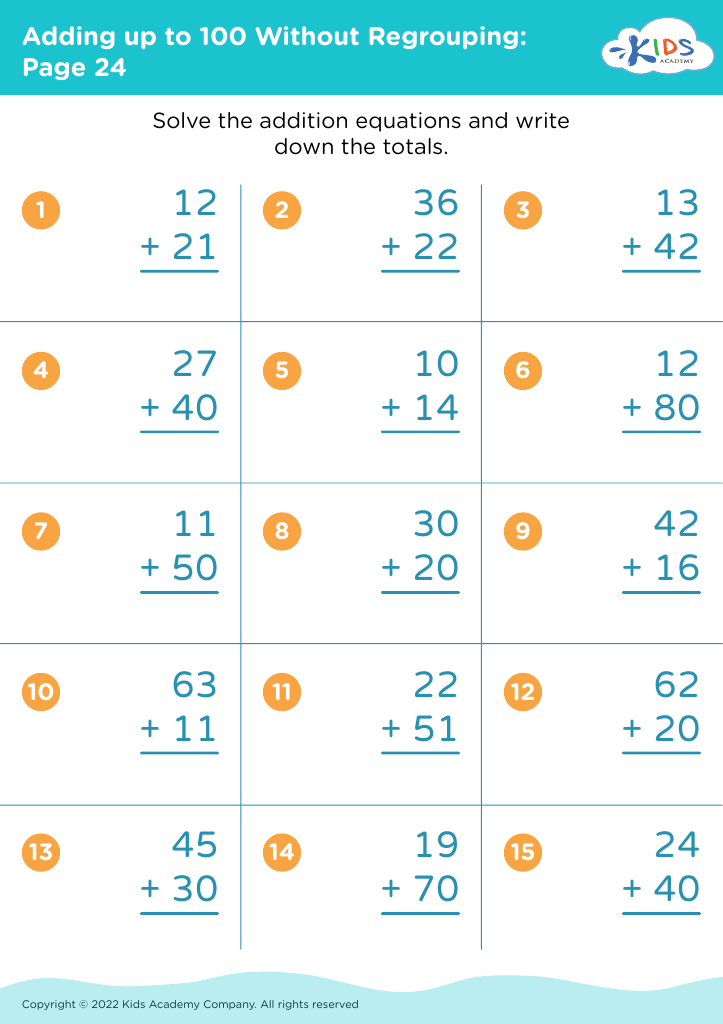




Developing critical thinking skills in children, especially ages 6-8, is essential for their overall cognitive growth and problem-solving abilities. One concrete way to enhance critical thinking is through addition activities, like adding numbers without regrouping. This foundational math concept not only strengthens a child's ability to perform basic addition, but also encourages logical reasoning.
When learners tackle problems like 23 + 15 without regrouping, they are prompted to break down numbers, identify patterns, and assess outcomes. This fosters an understanding of numbers as interconnected concepts rather than isolated units. As children explain their reasoning, they practice articulating thoughts clearly, promoting communication skills.
Moreover, when parents and teachers focus on such activities, they create an engaging learning environment. This zoning into critical thinking encourages children to explore different strategies for problem-solving. It also lays the groundwork for future mathematical concepts where regrouping may be introduced.
By prioritizing critical thinking and strong arithmetic skills, parents and teachers empower young learners, helping them develop confidence, independence, and a love for learning. Long-term, these skills can contribute to academic success and adapt to challenges throughout their educational journey and beyond.