Fine Motor Skills Adding up to 100 Without Regrouping Worksheets for Ages 6-8
4 filtered results
-
From - To
Enhance your child's fine motor skills and math abilities with our "Adding Up to 100 Without Regrouping" worksheets, designed for ages 6-8. These engaging exercises provide students with the opportunity to practice addition while developing essential fine motor skills, such as tracing numbers and manipulating writing tools. Each worksheet is thoughtfully crafted to captivate young learners, making math enjoyable and interactive. As children work through these fun activities, they’ll boost their confidence in addition and improve hand-eye coordination. Perfect for home or classroom use, these worksheets are an essential resource for fostering both mathematical proficiency and fine motor development.
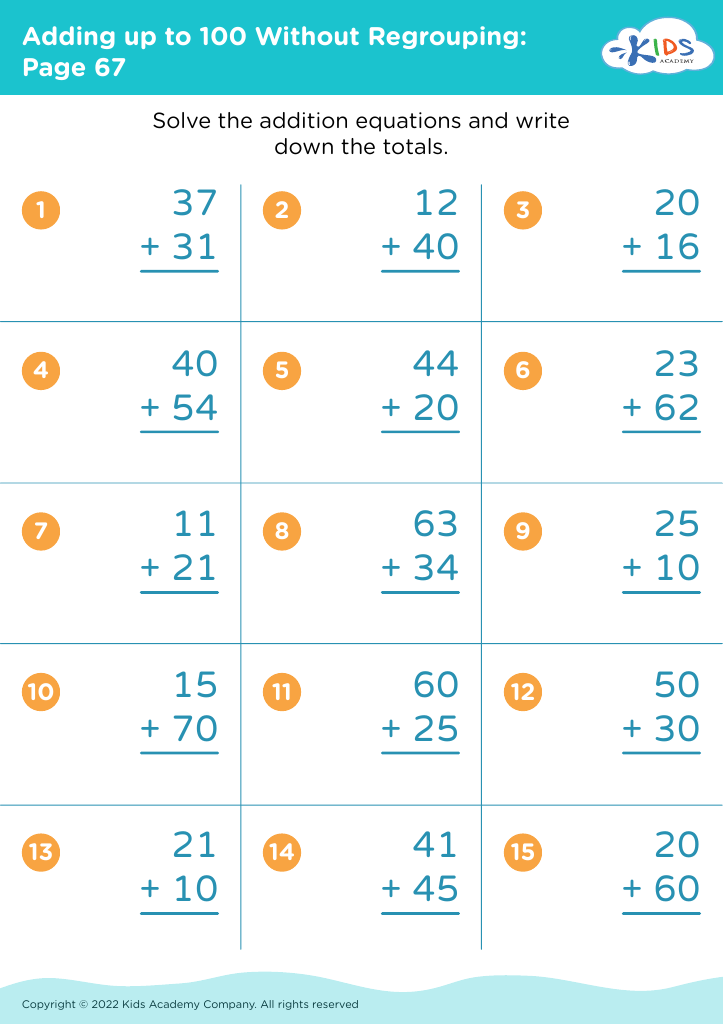
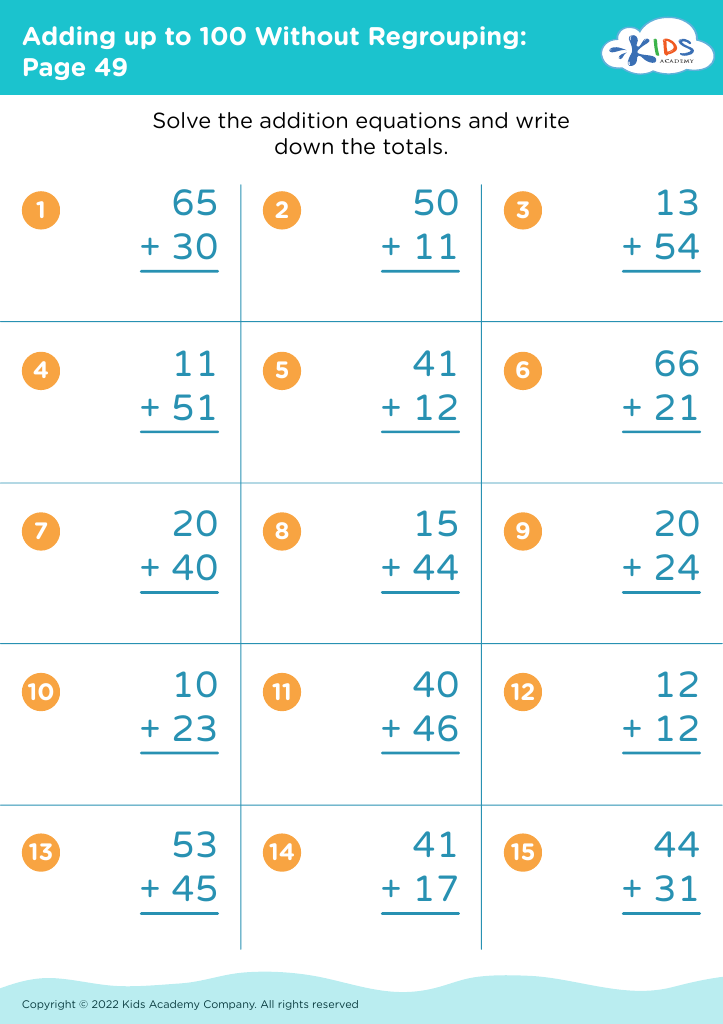
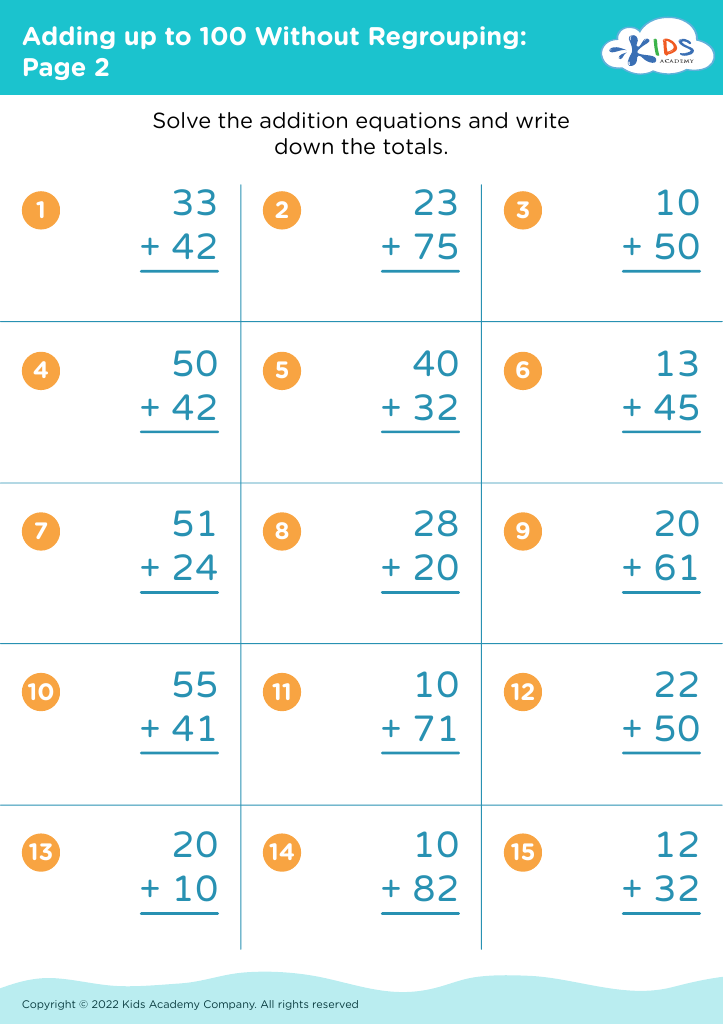
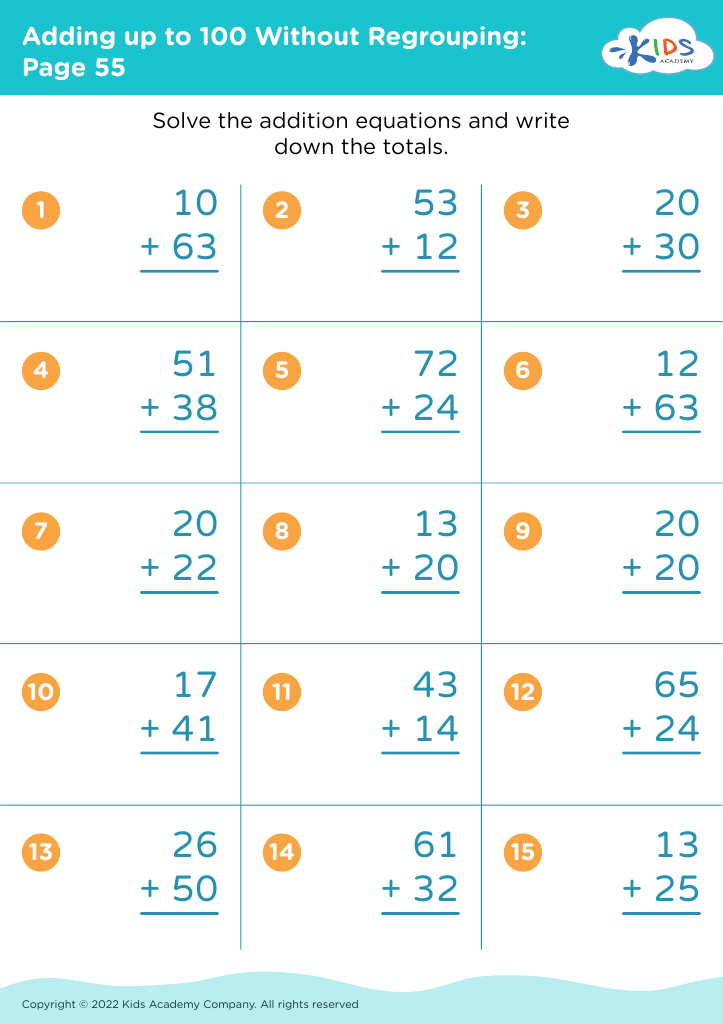




Fine motor skills and the ability to add up to 100 without regrouping are crucial developmental milestones for children ages 6 to 8 and hold significant importance for parents and teachers. Fine motor skills, which involve hand-eye coordination and dexterity, play an essential role in a child's academic success and daily activities. They enable children to perform tasks such as writing, drawing, and cutting effectively, which are foundational skills needed for future learning.
When children learn to add numbers without regrouping, they enhance their understanding of basic math concepts. This proficiency not only builds a strong numerical foundation but also fosters critical thinking, problem-solving skills, and independent learning. Children who struggle with these skills may find future math concepts challenging, leading to frustration and a lack of confidence.
Moreover, practicing fine motor skills and addition in tandem can offer a holistic approach to educating children. Activities that develop fine motor coordination, such as writing numbers, using manipulatives, or engaging in arts and crafts, can simultaneously reinforce math concepts. Therefore, by prioritizing these skills, parents and teachers can support a child's academic growth and boost their confidence, setting the stage for long-term educational success.