Identifying shapes Adding up to 100 Without Regrouping Worksheets for Ages 6-8
4 filtered results
-
From - To
Discover our "Identifying Shapes Adding Up to 100 Without Regrouping Worksheets" designed for children ages 6-8! These engaging worksheets combine fundamental math skills with fun shape identification, reinforcing both numerical understanding and geometric recognition. Perfect for home or classroom use, they help young learners practice addition without regrouping, ensuring a solid foundation in math. Each worksheet encourages creativity and critical thinking, allowing children to easily visualize numbers through shapes. This interactive resource will keep students focused and motivated while they master important math concepts. Perfect for early grade teachers seeking to enrich their lesson plans with hands-on activities!
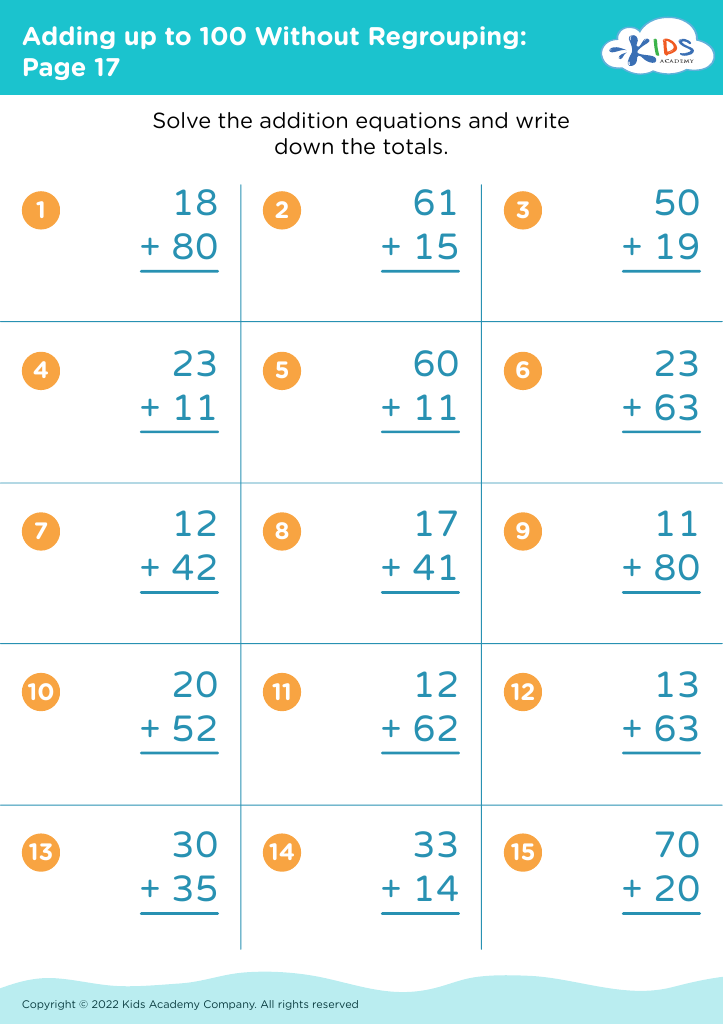
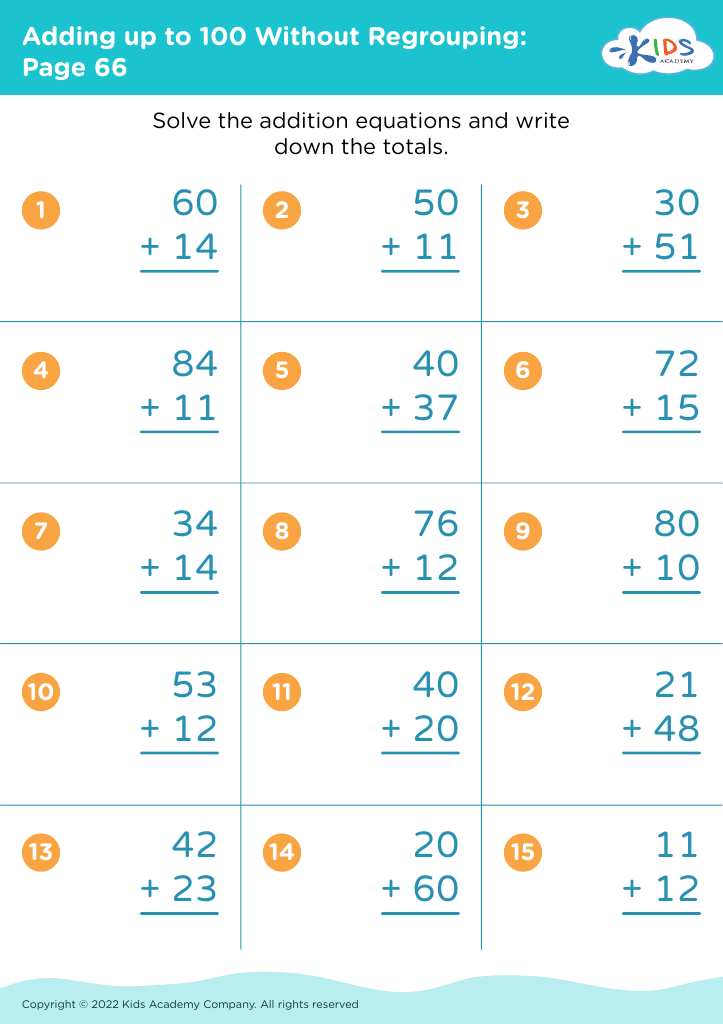
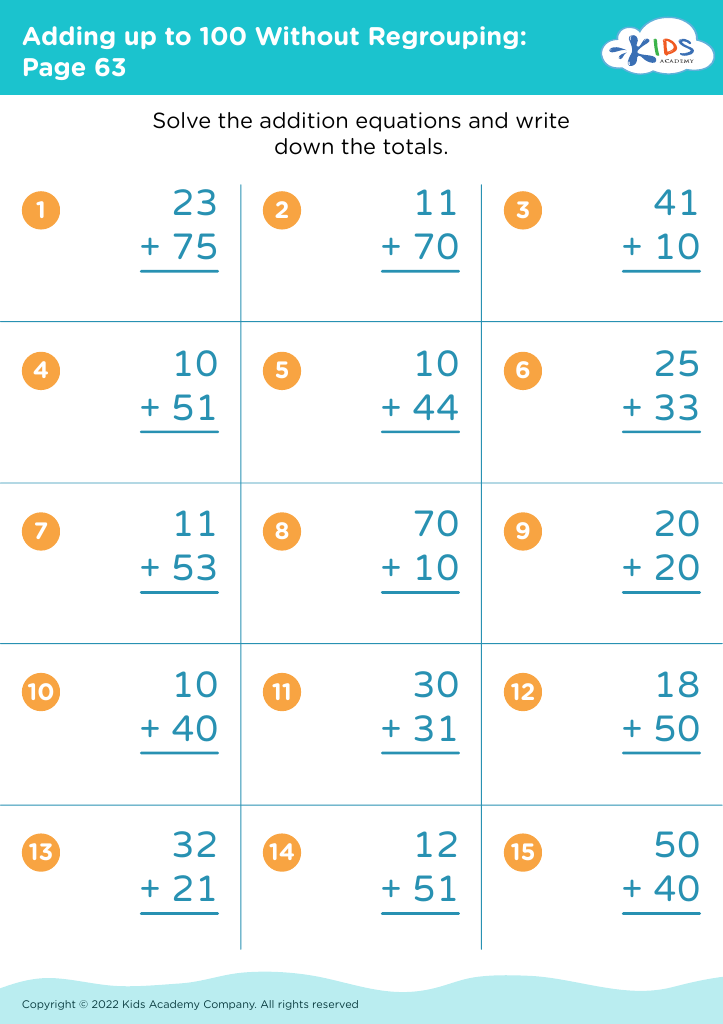
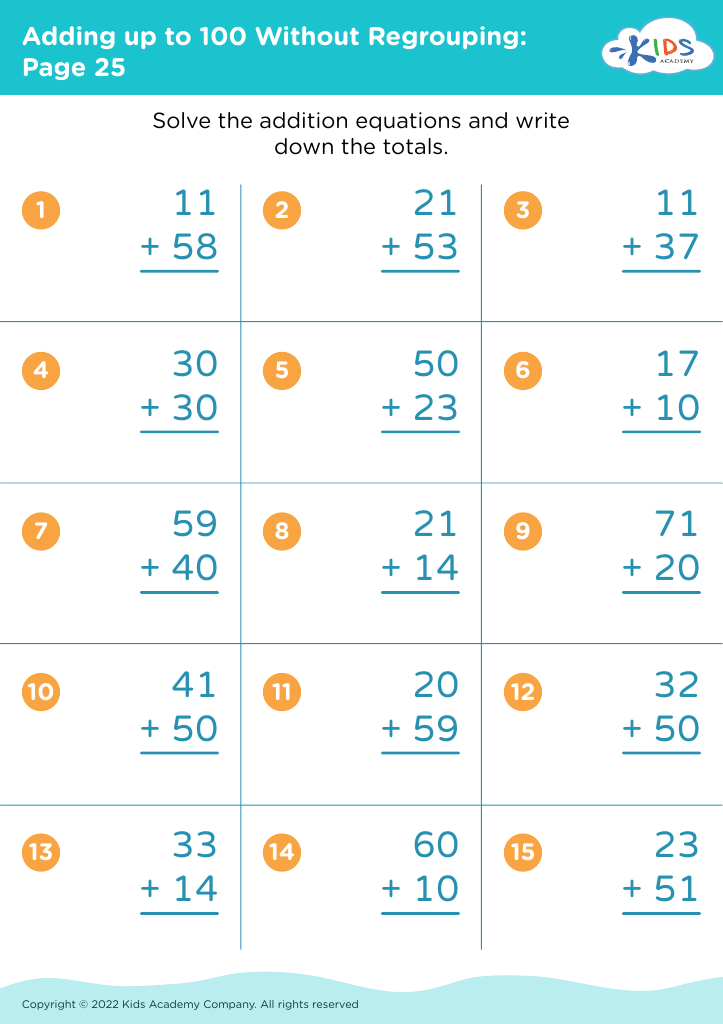




Understanding shape identification and addition skills without regrouping is vital for children aged 6-8, as it lays the foundation for critical mathematical and cognitive development. First, recognizing shapes helps children make sense of their environment, fostering spatial awareness and problem-solving skills. This foundational knowledge encourages creativity and enhances geometry skills, which are essential in advanced math concepts.
Furthermore, practicing addition up to 100 without regrouping strengthens their mental math abilities. At this age, children are developing their number sense, and learning to add without regrouping ensures they can maintain accuracy, build confidence, and minimize mistakes in future calculations. This skill also nurtures perseverance, as they learn to approach challenges systematically.
For parents and teachers, fostering these skills is crucial as it impacts children's overall academic performance and shapes their attitudes toward learning and math in particular. Engaging children in fun, interactive activities centered around shape identification and non-regrouping addition can spark enthusiasm and help cultivate a lifelong interest in mathematics. In essence, prioritizing these skills not only equips students for current educational demands but also prepares them for more complex concepts in the future, enhancing their academic success and cognitive growth.