Improve reading comprehension Adding up to 100 Without Regrouping Worksheets for Ages 6-8
3 filtered results
-
From - To
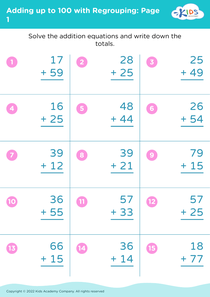
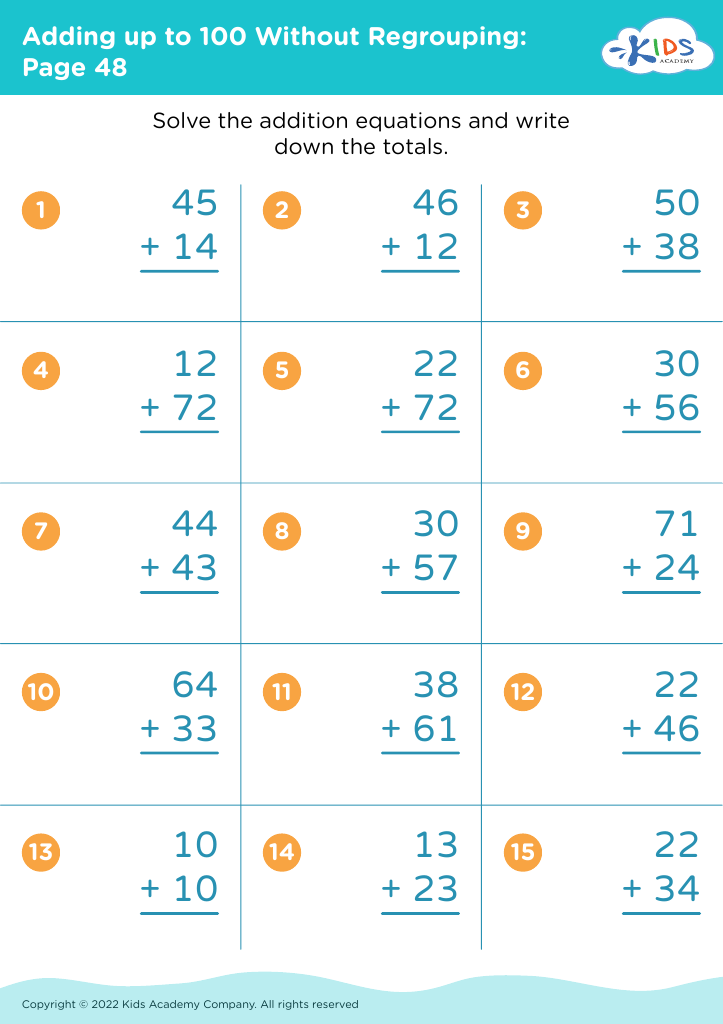
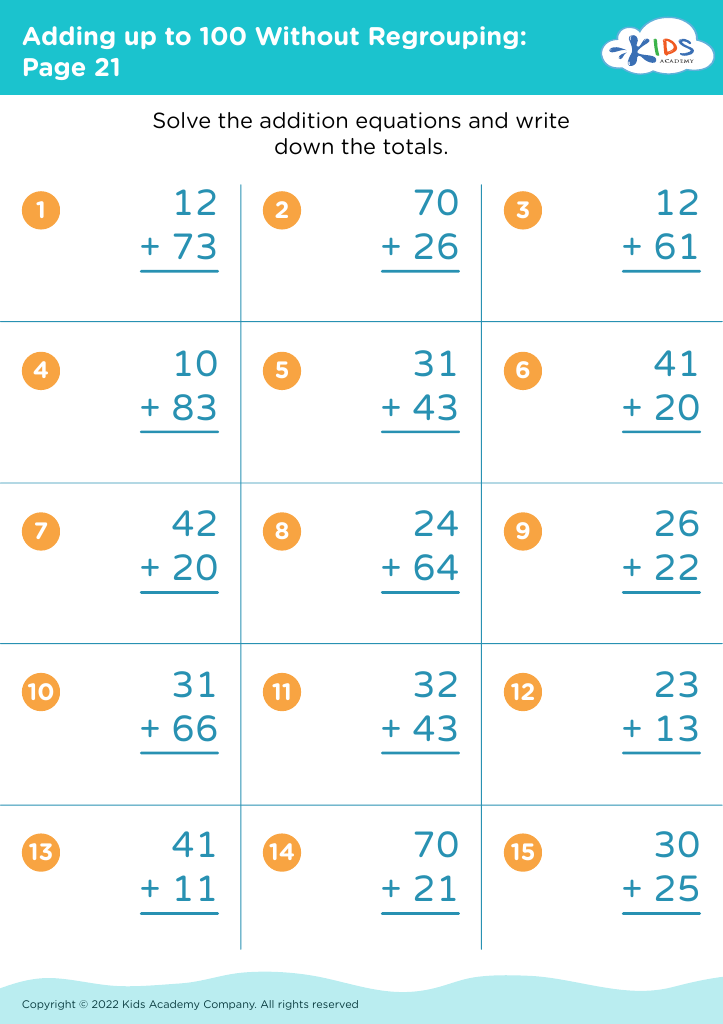
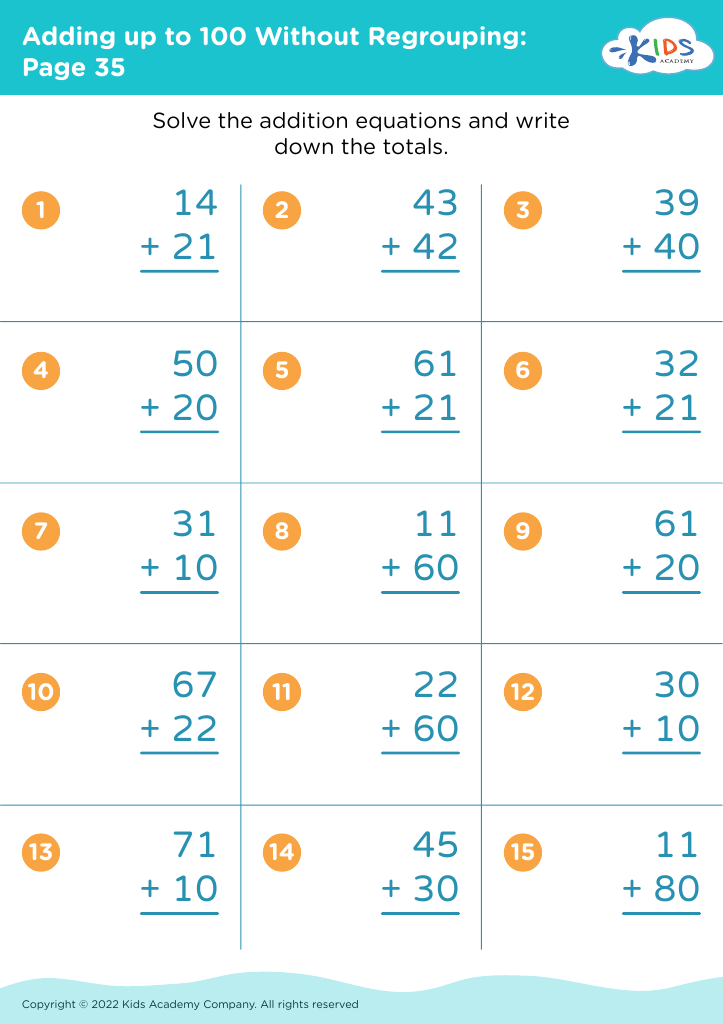
Enhance your child's comprehension and math skills with our "Improve Reading Comprehension Adding up to 100 Without Regrouping Worksheets for Ages 6-8". These engaging worksheets combine addition practice with reading exercises, making learning fun and effective. Children will develop their mathematical abilities by solving problems with sums up to 100, while simultaneously enhancing their reading comprehension through word problems and instructions. Perfect for young learners, these printable worksheets are designed to help your child gain confidence and proficiency in both math and reading, setting a solid foundation for future academic success. Discover more at Kids Academy today!




Developing reading comprehension and arithmetic skills in children ages 6-8 is essential for their academic and cognitive growth. At this formative age, learning to read effectively lays the foundation for all future learning. Strong reading comprehension skills enable children to understand and process information across all subjects, facilitating a deeper understanding and a lifelong love of learning. This boosts their confidence, enhances their critical thinking, and improves their ability to follow instructions.
Simultaneously, mastering basic arithmetic like adding numbers up to 100 without regrouping ensures foundational math proficiency. It helps children develop logical thinking and problem-solving abilities. Learning to add without regrouping simplifies the concept of number sense, allowing kids to grasp the building blocks of more complex math skills in the future.
When parents and teachers prioritize these skills, they give children vital tools for academic success and everyday life. Reading comprehension skills improve vocabulary and communication, essential components for overall intellectual development. Meanwhile, strong math skills are crucial in navigating daily tasks and future learning in subjects like science, engineering, and economics.
Both of these skills work synergistically to provide a balanced approach to young children’s education. Investing in these foundational competencies equips kids with the skills necessary to thrive in an increasingly complex and information-rich world.