Practicing multiplication Adding up to 100 Without Regrouping Worksheets for Ages 6-8
3 filtered results
-
From - To
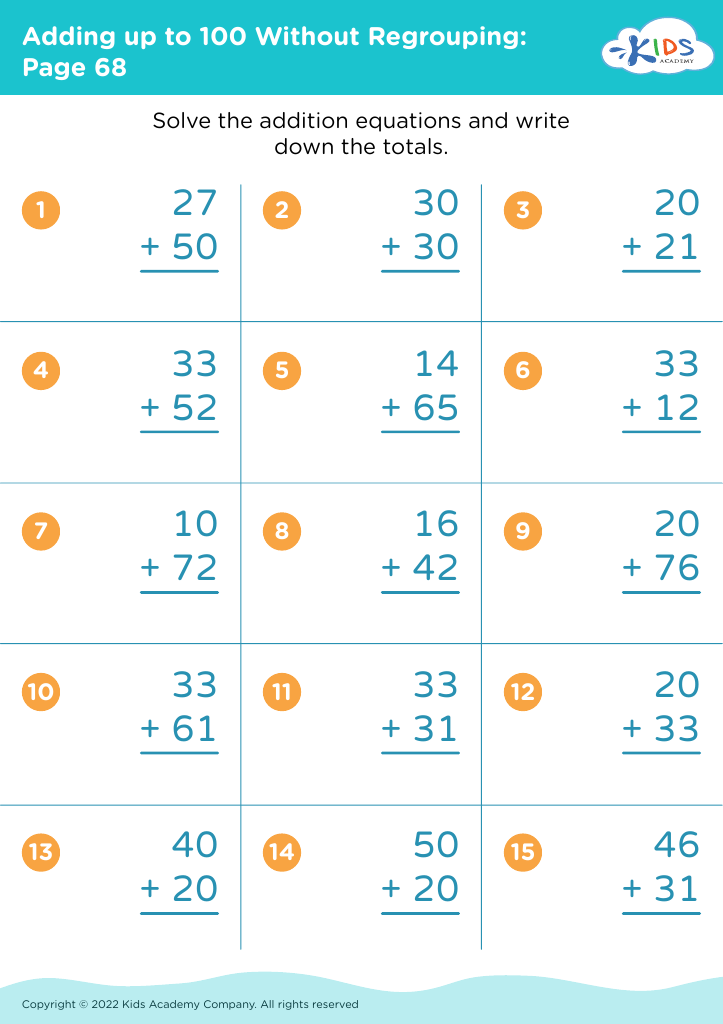
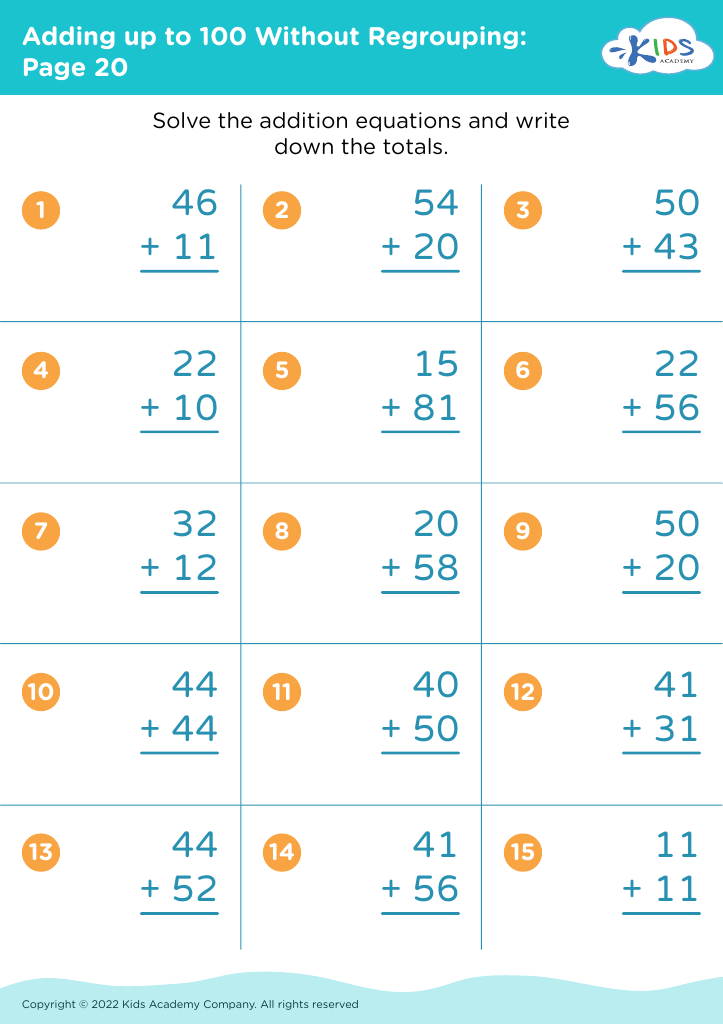
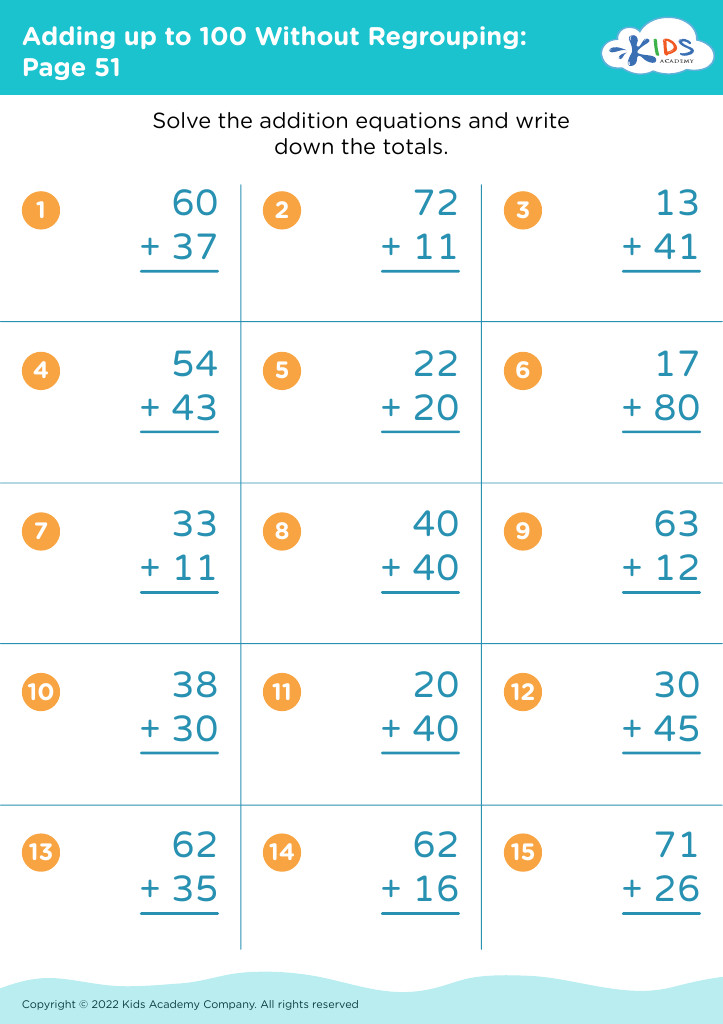
Enhance your child's math skills with our Practicing Multiplication Adding Up to 100 Without Regrouping Worksheets, designed for ages 6-8. These engaging worksheets focus on developing core multiplication abilities in an easy-to-understand way, helping young learners add and multiply numbers up to 100. Without the complexity of regrouping, your child can build confidence and proficiency. Each worksheet is crafted to make learning fun, stimulating children's interest in math. Perfect for home or classroom use, these printable resources aid in grasping fundamental math concepts, ensuring your child advances smoothly in their mathematical journey. Download now!




Parents and teachers should prioritize practicing multiplication and adding up to 100 without regrouping for children aged 6-8 because it sets the foundation for future math skills. During these early years, kids' brains are incredibly receptive to learning new concepts, and establishing strong number sense is crucial. By focusing on multiplication and addition without regrouping, children develop a solid understanding of basic arithmetic operations.
Mastering these skills boosts confidence, as children feel accomplished when they can solve problems independently. This confidence, in turn, encourages a positive attitude towards math, reducing math anxiety and fostering a lifelong interest in the subject. Additionally, these basic math skills are essential for more complex mathematical concepts they will encounter later, such as division, fractions, and algebra.
Moreover, these arithmetic skills are necessary for everyday problem-solving tasks, such as calculating time, managing money, and understanding measurements and quantities. Practicing multiplication and addition up to 100 also enhances cognitive abilities like critical thinking and logical reasoning. When parents and teachers support this practice, they enable children to excel academically and develop skills that are crucial in daily life and future careers. Thus, investing time and effort in these foundational math skills during the ages of 6-8 is indispensable for a child's overall development.