Reading comprehension Adding up to 100 Without Regrouping Worksheets for Ages 6-8
3 filtered results
-
From - To
Discover our engaging "Reading Comprehension: Adding Up to 100 Without Regrouping Worksheets" designed for children aged 6-8. These worksheets not only enhance mathematical skills by focusing on addition, but also strengthen reading comprehension. Each activity combines fun math problems with relatable scenarios, ensuring students grasp the concepts effectively while developing critical thinking skills. Perfectly tailored to align with early learning standards, these worksheets help improve attention to detail and comprehension in a playful manner. Empower your child to excel in math while enjoying the process of reading and problem-solving. Give them the tools they need for a successful educational journey!
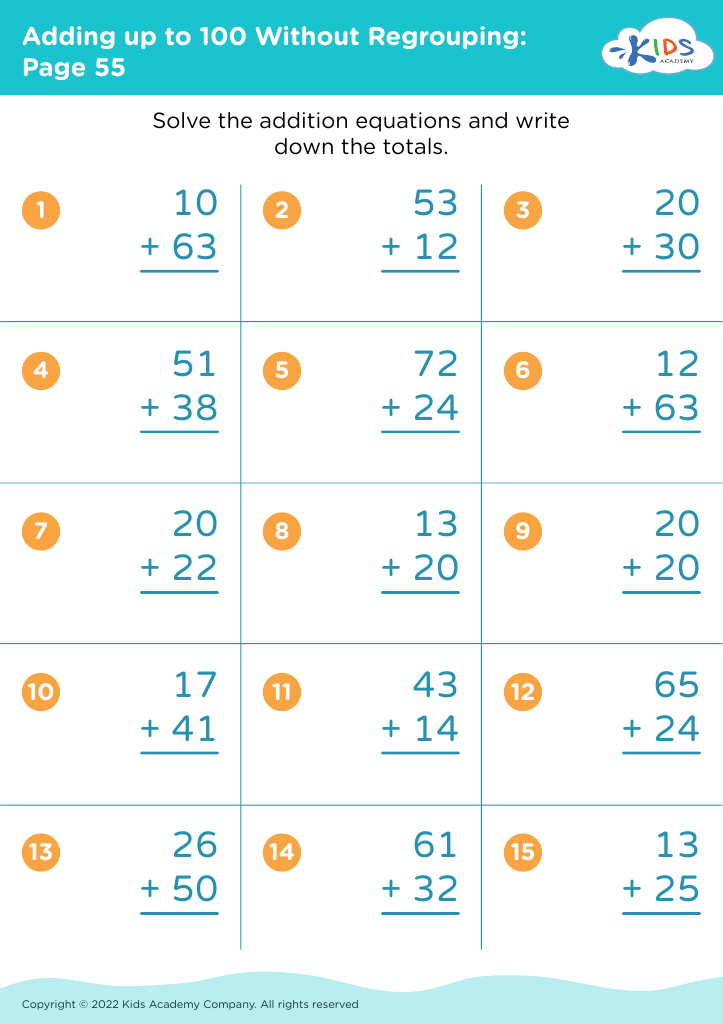
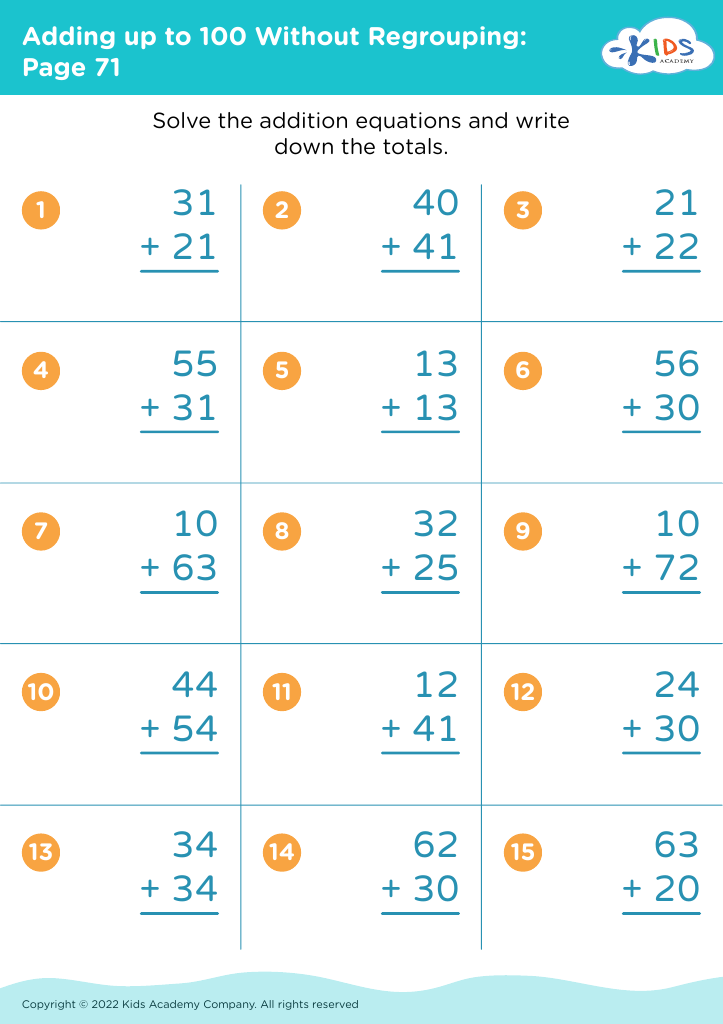
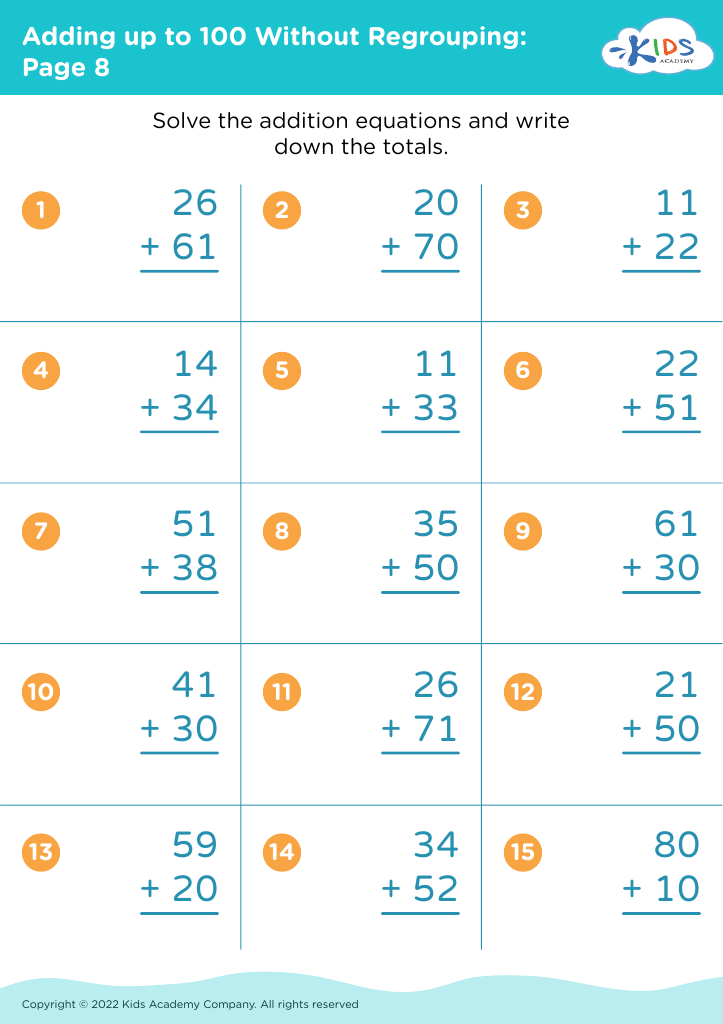




Reading comprehension is a critical foundational skill for children aged 6-8, as it directly impacts their overall academic success and lifelong learning. At this age, children are transitioning from learning to read to reading to learn. Strong comprehension skills enable them to understand and engage with texts, enhancing their ability to gather information, interpret directions, and enjoy storytelling.
Additionally, the ability to add numbers up to 100 without regrouping is an essential math skill that helps build a strong numerical foundation. This skill not only fosters confidence in young learners but also reinforces logical reasoning and problem-solving abilities. Mastering addition in this way prepares students for more complex concepts in mathematics, facilitating better performance in later grades.
By integrating reading comprehension with mathematics, parents and teachers can develop holistic lesson plans that support cross-curricular learning. This approach cultivates critical thinking, enhances retention, and encourages a love for learning. By fostering these skills together, adults contribute to children's overall cognitive development, enabling them to succeed academically and find joy in education. Ultimately, prioritizing reading comprehension and foundational math skills paves the way for future academic achievements and lifelong success.