Understanding multiplication Adding up to 100 Without Regrouping Worksheets for Ages 6-8
5 filtered results
-
From - To
Unlock the magic of multiplication with our "Understanding Multiplication: Adding Up to 100 Without Regrouping" worksheets, specifically designed for children aged 6-8. These engaging, age-appropriate worksheets help young learners grasp fundamental multiplication concepts by relating them to basic addition skills. By using hands-on activities and colorful visuals, children will build a solid foundation in math, boosting their confidence and problem-solving abilities. Perfect for both classroom use and at-home practice, our worksheets encourage independent learning while making math enjoyable. Dive into the world of numbers with confidence and watch your child excel in their mathematical journey!
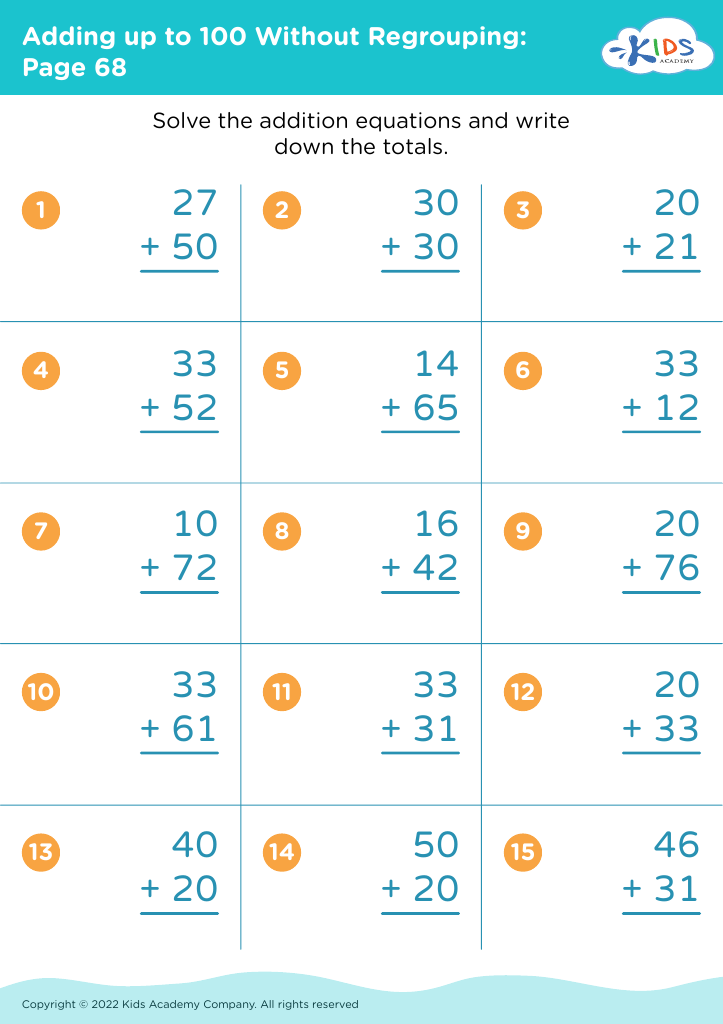
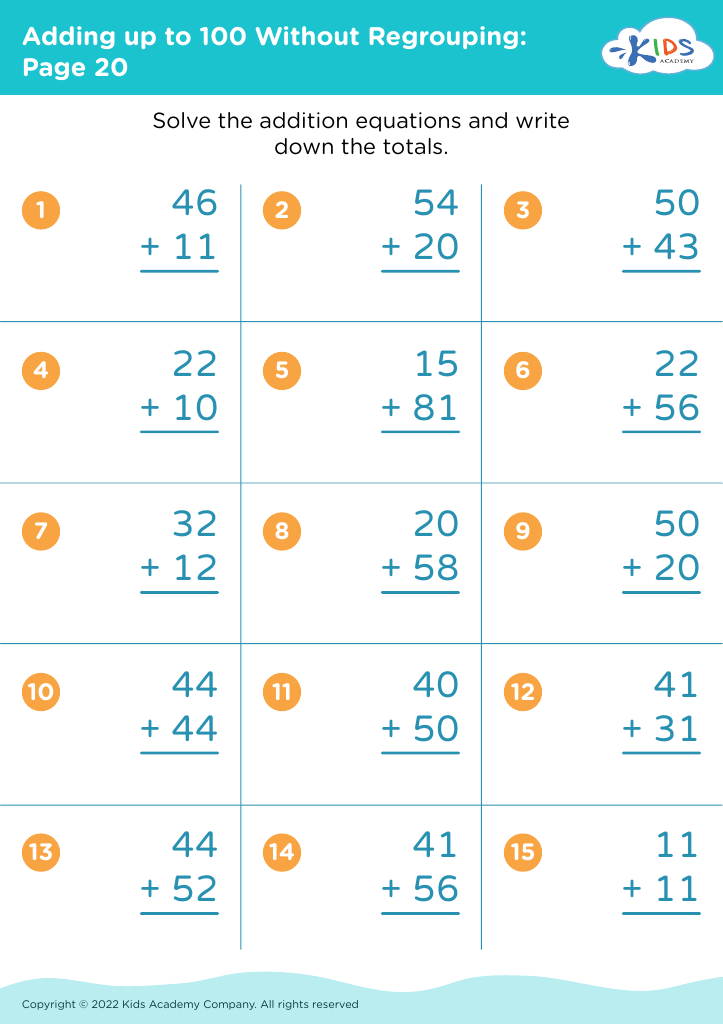
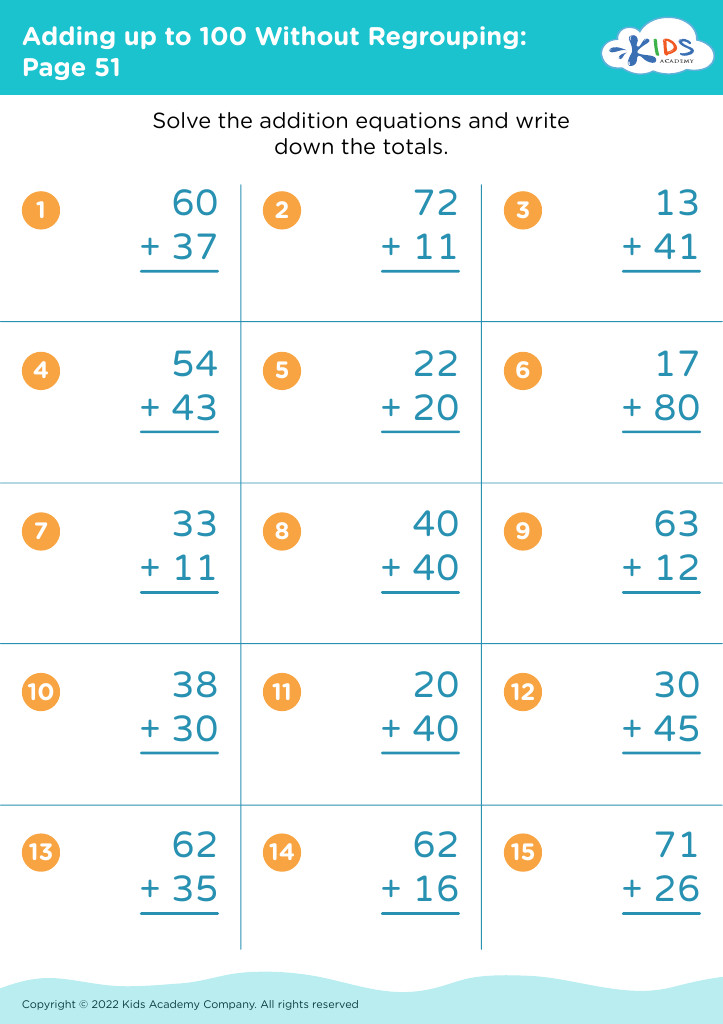
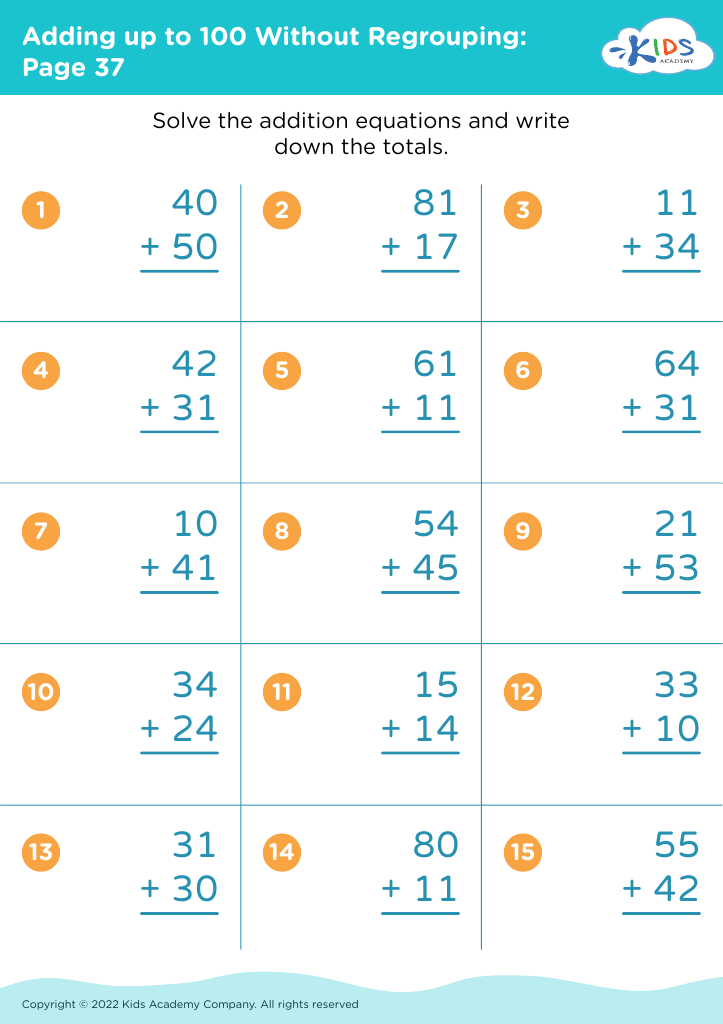
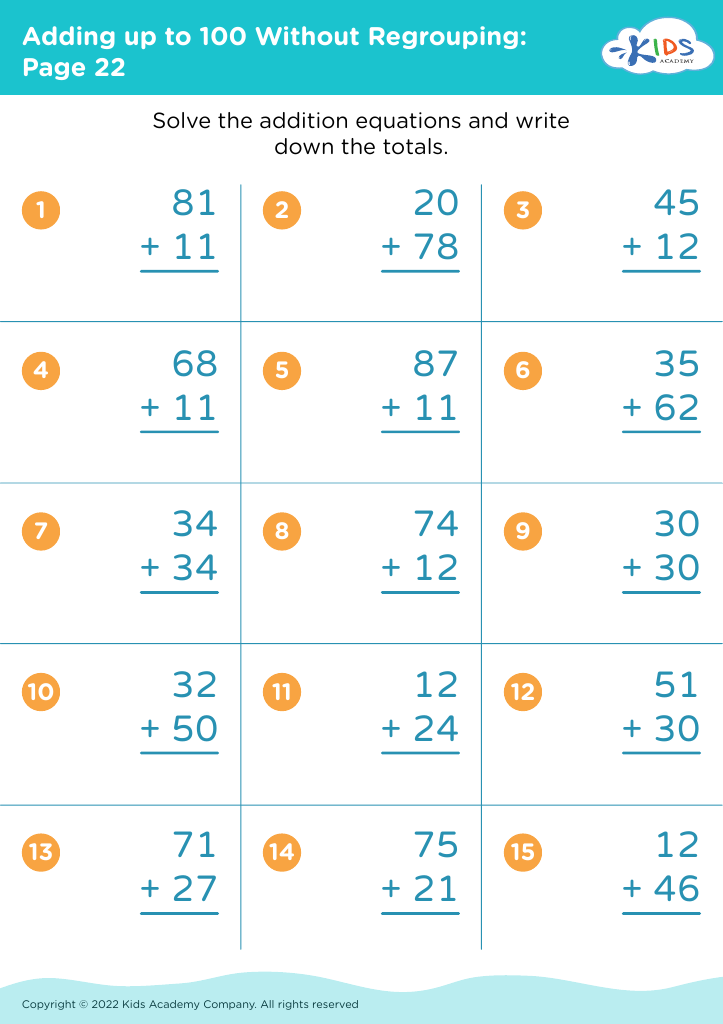




Understanding multiplication and addition concepts for children aged 6-8 is vital for their cognitive development and academic success. Mastering skills such as addition up to 100 without regrouping lays a strong foundation for mathematical reasoning. When children grasp these concepts early on, they develop confidence and a positive attitude toward mathematics, setting the stage for more complex operations in the future.
By focusing on multiplication and simple addition, parents and teachers create a supportive learning environment where students can build their problem-solving skills. These skills foster critical thinking and the ability to manipulate numbers confidently. Additionally, proficiency in basic arithmetic encourages children to approach numerical challenges with greater ease, allowing them to engage more fully in higher-level math concepts like multiplication, fractions, and word problems as they progress.
Moreover, incorporating real-life applications of these mathematical operations, like using grouping in real-world scenarios (e.g., buying items, sharing snacks), engrains the learning more holistically. Ultimately, by nurturing children’s understanding of multiplication and addition, caregivers provide them with the tools they need to navigate their future educational endeavors successfully. Fostering a love for math at a young age can lead to lifelong benefits and a greater appreciation for the subject.