Addition Practice Adding up to 1000 Misc Worksheets for Ages 6-8
5 filtered results
-
From - To
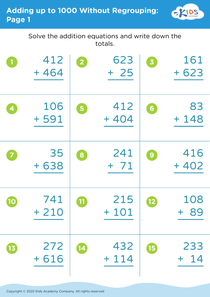
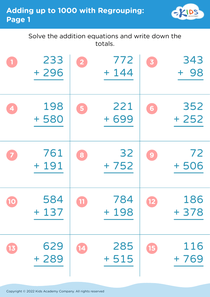
Welcome to our Addition Practice page, designed specifically for children ages 6-8! These engaging worksheets focus on enhancing addition skills with a variety of exercises that encompass adding numbers up to 1000. Our carefully crafted activities encourage students to practice single-digit, double-digit, and three-digit addition in a fun, interactive way. From colorful illustrations to challenging puzzles, these resources are perfect for both classroom and home learning. Whether your child is just starting to explore addition or looking to strengthen their math fluency, our assortment of miscellaneous worksheets will support their growth and boost their confidence in mathematics. Start practicing today!
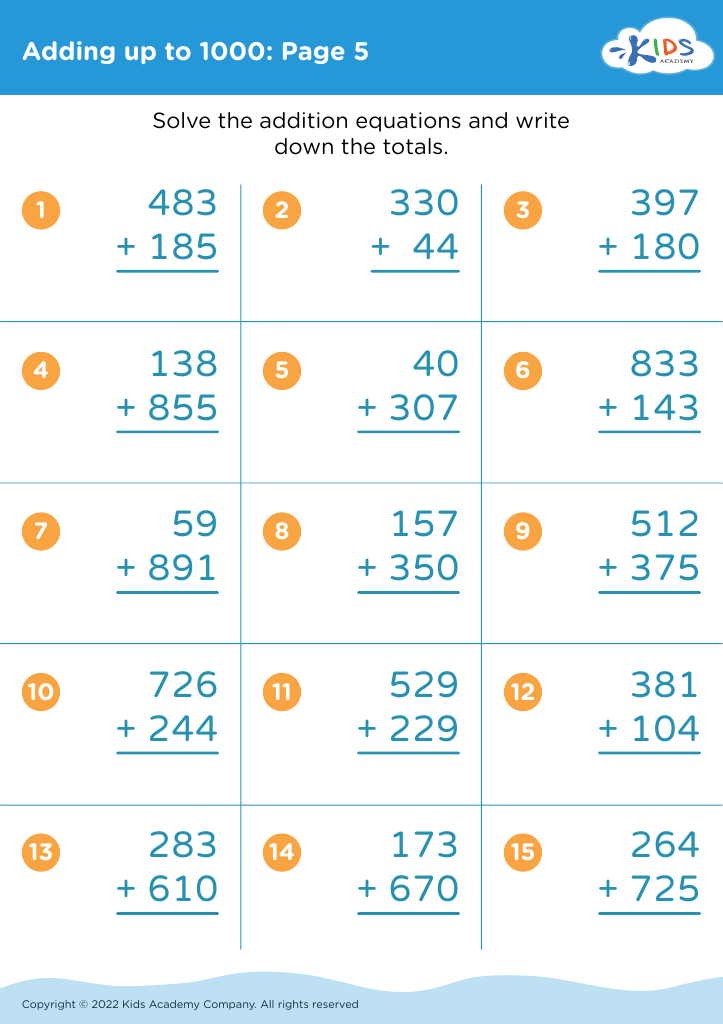
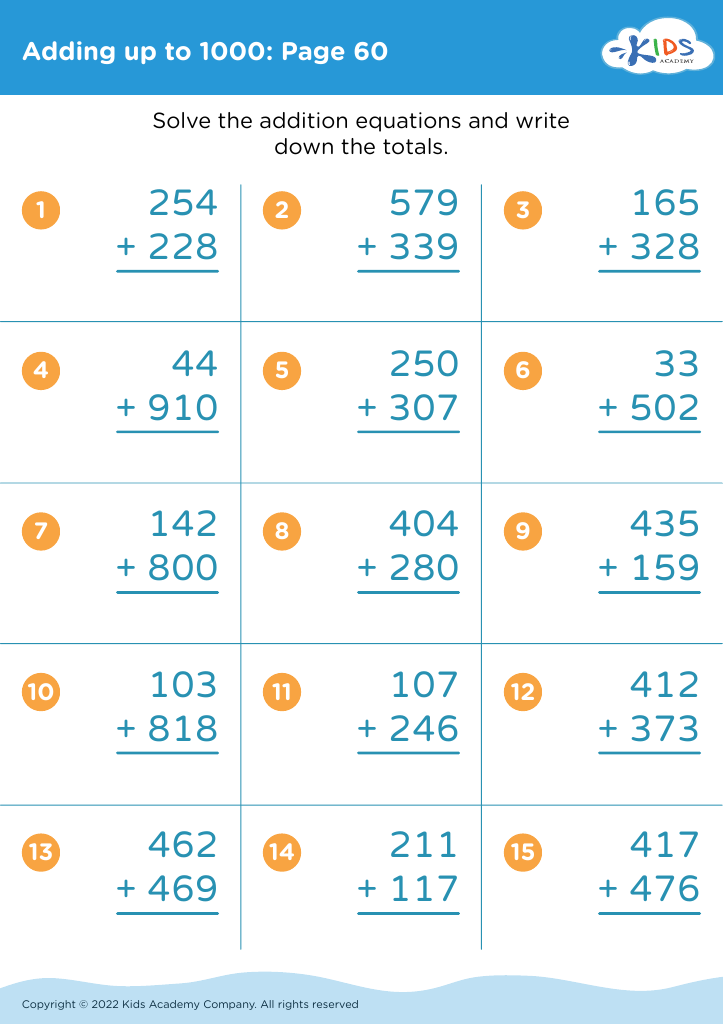
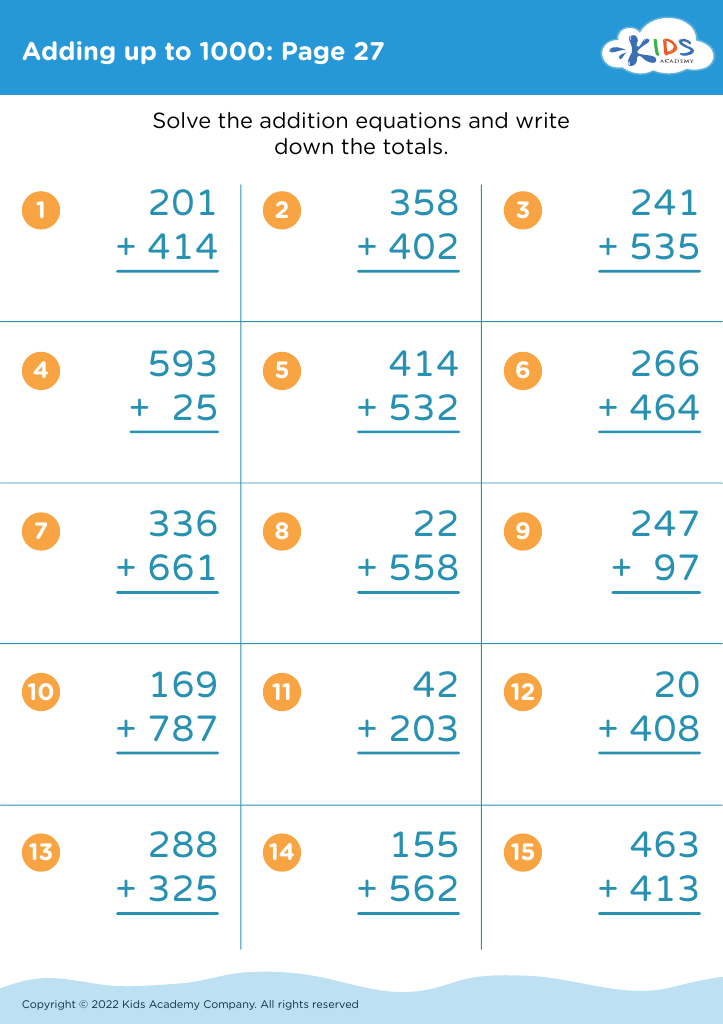
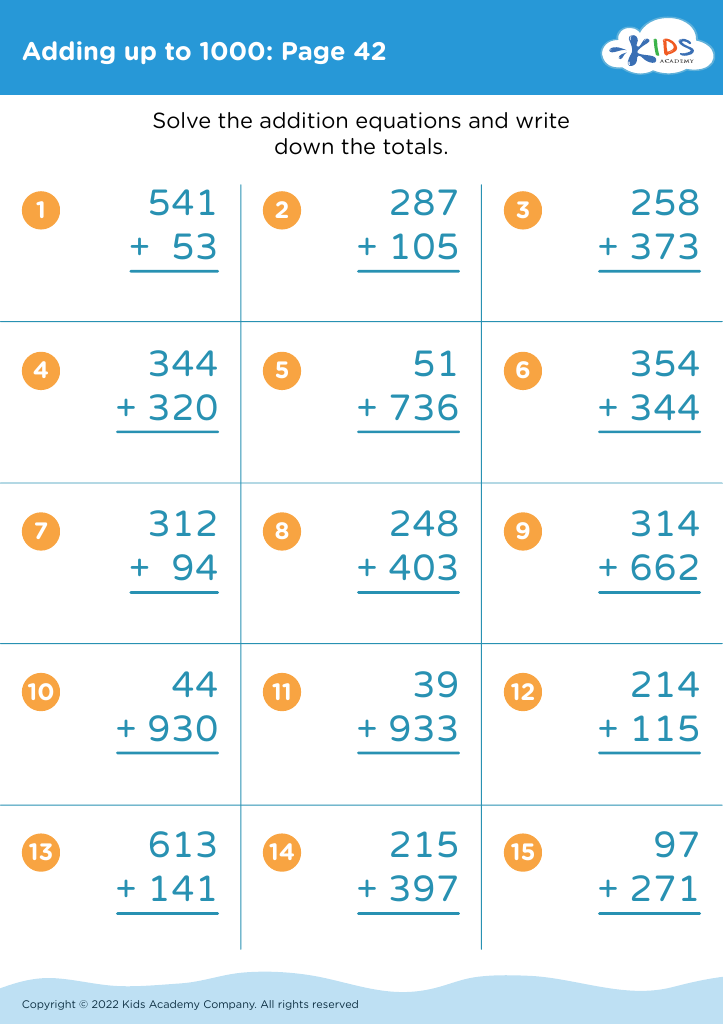
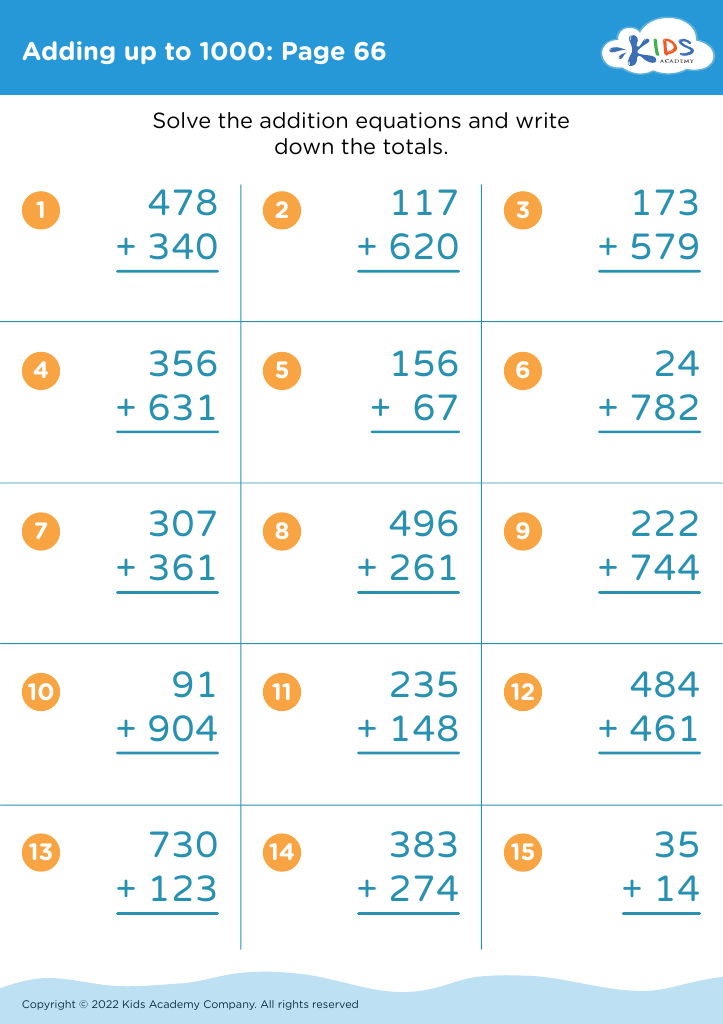


Addition practice for children ages 6-8, especially when it involves adding up to 1000, is essential for several reasons. First, this foundational skill enhances their understanding of numbers and arithmetic, enabling them to tackle more complex mathematical concepts in the future. Mastering addition helps build confidence in their math abilities, setting a positive tone for their overall learning experiences.
Furthermore, engaging in addition practice fosters cognitive development by encouraging problem-solving and critical thinking. Kids learn to approach math with curiosity and perseverance, skills that are invaluable across all subjects. Additionally, repetitive practice solidifies the neural pathways in their brains, making it easier for them to retrieve knowledge and solve problems quickly.
This age group often begins to relate math to real life, such as calculating scores, budgeting playtime, or understanding small group dynamics, reinforcing the importance of mathematical literacy. Well-structured addition practice also offers an opportunity for meaningful interaction between parents and teachers, providing guidance and support in a fun, engaging manner. In essence, addition practice not only sets the stage for future academic success but also encourages a lifelong appreciation for math and problem-solving. Encouraging this practice is crucial for children’s growth and school readiness.